Skip to content

Starter guide

Antique Bottle Collecting

Hand-blown glass with a town, a trade and a date pressed into it.

Antique bottle collecting is finding, identifying and keeping glass bottles made roughly before 1920: patent medicines, sodas, bitters, inks, poisons, whiskey flasks and canning jars. Each one was blown by hand or by an early machine, and the seams, lip and base tell you when. Many are embossed with the druggist, bottler or town that ordered them, so a $5 bottle can be a piece of local history nobody else has. Common examples cost a few dollars at shows and antique shops, rare colors and early flasks sell for thousands, and some collectors dig their own out of old dumps.

Difficulty
beginner-friendly
Startup cost
$30-$200
First result
Your first bottle identified and dated in one evening
Bench total$0.00
01

What bottle collecting involves

Most sessions happen at a table with one bottle and a magnifier: tracing the mold seams, reading the embossing, checking the lip and base, and working out what it held and when it was made. Then comes a soak, a scrub and a place on the shelf. The other half is the hunt, at bottle shows, antique shops, estate sales and online auctions, or outdoors in creek beds and old household dumps. Most collectors narrow down within a year, because there are far too many bottles to chase them all.

Four old clear glass bottles of different shapes standing in a row on a window sill
Old bottles on a window sill
02

Pick a direction

Shows, shops and auctionsBuying bottles that are already cleaned and identified. The fastest way to learn, because dealers will tell you what you are holding and why it costs what it does.

Start here

Find the nearest show on the calendar and go with $20. Handle as many bottles as dealers will let you, then buy one common embossed bottle with no chips or cracks.

One categoryOnly medicines, sodas, bitters, inks, poisons, milk bottles, flasks or canning jars. Each has its own price guides, specialist dealers and well-known rarities.

Start here

Browse the galleries by category until one keeps pulling you back, then write down the three most common bottles in it and look for the cheapest of those first.

Hometown bottlesEvery druggist, dairy, brewery and soda bottler that put your town's name in glass. A finite list tied to local history, and often the cheapest to build because few outsiders want them.

Start here

Search the forum for your town or county name to see which druggists, dairies and bottlers left embossed bottles behind, and start a list of them.

Digging and creek huntingRecovering bottles from old dumps, outhouse pits and stream beds. The bottles are free, the work is physical, and permission and safety rules apply.

Start here

Ask a landowner you know where the farm or household used to throw its trash, get permission in writing, and request a free utility locate before you put a tool in the ground.

811 Before You Dig

Open a direction to see its first step. Digging and creek hunting adds a soil probe, a digging knife and cut-resistant gloves to the kit. The other three directions use the base kit as it is.

Embossed antique swing-top bottles in green, amber and clear glass standing on an iron stand
03

Your first two weeks

Tick these off as you go

04

How to date a bottle

Side seams

On a mouth-blown bottle the mold seam fades out on the neck or stops below the lip. On a machine-made bottle it runs all the way up and over the top. Narrow-neck machine-made bottles date after about 1910.

Pontil scar

A rough ring or sharp circular mark on the base where a rod held the bottle while the lip was finished. On everyday American bottles it points to before about 1860.

Lip

A crude lip with a visible blob of extra glass was applied by hand, common before the late 1880s. A neater lip with fine horizontal lines was tooled, typical from the 1880s to the 1910s.

Closure

A cork-only top is the older style. The crown cap lip for a pry-off cap was patented in 1892. Screw-top canning jars go back to 1858, but screw threads on ordinary narrow-neck bottles became common only in the 1920s.

Embossing

Raised lettering names the product, proprietor and often the town. Liquor bottles embossed "Federal Law Forbids Sale or Re-Use of This Bottle" were made between 1935 and 1964.

Color

Aqua, clear and amber are common. Cobalt blue, deep green, yellow and purple are scarcer and cost more. Clear glass that has turned pale purple was made with manganese, mostly between about 1880 and 1920.

Bubbles and waviness

Uneven glass with trapped bubbles suggests hand production, but it is supporting evidence only. Seams and lips are more reliable.

05

Condition, value and what trips beginners up

  • Condition sets the price. A chip on the lip, a crack or a star-shaped bruise can cut a bottle's value by half or more, so run a fingertip around the lip and hold every bottle up to a bright light before paying.
  • A white or rainbow haze that will not wash off is called sickness: the glass surface itself has been etched by years in the ground. Only professional tumbling removes it, so do not buy a hazy bottle expecting to scrub it clear.
  • Old does not mean valuable. Millions of plain aqua and clear bottles survive and sell for a dollar or two. Color, embossing, rarity and condition drive price far more than age.
  • Reproductions exist, mostly of historical flasks, bitters and figural bottles. Warning signs are colors the original never came in, glass that feels too thick and too perfect, and a base with no wear at all.
  • Deep purple glass has usually been artificially irradiated to darken it. Most collectors treat that as damage, not as a rare color.
  • A paper label, original stopper or original contents add value. Never soak a labeled bottle.
  • Check asking prices against sold prices in online auction archives. Printed price guides show relative rarity well but their dollar figures go out of date.
Amber glass bottles lined up on two dark wooden shelves above a row of clear bottles
Amber and clear bottles on display
06

Cleaning and display

  • Soak in lukewarm water with dish soap for a day or two, then scrub inside with a bottle brush. Never use hot water or a dishwasher: sudden temperature change cracks old glass.
  • Let a cold bottle from the ground or a winter garage reach room temperature before it touches water.
  • For stubborn dirt inside, swirl a handful of uncooked rice with soapy water. Skip metal tools and abrasive pads, which scratch.
  • Display on a sturdy shelf away from where doors slam, with a small ball of museum putty under each base.
  • A window shows off colored glass, but strong sun over years can tint manganese-clear glass purple and fades paper labels, so keep labeled bottles out of direct light.
Dirt-crusted old bottles lying in a pile with their bases toward the camera
07

Digging law and safety

Read this before you dig

  • On federal and tribal land it is illegal to dig or remove objects of archaeological interest that are at least 100 years old without a permit, under the Archaeological Resources Protection Act. State parks and most state and city land have similar rules.
  • Dig only on private land with the owner's permission, in writing, and agree up front on who keeps what.
  • Contact 811 a few business days before digging so buried utility lines are marked. The service is free.
  • Rules for streams and beaches vary by state. Check who owns the bed and banks before you wade in.
  • Old dumps are full of broken glass and rusty metal. Wear cut-resistant gloves and sturdy boots, and keep your tetanus shot current.
  • Never climb into a pit deeper than your waist alone. Outhouse pits and dump walls collapse without warning.
  • Do not open, sniff or pour out a bottle that still has contents. Old medicines and poisons can hold mercury, arsenic or strychnine. Ask your local hazardous waste program how to dispose of them.
  • Fill every hole and leave the ground as you found it.
08

Where to learn more

A bottle show is the best classroom: hundreds of bottles on tables, and dealers who enjoy explaining them. Local clubs run most shows and usually welcome beginners at monthly meetings, where members bring recent finds and identify each other's mystery bottles. Online, the collector forum will identify a bottle from a few clear photos of the base, lip and embossing.

09

About the kit

The bottles themselves are the main cost and are bought in person or at auction, not from this list. A solid first shelf of ten common embossed bottles runs $50 to $150. The kit below is everything around the bottles: a loupe to inspect them, brushes to clean them, a guide to look them up, and putty and a shelf to show them safely. Digging gear appears only if you choose that direction. A UV light is listed last because it earns its place once you start buying bottles expensive enough to be worth faking or repairing.

Old pharmacy shelves packed with rows of labeled medicine bottles and tins
Labeled bottles on old pharmacy shelves
10

Stock the bench

Compare the options on each line, then set your tiers and check out from the bench. Clicking a card selects it there. The loupe, the brushes, the price guide, the museum putty and the shelf start in the kit. The probe, digging knife and gloves join when you switch on Digging And Creek Hunting. The UV flashlight is optional and starts out of the kit.

10x jeweler's loupe

Essential · Inspection

Hairline cracks, polished-out chips and faint mold seams are invisible to the naked eye, and they decide what a bottle is worth and how old it is.

budget
10x Magnifier Jewelry Loupe 20.5mm Triplet Lens Optical Glass Pocket Gem Magnifying Tool for Jeweler, Stamp Philatelist, Coin Numismatic, Achromatic Black Hexagonal Design Kit Set

10x Magnifier Jewelry Loupe 20.5mm Triplet Lens Optical Glass Pocket Gem Magnifying Tool for Jeweler, Stamp Philatelist, Coin Numismatic, Achromatic Black Hexagonal Design Kit Set

4.5(591)

$13.99

View on Amazon
mid-range
Toyo Professional Hexagonal 10X Magnifying Jeweler's Loupe with 21mm Triplet Lens, Chrome

Toyo Professional Hexagonal 10X Magnifying Jeweler's Loupe with 21mm Triplet Lens, Chrome

4.7(131)

$21.95

View on Amazon
premium
Hastings 10X Loupe Highest Optical Grade Glass Element Lens

Hastings 10X Loupe Highest Optical Grade Glass Element Lens

4.3(137)

$47.99

View on Amazon

10x is the standard power. Higher magnification narrows the view and is harder to hold steady.

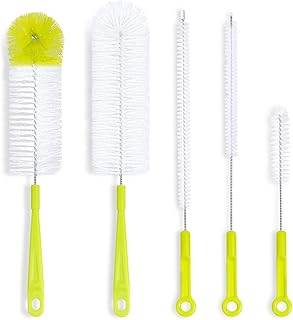
Bottle brush set

Essential · Cleaning

Almost every old bottle arrives with dirt or residue inside, and a brush is the only safe way to reach it through a narrow neck.

budget
Bottle Cleaning Brush Set - Long Handle Bottle Cleaner for Washing Narrow Neck Beer Bottles, Sports Water Bottles with Straw Brush, Kettle Spout/Lid Cleaner Brushes

Bottle Cleaning Brush Set - Long Handle Bottle Cleaner for Washing Narrow Neck Beer Bottles, Sports Water Bottles with Straw Brush, Kettle Spout/Lid Cleaner Brushes

4.5(11.3K)

$7.98

View on Amazon
mid-range
Long Handle Bottle Brush, 17 Inch Bottle Brush Cleaner, 2 Pack

Long Handle Bottle Brush, 17 Inch Bottle Brush Cleaner, 2 Pack

4.6(1.2K)

$14.95

View on Amazon
premium
NewFerU Bottle Brushes Thin Long Handle X 3, Natural Boar Bristle Set

NewFerU Bottle Brushes Thin Long Handle X 3, Natural Boar Bristle Set

4.7(291)

$18.99

View on Amazon

Look for a set with several diameters and soft nylon or foam heads. Avoid exposed wire tips, which scratch the inside of the glass.

Antique bottle identification and price guide

Recommended · Reference

A printed guide with photos lets you flip through categories and learn what is common and what is scarce far faster than searching one bottle at a time.

budget
Bottle Pricing Guide

Bottle Pricing Guide

4.4(35)

$15.22

View on Amazon
mid-range
The Standard Old Bottle Price Guide

The Standard Old Bottle Price Guide

4.1(40)

$25.06

View on Amazon
premium
Antique Trader Bottles Identification & Price Guide

Antique Trader Bottles Identification & Price Guide

4.5(138)

$47.22

View on Amazon

These are long-standing collector references and some are out of print, so copies and prices vary. Treat the dollar values inside as a rough ranking of rarity, not current prices.

Museum putty

Recommended · Display

A small ball under the base keeps a bottle from walking off the shelf when a door slams or a pet brushes past. It peels off without leaving a mark.

budget
99111 2.64-Ounce Museum Putty, Neutral/Crème , White

99111 2.64-Ounce Museum Putty, Neutral/Crème , White

4.5(20.6K)

$7.32

View on Amazon
mid-range
Ready America 33111 Museum Gel 4 oz, Clear

Ready America 33111 Museum Gel 4 oz, Clear

4.3(11.3K)

$10.79

View on Amazon
premium
66111 Museum Wax, Clear Adhesive 2 oz

66111 Museum Wax, Clear Adhesive 2 oz

4.4(7.1K)

$11.75

View on Amazon

Clear gel or wax versions are less visible under colored glass than white putty.

Wall display shelf

Recommended · Display

Bottles kept in a box get forgotten and knocked together. A dedicated shelf gets them into the light and out of reach of elbows.

budget
upsimples 15" x 4" Acrylic Shelves for Wall Storage and Organizer, 6 Pcs

upsimples 15" x 4" Acrylic Shelves for Wall Storage and Organizer, 6 Pcs

4.7(4.5K)

$17.99

View on Amazon
mid-range
BAYKA Black Floating Shelves 15.7in, Set of 3, Wall Mount Rustic Wood Shelf

BAYKA Black Floating Shelves 15.7in, Set of 3, Wall Mount Rustic Wood Shelf

4.4(11.1K)

$20.98

View on Amazon
premium
100% Solid Wood Wall Shelf 3-Tier, Rustic Floating Shelves Wall Mounted Storage Rack, Farmhouse Decor Hanging Shelf Display Shelves for Apartment, Living Room and Bedroom

100% Solid Wood Wall Shelf 3-Tier, Rustic Floating Shelves Wall Mounted Storage Rack, Farmhouse Decor Hanging Shelf Display Shelves for Apartment, Living Room and Bedroom

4.5(157)

$34.19

View on Amazon

Check the shelf depth: most bottles need 3 to 4 inches. Screw it into wall studs or use anchors rated for the weight, since a dozen glass bottles are heavy. Thin acrylic shelves suit small medicine and ink bottles only.

Steel soil probe

Situational · Digging gear · Digging And Creek Hunting add-on

Pushed into the ground, a probe tells you by feel and sound where loose fill, ash and glass lie, so you dig one hole in the right place.

budget
GADFISH Stainless Steel Soil Probe Rod,32-48 Inch Hight Adjustable Ground Rod Tool with T-Handle for Locating Septic Tanks,Underground Pipes,Water Lines,Graves and Gopher Runs

GADFISH Stainless Steel Soil Probe Rod,32-48 Inch Hight Adjustable Ground Rod Tool with T-Handle for Locating Septic Tanks,Underground Pipes,Water Lines,Graves and Gopher Runs

4.1(359)

$20.89

View on Amazon
mid-range
HOMESTEAD 48-Inch Soil Probe Rod with wide T handle, Comfortable Grip for Locating underground pipes and septic tanks

HOMESTEAD 48-Inch Soil Probe Rod with wide T handle, Comfortable Grip for Locating underground pipes and septic tanks

4.6(248)

$45.99

View on Amazon
premium
T&T Tools 48-Inch Smart Stick Metal Soil Probe – 3/8" Round Rod - 1 Pack

T&T Tools 48-Inch Smart Stick Metal Soil Probe – 3/8" Round Rod - 1 Pack

4.6(124)

$85.10

View on Amazon

A solid rod about 4 feet long with a T handle is the usual choice. Hollow core-sampling probes are for soil testing and bend in rocky fill.

Digging knife

Situational · Digging gear · Digging And Creek Hunting add-on

Once you reach the bottle layer a shovel breaks more than it finds. A narrow hand tool lets you loosen soil around each bottle and lift it out whole.

budget
NISAKU NJP650 The Original Hori Hori Namibagata Stainless Steel Weeding Knife, 7.25-Inch Blade

NISAKU NJP650 The Original Hori Hori Namibagata Stainless Steel Weeding Knife, 7.25-Inch Blade

4.8(9.4K)

$22.10

View on Amazon
mid-range
Fiskars Hori Hori Garden Knife with Sheath, Heavy Duty Gardening Hand Tool

Fiskars Hori Hori Garden Knife with Sheath, Heavy Duty Gardening Hand Tool

4.6(1.2K)

$24.99

View on Amazon
premium
Barebones Hori Hori Classic - Garden Knife - Heat-Tempered Stainless Steel Blade and Walnut Handle

Barebones Hori Hori Classic - Garden Knife - Heat-Tempered Stainless Steel Blade and Walnut Handle

4.7(734)

$47.99

View on Amazon

Bring a full-size shovel you already own for opening the hole.

Cut-resistant work gloves

Situational · Safety gear · Digging And Creek Hunting add-on

Every dump and creek bed holds far more broken glass than whole bottles, and you find most of it by hand.

budget
Ergodyne Unisex Adult Proflex 7030 Pu Coated Cut-resistant Gloves - Ansi/Isea 105-2016 A3, En 388: 4x42c, 13g

Ergodyne Unisex Adult Proflex 7030 Pu Coated Cut-resistant Gloves - Ansi/Isea 105-2016 A3, En 388: 4x42c, 13g

4.5(272)

$6.49

View on Amazon
mid-range
Schwer ProGuard High Level Cut Resistant Work Gloves for Extreme Protection, ANSI A9 Cut Gloves with Reinforced Thumb, Non Slip, Breathable, Durable, Touch-screen, Black 1 Pair(L 3326

Schwer ProGuard High Level Cut Resistant Work Gloves for Extreme Protection, ANSI A9 Cut Gloves with Reinforced Thumb, Non Slip, Breathable, Durable, Touch-screen, Black 1 Pair(L 3326

4.4(4.8K)

$14.99

View on Amazon
premium
Ansell HyFlex Cut Resistant Touchscreen Work Gloves with Aerofit Precision Comfort Technology

Ansell HyFlex Cut Resistant Touchscreen Work Gloves with Aerofit Precision Comfort Technology

4.5(24)

$25.24

View on Amazon

Choose a pair with a coated palm for grip on wet glass. These fit any hand: pick your size on the product page.

365nm UV flashlight

Optional · Inspection

For later, once you buy pricier bottles: resin repairs and glued cracks glow differently from the glass around them under ultraviolet light.

budget
DARKBEAM UV Flashlight Filtered 365nm Black Light Woods Lamp Ringworm, Mini

DARKBEAM UV Flashlight Filtered 365nm Black Light Woods Lamp Ringworm, Mini

4.6(1.1K)

$9.99

View on Amazon
mid-range
TrixHub 365nm Black Light UV Light Flashlight Rechargeable with LCD Display

TrixHub 365nm Black Light UV Light Flashlight Rechargeable with LCD Display

4.6(1.1K)

$21.99

View on Amazon
premium
LUMENSHOOTER S3 365nm UV Flashlight with 3 LEDs

LUMENSHOOTER S3 365nm UV Flashlight with 3 LEDs

4.6(2K)

$39.99

View on Amazon

365nm shows repairs more clearly than the cheaper 395nm lights, which give off a lot of visible purple.