Skip to content

Starter guide · one script, measured in dots

Arabic Calligraphy

Cut a reed pen, load it from a silk-filled ink pot, and write.

Arabic calligraphy (khatt) is the art of writing the Arabic script by hand with a cut reed or bamboo pen called a qalam. Every letter is measured in rhombic dots made by the pen's own nib, so a well-written line has the proportions of centuries of master copies behind it. Beginners spend their first months on one script, usually Naskh, copying letter models and checking them against those proportions. People take it up for the slow, focused practice, for a closer connection to the language or the Qur'anic tradition, and because a single page of even letters is something you can see yourself getting better at week by week.

Difficulty
Steep learning curve
Startup cost
$42-$170
First result
A clean single-letter practice sheet in your first week; your name in Ruq'ah within a month
01

What the practice looks like

Arabic is written right to left, and most letters connect, changing shape depending on whether they sit at the start, middle or end of a word. A calligrapher holds the qalam at a steady angle so the nib's width makes thick and thin strokes on its own; you do not press harder to get a thick line.

A typical session is 45 to 90 minutes: prepare the ink pot, check the nib, then copy letters or words from a model (traditionally a teacher's sheet, called a mashq) over and over. Letter heights and widths are measured in dots, small rhombuses the pen makes when you press its full width down at an angle. In Naskh an alif is about five dots tall, and that dot ladder is how you check your own work.

A manuscript page of black Naskh script in even lines, with small gold rosettes set between phrases
Naskh lines with gold rosette markers
A gilded panel of Arabic script above a doorway, in a wall of blue and green tiles also covered in script
02

The main scripts

Start with Naskh, branch out later

NaskhThe clear, rounded script of most printed Qur'ans and books. Almost every teacher starts students here because its proportions carry over to the other scripts.

Start here

Write the alif, ba and jim of Naskh five times each, measuring every alif against a ladder of five nib dots before you move on.

Ruq'ahThe everyday handwriting script, short and quick with few flourishes. It is the fastest way to write something useful, like your name.

Start here

Copy a full Ruq'ah alphabet sheet with your smallest qalam, then write your own name and a short greeting in it every day this week.

ThuluthThe large, sweeping display script seen on mosque walls and in compositions. It is normally learned after Naskh, with a wider pen.

Start here

Hold off until your Naskh letters are steady, then cut your widest qalam and try three Thuluth letters (alif, lam and nun) at large size from a model.

KuficThe oldest major style, angular and geometric. Square Kufic is built on a grid and suits people who like design and pattern.

Start here

Rule a pencil grid of squares on a practice sheet and fill squares to spell your name in square Kufic, keeping every stroke one square wide.

DiwaniThe flowing script of Ottoman court documents, with letters that lean and stack tightly. Best tried once Ruq'ah feels natural.

Start here

Copy a single Diwani word from a model, paying attention to how its letters lean and stack, once your Ruq'ah is comfortable.

Modern calligraffitiFree, expressive lettering that borrows traditional letterforms for wall art, posters and canvases, often with wide cartridge pens or markers.

Start here

Write one word in large, bold strokes with a wide-tip pen, then repeat it in a loose circle so the letters form a ring.

Open a script for the first thing to try. Every traditional script uses the base pen case; only Modern Calligraffiti adds gear of its own, and you can switch it off again from the kit.

03

Choosing and preparing your qalam

Material

Traditional pens are cut from dried reed; bamboo is harder, cheaper and lasts longer between recuts, so most starter sets are bamboo. Either is right for Naskh and Ruq'ah.

What to check before buying

A straight, uncracked barrel about as thick as a pencil or a little thicker, a nib already cut with a slit down the middle, and several widths. A 2 to 3 mm nib suits Naskh and Ruq'ah practice; 5 mm and up is for Thuluth.

The cut

The nib end is trimmed at a slant, so one corner is longer than the other. Keep the factory angle at first and copy it when you recut.

Before each session

Look at the nib under good light. If the edge is rounded, split unevenly or soft from soaking, rest the tip on a hard, flat surface and shave a thin sliver off with the pen knife, making one firm cut straight down.

Load from the ink pot, not a dropper

Dip just the nib into the silk-filled ink pot (the silk is called liqa), lift, and touch it once to the silk to shed the excess. Too much ink gives blobs; too little gives broken strokes.

After the session

Wipe the nib dry. A reed or bamboo pen left wet softens and loses its edge.

A calligrapher's hands writing Arabic letters in red ink with a reed pen on a framed card, a small ink pot beside the paper
A reed pen and its ink pot at work
04

Your first week

Tick each step off as your sheet fills up

What you can write in your first month

Dot ladder sheet

A row of alifs, each checked against a stack of nib-width dots, which teaches the measuring system everything else rests on.

Isolated Naskh alphabet

All 28 letters in their stand-alone forms on one sheet, copied from your workbook's models.

Connected words

Short two- and three-letter words in Naskh, practicing how letters change shape at the start, middle and end of a word.

Your name in Ruq'ah

A quick, practical script that gives a finished-looking result early.

Square Kufic name

Your name built from a ruled pencil grid, a good break from pen-angle practice.

05

Skills to focus on early

A constant pen angle

Thick and thin strokes come from the nib, not from pressure.

Measuring with dots

Check each letter's height and width against the dot ladder instead of by eye.

Ink control

Load the nib from the silk so a full letter comes out in one even stroke.

Letter connections

Learn the initial, medial and final forms of each letter and how they join on the baseline.

Recutting the nib

Keep your pen sharp yourself instead of putting up with a worn edge.

An early Kufic page on parchment: long, low brown letters in wide lines, dotted with small red and green marks
Early Kufic on parchment
06

What trips beginners up

  • Progress is slow. Most students spend months on one script, and teachers in the tradition expect years before a student is ready for an ijazah (a master's license to sign work).
  • Ink is the first fight: blots, feathering and dry strokes are usually a loading or paper problem, not a skill problem.
  • Without a model, you will practice your own mistakes. Copy from printed models every session rather than from memory.
  • Switching scripts early. Staying with Naskh until the letters are steady makes every later script easier.
  • Pressing harder for thicker strokes instead of turning the paper or keeping the angle steady.
  • Using a bottle of waterproof drawing ink in a reed pen. Shellac-based inks dry in the slit and ruin the nib's flow.
  • Judging a page by the best letter on it. Look at the weakest one and practice that.
07

Respecting the tradition

  • Arabic calligraphy grew up around copying the Qur'an, and much of the finest work quotes it. Many beginners practice letters, names and everyday words first and save sacred text for later.
  • Many Muslims will not throw a page bearing Qur'anic verses or the names of God in the trash. If you practice such text, keep those sheets apart and dispose of them respectfully, usually by burning or burying them.
  • Use the script to write real words and check meanings with a native reader before you frame or post a piece. Letters that look attractive but spell nonsense, or something unintended, are a common misstep in decorative work.
  • Formal training runs through a teacher who corrects your sheets and, after years of study, may grant an ijazah. Online courses and books are a good start, but a teacher's corrections are how the tradition is passed on.
An old handwritten Arabic book lying open on display, each page of script framed by ruled borders
A handwritten book, framed in ruled borders
08

Where to learn

A workbook of letter models is the backbone of self-study, since it gives you something correct to copy every session. Free online video courses cover each script step by step, and a few teachers run paid courses where you send in practice sheets for correction. If there is a mosque, Islamic center or university Middle Eastern studies department near you, ask about calligraphy classes; in-person correction speeds things up more than anything else.

Large modern Arabic letterforms cut through a building facade, lit from behind
Modern letterforms on a building facade
09

How the kit is put together

The essentials are the pen, the ink, the paper and a workbook to copy from; with those you can practice Naskh and Ruq'ah from day one. The ink pot, its silk and the pen knife are what keep a reed pen writing well for months, so most people add them in the first few weeks. A pencil, a ruler for guide lines and a soft cloth for wiping the nib are things you already own. The wide-tip pen is only for modern, large-format lettering.

A roundel of gold calligraphy at the crown of a dome, seen from directly below
10

Fill the pen case

Pen, ink, paper and models first

Compare the options, then set your tiers in the pen case. Clicking a card selects it there, and clicking the selected card again takes that line out. The wide-tip pen for Modern Calligraffiti stays out of the total until you add that style.

Bamboo qalam pen set

Essential · Core equipment

The qalam is the tool every Arabic script is written with, and a set gives you the narrow nibs for Naskh and Ruq'ah plus wider ones for later.

budget
Bamboo Cane Qalam Pens, 5PCS Calligraphy Dive Pen, Vintage Handcrafted Manga Calligraphy Pens for Writing, Drawing, Painting (Natural Bamboo Tip Set)

Bamboo Cane Qalam Pens, 5PCS Calligraphy Dive Pen, Vintage Handcrafted Manga Calligraphy Pens for Writing, Drawing, Painting (Natural Bamboo Tip Set)

4.2(21)

$14.44

View on Amazon
mid-range
Arabic Farsi Persian Urdu Hebrew Calligraphy Reed Bamboo Pen Qalam Set

Arabic Farsi Persian Urdu Hebrew Calligraphy Reed Bamboo Pen Qalam Set

4.6(34)

$15.99

View on Amazon
premium
Arabic calligraphy Set of 10 Bamboo pens

Arabic calligraphy Set of 10 Bamboo pens

No rating yet

$33.59

View on Amazon

Look for pens with the nib already cut and slit. A set with four or more widths covers practice through Thuluth.

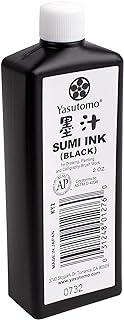
Black calligraphy ink

Essential · Consumables

A water-based, non-waterproof black ink flows smoothly through a reed or bamboo nib and washes out when you clean it.

budget
Winsor & Newton Calligraphy Ink, 30ml (1-oz) Bottle, Matt Black

Winsor & Newton Calligraphy Ink, 30ml (1-oz) Bottle, Matt Black

4.6(2.9K)

$7.89

View on Amazon
mid-range
Yasutomo Bokuju Liquid Ink - 2oz Sumi Ink for Calligraphy and Artwork - Black Drawing Ink for use with Japanese Ink Brushes and Dip Pens

Yasutomo Bokuju Liquid Ink - 2oz Sumi Ink for Calligraphy and Artwork - Black Drawing Ink for use with Japanese Ink Brushes and Dip Pens

4.4(281)

$9.07

View on Amazon
premium
Jacques Herbin 11609T Black Arabic Calligraphy Ink 40ml

Jacques Herbin 11609T Black Arabic Calligraphy Ink 40ml

5.0(1)

$22.78

View on Amazon

Avoid shellac or acrylic drawing inks; they dry in the nib's slit. One bottle lasts a beginner several months.

Smooth practice paper pad

Essential · Consumables

A reed nib catches on rough copy paper and ink feathers into it; a smooth, slightly coated paper lets the nib glide and keeps edges crisp.

budget
9 × 12 in Marker Paper Pad, 50 Sheets, Spiral Bound, 120gsm

9 × 12 in Marker Paper Pad, 50 Sheets, Spiral Bound, 120gsm

4.6(759)

$9.99

View on Amazon
mid-range
U.S. Art Supply 9" x 12" Calligraphy Practice Paper Pad (70gsm), 2-Pack

U.S. Art Supply 9" x 12" Calligraphy Practice Paper Pad (70gsm), 2-Pack

4.6(646)

$12.99

View on Amazon
premium
Soucolor Marker Paper Sketchbook,Bleedproof Maker Paper 9"x12"

Soucolor Marker Paper Sketchbook,Bleedproof Maker Paper 9"x12"

4.8(10.5K)

$16.99

View on Amazon

Traditional burnished paper is lovely but costly. For daily practice any smooth, bleedproof pad works, and glossy printer paper is a fine stand-in.

Naskh script practice workbook

Essential · Learning

You learn by copying correct letter models, and a workbook gives you those models with dot measurements marked.

budget
Naskh Calligraphy Practice Sheets: A Step-by-Step Guide for Creating Artistic Designs (Arabic Calligraphy الخط العربي)

Naskh Calligraphy Practice Sheets: A Step-by-Step Guide for Creating Artistic Designs (Arabic Calligraphy الخط العربي)

4.6(15)

$9.99

View on Amazon
mid-range
Arabic Calligraphy Naskh Script for Beginners /anglais

Arabic Calligraphy Naskh Script for Beginners /anglais

4.3(162)

$18.66

View on Amazon
premium
An Introduction to Arabic Calligraphy

An Introduction to Arabic Calligraphy

4.4(99)

$23.18

View on Amazon

Pick one that shows each letter's dot proportions and its connected forms, not only the alphabet.

Lidded ink pot

Recommended · Core equipment

A small pot with a lid holds the silk-soaked ink between sessions without drying out, and its weight keeps it from tipping when you dip.

budget
Clear Glass Antique Style Inkwell Cut Glass Vintage Reproduction Ink Well

Clear Glass Antique Style Inkwell Cut Glass Vintage Reproduction Ink Well

3.9(91)

$18.73

View on Amazon
mid-range
Ink Well for Dip Pen with Lid for Fountain Pen Calligraphy Ink Holder for Glass Dip Pen

Ink Well for Dip Pen with Lid for Fountain Pen Calligraphy Ink Holder for Glass Dip Pen

4.7(116)

$18.85

View on Amazon
premium
Ink Well for Dip Pen with Lid Dinky Dip Ink Holder Calligraphy Nib Storage

Ink Well for Dip Pen with Lid Dinky Dip Ink Holder Calligraphy Nib Storage

4.8(88)

$22.85

View on Amazon

Pick one with a mouth wide enough for your widest qalam. A clean jam jar with a lid works too.

Raw silk fibers for the liqa

Recommended · Consumables

A pinch of raw silk in the pot holds the ink so each dip loads the nib with the same small amount, which ends most blotting.

budget
Tussah Silk Roving (2 oz.) for Spinning, Felting, and Soap-Making (Natural White)

Tussah Silk Roving (2 oz.) for Spinning, Felting, and Soap-Making (Natural White)

4.7(214)

$15.95

View on Amazon
mid-range
Mulberry Silk Fiber for Spinning, Blending, Felting, Dyeing

Mulberry Silk Fiber for Spinning, Blending, Felting, Dyeing

4.4(41)

$19.95

View on Amazon
premium
Revolution Fibers Grade A Mulberry Silk Fiber | 100% Natural, Luxurious Sheen | Ready to Spin,Dye, Blend or Felt

Revolution Fibers Grade A Mulberry Silk Fiber | 100% Natural, Luxurious Sheen | Ready to Spin,Dye, Blend or Felt

4.9(22)

$29.99

View on Amazon

Sold for spinning and felting; use it undyed. One bag is enough to refill the pot for years. Cotton wool is a weaker substitute.

Pen knife for recutting nibs

Recommended · Tools

Every reed or bamboo nib wears down within weeks, and a sharp blade lets you recut it instead of buying new pens.

budget
Kiridashi Knife Jpanese Pocket Knife Wooden Handle with Sheath Seki Japan

Kiridashi Knife Jpanese Pocket Knife Wooden Handle with Sheath Seki Japan

4.6(289)

$11.44

View on Amazon
mid-range
OLFA Limited AK Art Knife Ltd-09

OLFA Limited AK Art Knife Ltd-09

4.6(662)

$12.60

View on Amazon
premium
KAKURI Kiridashi Knife 18mm, Right-Handed Woodworking Marking Knife

KAKURI Kiridashi Knife 18mm, Right-Handed Woodworking Marking Knife

4.7(945)

$25.80

View on Amazon

Make the final cut on a hard, flat surface (traditionally a small bone or plastic plate called a maqta); a scrap of hard plastic works. A soft cutting mat crushes the nib.

Wide-tip pen for large lettering

Situational · Core equipment · Modern Calligraffiti add-on

For modern lettering on posters, canvas and walls, a 6 mm cartridge pen or a 15 mm paint marker gives bold strokes without an ink pot.

budget
BIGTHUMB 3 Pcs Black Jumbo Permanent Markers: 15mm Wide Tip Thick Acrylic Paint Pen Large Calligraphy Marker for Rock Painting, Poster, Sign, Canvas, Glass, Wood, Ceramic

BIGTHUMB 3 Pcs Black Jumbo Permanent Markers: 15mm Wide Tip Thick Acrylic Paint Pen Large Calligraphy Marker for Rock Painting, Poster, Sign, Canvas, Glass, Wood, Ceramic

4.5(1.7K)

$9.99

View on Amazon
mid-range
Sharpie Pro Magnum Heavy Duty Large Jumbo Permanent Markers - Pack of 2 - Extra Wide Chisel Wedge Tip - Black Ink

Sharpie Pro Magnum Heavy Duty Large Jumbo Permanent Markers - Pack of 2 - Extra Wide Chisel Wedge Tip - Black Ink

4.6(76)

$12.97

View on Amazon
premium
Pilot parallel pen pen width 6mm nib P-FP-120R-15 Made in Japan

Pilot parallel pen pen width 6mm nib P-FP-120R-15 Made in Japan

4.2(58)

$17.53

View on Amazon

The paint markers are permanent and work on canvas, wood and glass; the cartridge pen is for paper. Neither replaces the qalam for learning traditional scripts.