Skip to content

Starter guide

Bird Banding

Help scientists track wild birds, one numbered band at a time.

You start bird banding with nothing but a free morning, because nobody begins by doing it alone. Licensed banders catch wild birds in fine nets, fit each one with a numbered leg band, record its age, sex, weight and wing length, and let it go within minutes. Putting a band on a wild bird takes a government permit, so beginners join as volunteers at a banding station and learn under the person who holds it. You get to see a warbler's feathers from six inches away, and every bird you help process becomes a data point in studies of migration, lifespan and population change.

Difficulty
steep learning curve
Startup cost
$15-$180
First result
Your first morning helping at a station within a few weeks of asking
BANDSPECIESAGESEXWINGFATWEIGHT
One bird, one rowWrite exactly what the bander calls out, then read it back.
Station bag$0.00
A small bird held up in one hand inside a wooden station hut, tall windows out of focus behind it
01

What a banding morning looks like

About six hours, starting at sunrise

A station opens its nets around sunrise and runs for about six hours. The crew walks the net lanes every 20 to 30 minutes, and trained hands lift each caught bird out and carry it back in a soft cloth bag. At the banding table the bander fits a numbered aluminum band, then works out the species, age and sex, measures the wing, checks fat and feather molt, and weighs the bird. A scribe writes all of it down, the bird goes out the window or off an open palm, and the next bag comes off the hook. Slow mornings bring ten birds. A big migration day can bring two hundred, and that is when a station needs every extra pair of hands.

02

Permits: why you cannot do this on your own

  • In the US, catching, handling or banding a wild bird without a permit is a federal offense under the Migratory Bird Treaty Act. That includes the sparrows in your own yard.
  • Permits come from the federal Bird Banding Laboratory, and most states require a state permit on top. Applicants need a research or monitoring project that justifies the banding and references from banders who have watched them work.
  • There are two levels. A master permit covers a station or a project. A sub-permit lets a trained person band under a master permit holder. Getting to a sub-permit usually takes two or three seasons of regular volunteering.
  • You do not need a permit to volunteer. You work under the direct supervision of the permit holder, who decides what you are ready to do and is responsible for every bird.
  • Official bands are issued only to permit holders, and mist nets are sold only to people who can show a permit. Do not buy look-alike nets or bands online. Using them is illegal and it kills birds.
  • Other countries run the same kind of system. Canada issues permits through its federal Bird Banding Office, and in the UK and Europe (where it is called ringing) trainees work up through graded permits under a licensed trainer.
  • One part needs no permit at all: reading and reporting a band on a live bird through binoculars or on a bird found dead.
A young gull standing on a stone sea wall, a blue band with white letters on one leg and a metal band on the other
A coded leg band, readable from a distance
03

How to get started

Tick each one off as you go

04

The skills you build, in order

  1. Scribing

    Recording band number, species code, age, sex, wing, fat and weight cleanly and fast. The data is the whole point, and one wrong digit loses a bird's record.

  2. Station work

    Setting and furling nets, clearing leaves and twigs from the mesh, keeping the lanes trimmed, and carrying bagged birds without swinging or stacking them.

  3. The bander's grip

    Holding a small bird on its back with its neck between your first two fingers and your hand closed loosely around the body. You learn it on calm, sturdy species first.

  4. Banding and measuring

    Choosing the band size from the chart, closing it with banding pliers so the ends meet flush, and taking a repeatable wing measurement.

  5. Ageing and sexing

    Reading feather wear, molt limits, skull development and breeding condition. This is the part that takes years and that most banders say never stops being interesting.

  6. Extraction

    Getting a tangled bird out of a net quickly and safely. It is the last skill taught and the one supervised longest.

Two weathered hands working on a small bird held between the fingers, in black and white
A small bird held in the hand
05

Kinds of banding you can join

Open one to see the first thing to do. None of them needs gear beyond the kit below.

Migration stationsSpring and fall songbird banding at observatories, the busiest and most common way in.

Start here

Search for a bird observatory or nature center within driving distance that bands during spring or fall migration, and email the station manager in the off-season asking to help as a scribe.

Summer breeding stationsOne morning every ten days from May to August at a fixed site, tracking how many young birds a population raises.

Start here

Open the station map, find the summer station closest to you and write to its operator in late winter, before crews are set for the season that starts in May.

Owl nightsFall evenings catching small migrating owls after dark, often with public viewing.

Start here

Look up the owl banding station nearest you and ask in September about its public nights in October and November. Dress for standing in the cold after dark.

Band reportingFinding and reading bands and color markers on wild birds from a distance. No permit, no station, and every report is useful.

Start here

Next time you see a goose, gull or shorebird wearing a band or a colored marker, photograph the leg, write down every character you can read, and report it with the date and location.

A small owl with yellow eyes held on a table while a hand points at a card of yellow color swatches
A small owl checked against a color card
06

Keeping the birds and yourself safe

A young starling with its bill open, held by the legs above a hand, in black and white
A young starling at a banding station
  • The bird comes first. If one looks stressed, panting or fluffed up, tell the bander right away. It gets released without a band and nobody minds.
  • Stations close nets in rain, strong wind, heat and hard cold, and whenever more birds are arriving than the crew can process. Do not argue for one more round.
  • Never touch a bird in a net, or a net itself, unless you have been shown how and told to. A well-meant tug tightens the mesh.
  • Keep insect repellent, sunscreen and hand lotion off your hands. They get on feathers. Apply repellent to clothing at home and wash your hands before your shift.
  • Wash or sanitize your hands after handling birds and bags and before you eat. Wild birds carry salmonella and, some years, avian flu.
  • Check yourself for ticks after every shift. Net lanes run through exactly the brush and tall grass ticks like.
  • Some birds bite hard (cardinals and grosbeaks draw blood) and hawks and owls grab with their feet. You will be told which birds are not yours to hold yet.
07

What trips beginners up

  • Posting photos of birds in the net or in the hand without asking. Stations have rules about it, because a picture with no context reads as a trapped bird to people who do not know the work.
  • Underestimating the hours. Nets open at first light, which in May means leaving home around 4:30 a.m., and the dew soaks you to the knee by six.
  • Volunteering twice and vanishing. Training you costs the bander time, so stations invest in the people who keep coming.
  • Guessing at what the bander said. Ask for a repeat every time. Nobody is annoyed by a scribe who checks.
  • Trying to speed-run the permit. There is no course that replaces handling several hundred birds under supervision.
  • Staying quiet about a mistake. A dropped bag or a misread band is fixable in the first minute and much harder an hour later.
08

Where to learn

Almost all real training happens in person at a station, and the reading supports it. The North American Banding Council publishes its banding manuals free online and runs certification sessions where you are tested on handling, ageing and data. The Institute for Bird Populations teaches week-long beginner classes each spring and summer for people who want concentrated practice. The three regional banding associations hold annual meetings with workshops, and they are the fastest way to meet banders near you who need help.

A starling perched on a closed fist with its bill open, in black and white
A starling on the hand before release
09

Why the kit is so small

The station provides everything that touches a bird: nets, bands, pliers, rulers, scales and bags. Those are restricted to permit holders or chosen by the bander, so none of them is on this list. What you bring is personal gear for dark, wet early mornings. A headlamp is the one thing to buy before your first shift. A waterproof notebook and a tick remover earn their place by the second week. The feather and molt reference is optional and for when you have decided to stay, since most stations keep a shared copy at the table.

10

Pack for the station

The first line is not something you buy online: it is your place at a permitted station, and it comes before any gear. For the rest, compare the options on each line, then set your tiers and check out from the cart. Clicking a card selects it there, and clicking the selected card again takes that line out. Nets, bands and banding tools are not listed because the station provides them.

Volunteer placement at a permitted banding station

EssentialTraining

Banding wild birds is legal only under a permit, so every beginner starts by helping a licensed bander. The station supplies the nets, bands and tools.

Not sold on Amazon

Not sold on Amazon. Look for a bird observatory, nature center or university project whose lead bander holds a federal master permit, and ask if they train volunteers. Helping is normally free. Week-long beginner classes run by banding organizations are optional and cost several hundred dollars and up.

Rechargeable headlamp with a red light

EssentialField gear

Nets are opened before sunrise and you need both hands free to unfurl them. The red mode lets you see the trail without blinding the rest of the crew.

budget
MIOISY Rechargeable Headlamp, Ultra-Bright 5 LED Head Lamp Red White Light

MIOISY Rechargeable Headlamp, Ultra-Bright 5 LED Head Lamp Red White Light

4.5(2.6K)

$12.99

View on Amazon
mid-range
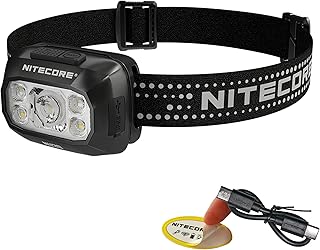
Nitecore NU30 500 Lumen LED Rechargeable Headlamp with White and Red Beams

Nitecore NU30 500 Lumen LED Rechargeable Headlamp with White and Red Beams

4.7(1.3K)

$34.95

View on Amazon
premium
Petzl Actik Core Headlamp

Petzl Actik Core Headlamp

4.7(4.4K)

$72.00

View on Amazon

Charge it the night before. Owl banding runs entirely after dark, so the same lamp covers that too.

Waterproof pocket field notebook

RecommendedField gear

The station keeps the official data sheets. This one is yours, for species codes, band sizes and the ageing tips the bander gives you between birds. Ordinary paper turns to pulp in morning dew.

budget
Rite In The Rain Weatherproof Top Spiral Notebook, 3" x 5", Green Cover, Universal Pattern (No. 935)

Rite In The Rain Weatherproof Top Spiral Notebook, 3" x 5", Green Cover, Universal Pattern (No. 935)

4.7(2.1K)

$7.24

View on Amazon
mid-range
Elan Publishing Company The Indestructible, Waterproof, Tearproof, Weatherproof Field Notebook - 3.5"x5.5" - Combo Colors - Lined Memo Book - Pack of 4

Elan Publishing Company The Indestructible, Waterproof, Tearproof, Weatherproof Field Notebook - 3.5"x5.5" - Combo Colors - Lined Memo Book - Pack of 4

4.6(1K)

$12.95

View on Amazon
premium
Field Notes | Expedition Edition 3-Pack | Waterproof Notebook

Field Notes | Expedition Edition 3-Pack | Waterproof Notebook

4.6(1.4K)

$14.95

View on Amazon

Write in pencil. It works on damp waterproof paper where most pens skip.

Tick remover tool

RecommendedSafety gear

Net lanes are cut through brush and tall grass, and you walk them a dozen times a morning. A proper remover takes a tick out whole, mouthparts included.

budget
Tick Twister Tick Remover Set Small Large

Tick Twister Tick Remover Set Small Large

4.6(8.4K)

$6.62

View on Amazon
mid-range
Tick Key The Original Tick Key - Tick Detaching Device - Green

Tick Key The Original Tick Key - Tick Detaching Device - Green

4.7(2.6K)

$7.99

View on Amazon
premium
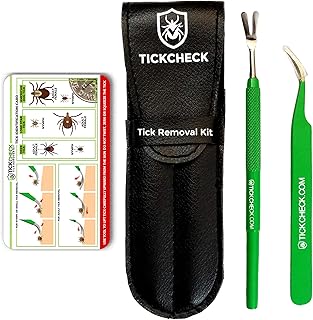
TickCheck Premium Tick Remover Kit - Stainless Steel Tick Remover + Tweezers, Leather Case, and Free Pocket Tick Identification Card (1 Set)

TickCheck Premium Tick Remover Kit - Stainless Steel Tick Remover + Tweezers, Leather Case, and Free Pocket Tick Identification Card (1 Set)

4.7(6.4K)

$12.95

View on Amazon

Keep it in the car or your pack so it is there when you do the after-shift check.

Bird molt and feather reference book

OptionalReference

For later, once you are handling birds. Working out a bird's age from its feathers is the hardest part of banding, and it goes much faster if you have read about feathers and molt before you see them in the hand.

budget
Bird Feathers: A Guide to North American Species

Bird Feathers: A Guide to North American Species

4.8(463)

$26.92

View on Amazon
mid-range
Identification Guide to North American Birds, Part 1, Second Edition

Identification Guide to North American Birds, Part 1, Second Edition

5.0(14)

$80.00

View on Amazon

Wait until you have a few shifts behind you, then ask your bander which reference the station uses at the table and get the same one.