Skip to content

Starter guide

Butterfly Raising

Raise a caterpillar on your kitchen counter and release a butterfly three weeks later.

Butterfly raising means keeping caterpillars in a mesh enclosure, feeding them until they form a chrysalis, and letting the adult butterfly go once its wings have dried. A whole life cycle takes about three to five weeks and fits on a counter or a shelf. The daily work is ten minutes of clearing droppings and swapping in fresh leaves, and the payoff is seeing every stage up close: a caterpillar that doubles in size in two days, a chrysalis that turns clear the night before, and a butterfly that sits on your finger before its first flight.

Difficulty
beginner-friendly
Startup cost
$30-$90
First result
Your first butterfly about 3 weeks after the caterpillars arrive
Turns clear the night beforeA chrysalis turns clear enough to show the wings a day before the butterfly comes out.
Habitat total$0.00
A jade green monarch chrysalis, a darkened one about to open and a newly emerged monarch butterfly hanging side by side from the rim of a basket
01

What raising butterflies involves

Egg, caterpillar, chrysalis, butterfly

A butterfly goes through four stages: egg, caterpillar (larva), chrysalis (pupa) and adult. You look after the middle two. Caterpillars eat only their own host plant, molt four or five times over about two weeks, then hang up and form a chrysalis. Seven to fourteen days later the adult emerges, pumps its wings full and needs a few hours to dry before it can fly. Most people raise a handful at a time through spring and summer, release every adult, and start again with the next eggs they find.

Molts
Four or five
As a caterpillar
About two weeks
In the chrysalis
7 to 14 days
02

Your first batch, step by step

Tick these off as the batch grows

A monarch caterpillar with yellow, black and white stripes walking across a broad green milkweed leaf
A monarch caterpillar on milkweed

What you can raise in your first month

A cup of painted ladies

Five caterpillars from delivery to release in about three weeks, with nothing to feed until the butterflies emerge.

A photo record of one caterpillar

A picture a day at the same distance shows the molts and the size jump better than memory does.

A pot of dill or parsley

Sown from seed, it is big enough within a month to draw in egg-laying swallowtails and feed the caterpillars that follow.

A release morning

Pick a warm, dry, still day and let each butterfly climb onto a flower once its wings have hardened.

03

Which butterfly to raise first

Open one to see where to start. Each card can add that butterfly's line to the kit.

Painted LadiesThe classic first butterfly. Caterpillars are mailed in a cup with all the food they need, so there is no plant to find and no season to wait for. They are native across most of the US, which is why they are the species sold for release.

Start here

Order a cup of painted lady caterpillars with their food already in it, and set the sealed cup upright on a shelf out of direct sun the day it arrives. Check that the seller ships live caterpillars to your state before you pay.

MonarchsThe famous orange migrant, raised from eggs or small caterpillars found on milkweed, the only plant they eat. The season runs from late spring into early fall, and a growing caterpillar eats a surprising amount, so you need a steady milkweed supply and a strict cleaning habit.

Start here

Find the milkweed nearest you and turn the leaves over to look for a single cream-colored egg the size of a pinhead. Bring home two or three on their leaves, no more, and sow native milkweed so you have food for next year.

Monarch Joint Venture
SwallowtailsBlack swallowtails in the East and anise swallowtails in the West lay eggs on dill, parsley and fennel, so a pot of herbs is all the bait you need. The caterpillars are large, calm and striped. Late-summer chrysalises often wait until the following spring to open.

Start here

Sow a pot of dill and a pot of parsley on a sunny step. Black swallowtails find them on their own across the eastern and central states (anise swallowtails do the same with fennel in the West), and the striped green caterpillars are easy to spot.

Butterflies and Moths of North America
04

Choosing and setting up the habitat

Height

Butterflies hang below the empty chrysalis to stretch their wings. A 12 inch cube works for painted ladies. Monarchs and swallowtails need about 24 inches so there is room for cuttings standing in water and a clear drop under the roof.

Mesh

Look for fine, soft mesh. Newly hatched caterpillars are a tenth of an inch long and walk through coarse netting, and stiff mesh frays wings.

Opening

A zipper that runs down the side lets you clean the floor without disturbing anything hanging from the roof. A zipper in the top panel is the one to avoid.

Viewing panel

One clear vinyl side makes photos easier. More than one cuts airflow and lets condensation build, which invites mold.

Before every batch

Wash the habitat and any containers in one part household bleach to nine parts water, rinse until the smell is gone, and dry fully in the sun. This is the routine that keeps disease from carrying over.

A bright green swallowtail caterpillar with black bands and orange dots climbing the stem of a seed head under a blue sky
A swallowtail caterpillar on its host plant
05

How much time it takes

Plan on ten minutes a day while caterpillars are eating, plus a short walk to cut fresh leaves if you are feeding host plants. The chrysalis stage needs nothing but a daily look. The one firm commitment is being around on the day a butterfly emerges, because it should be released within a day or two. Butterflies usually emerge in the morning, so a habitat you pass at breakfast is in the right spot.

An orange and black butterfly pushing head first out of a split, papery chrysalis that hangs under a leaf against a blue sky
Emergence day
Caterpillars eating
Ten minutes a day
Chrysalis stage
A daily look
Emergence day
Be around
06

Rules and responsible release

Shipping is regulated.

The USDA controls moving live butterflies across state lines, and approves only certain species for certain states. Reputable sellers will not ship where it is not allowed. Hawaii does not allow live butterfly shipments from the mainland.

Release only what belongs where you live.

Butterflies found locally go back where you found them. Never release a species that does not occur in your area, and never release butterflies bought from another country.

Monarchs have extra rules.

California requires a state permit to handle wild monarchs, and the monarch has been proposed for federal listing as a threatened species, so check current US Fish and Wildlife Service and state guidance before you collect any.

Keep it small.

Conservation groups ask hobbyists to raise a few monarchs at a time from local wild eggs, kept individually and outdoors or by an open window, and not to buy or breed them. Crowded rearing spreads a parasite called OE that weakens the butterflies you release.

Do not release a sick butterfly.

One that emerges with crumpled wings or cannot fly after a day will not survive outdoors. It can live out its two to four weeks in the habitat on fruit and flowers.

A black swallowtail butterfly with open wings resting on an outstretched hand in a sunny backyard
A black swallowtail, wings dry
07

What trips beginners up

Losses are normal.

In the wild fewer than one egg in ten reaches adulthood. Indoors the odds are far better, but some caterpillars still die, often from parasitic flies or wasps that got to them before you did.

Pesticide on plants.

Nursery plants and store-bought herbs are often treated with insecticides that stay in the leaves for months. Feed only leaves you grew from seed or collected from an unsprayed spot.

Too many at once.

Twenty caterpillars eat faster than you can cut leaves and foul a habitat in a day. Five is plenty for a first batch.

Helping too much.

A caterpillar that sits still for a day is molting, not dying, and a butterfly struggling out of its chrysalis should not be pulled free. Hands off is nearly always right.

Drowning.

Small caterpillars walk down stems into open water. Cuttings go in capped tubes or a jar with the mouth plugged, never an open glass.

A fallen chrysalis is not lost.

Lay it on a paper towel at the foot of a mesh wall, or tie a thread around the black stem at its top and hang it from the roof.

08

Where to learn more

University-run monarch programs publish the most reliable free rearing instructions, and their advice on cleaning and crowding applies to every species. A species database with range maps tells you which butterflies and host plants occur in your county, a photo identification app sorts out the caterpillars you find, and a local butterfly club is the fastest way to learn where the milkweed and the swallowtails are.

09

How the kit is put together

The habitat is the only thing every route needs, and it lasts for years. After that the cost depends on the butterfly. Painted ladies mean buying caterpillars each time. Monarchs and swallowtails cost a packet of seed, since the caterpillars come from your own plants or a nearby patch. Pick your butterfly below and the kit adds that route's line. The capped water tubes keep cuttings and nectar flowers fresh, and the book earns its place the first time something happens that the steps above do not cover. Many boxed butterfly kits bundle a small habitat with a caterpillar voucher, which is fine, but buying the habitat separately lets you choose one tall enough for any species.

A painted lady butterfly with open orange, black and white-spotted wings resting on a pink flower
A painted lady on a garden flower
10

Set up the habitat

Compare the options on each line, then set your tiers and check out from the cart. Clicking a card selects it there, and clicking the selected card again takes that line out. The three butterfly lines stay out of the kit until you switch that butterfly on.

Mesh butterfly habitat

essential · Core equipment

Keeps caterpillars in and predators out while letting air through, and gives chrysalises a roof to hang from and butterflies room to dry their wings.

budget
Foldable Butterfly Habitat, 24" Butterfly Cage for Caterpillars, Create Farm, Enclosure for Breeding Soldier Fly, Ladybug, Dragonfly, or Housefly for Chicken and Reptile Feed, Green

Foldable Butterfly Habitat, 24" Butterfly Cage for Caterpillars, Create Farm, Enclosure for Breeding Soldier Fly, Ladybug, Dragonfly, or Housefly for Chicken and Reptile Feed, Green

4.4(433)

$9.95

View on Amazon
mid-range
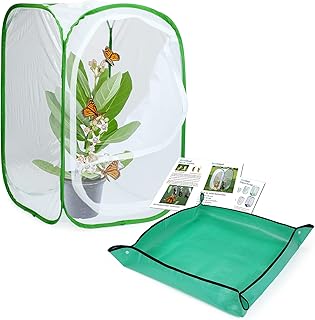
Butterfly Habitat with Poo Poo Platter, Monarch Butterfly Cage with Poo Poo Tray Mat 24 Inches Tall

Butterfly Habitat with Poo Poo Platter, Monarch Butterfly Cage with Poo Poo Tray Mat 24 Inches Tall

4.7(353)

$17.99

View on Amazon
premium
36" Large Monarch Butterfly Habitat, Giant Collapsible Insect Mesh Cage Terrarium Pop-up 24 x 24 x 36 Inches

36" Large Monarch Butterfly Habitat, Giant Collapsible Insect Mesh Cage Terrarium Pop-up 24 x 24 x 36 Inches

4.8(3.4K)

$29.99

View on Amazon

A habitat about 24 inches tall suits every species on this page. A 12 inch cube is enough if you only plan to raise painted ladies.

Floral water tubes

recommended · Feeding

Capped tubes keep leaf cuttings and nectar flowers fresh for days, and the cap stops small caterpillars from walking down the stem into the water.

budget
BEADNOVA Floral Water Tubes 2.8 Inch Plastic Water Tubes for Floral Flower Vials with Caps for Flower Arrangement Decoration (Clear, 20 Pcs)

BEADNOVA Floral Water Tubes 2.8 Inch Plastic Water Tubes for Floral Flower Vials with Caps for Flower Arrangement Decoration (Clear, 20 Pcs)

4.5(696)

$5.49

View on Amazon
mid-range
20Pcs 60ML Floral Tubes, Large Flower Water Tubes for Milkweed Stem Cuttings Arrangements

20Pcs 60ML Floral Tubes, Large Flower Water Tubes for Milkweed Stem Cuttings Arrangements

4.6(544)

$14.99

View on Amazon
premium
Tirifer 21 Pack 60ml Large Floral Tubes with Rack Holder for Milkweed Cuttings, Raising Caterpillars, Monarchs, Butterflies, Flower Arrangements

Tirifer 21 Pack 60ml Large Floral Tubes with Rack Holder for Milkweed Cuttings, Raising Caterpillars, Monarchs, Butterflies, Flower Arrangements

4.5(189)

$21.99

View on Amazon

Sold in packs of 20 to 100. A small pack is plenty.

Butterfly raising guide book

recommended · Learning

A rearing guide shows each species' eggs, caterpillars and host plants side by side, and covers the problems (parasites, disease, overwintering chrysalises) a short guide cannot.

budget
How to Raise Monarch Butterflies: A Step-by-Step Guide for Kids (How It Works)

How to Raise Monarch Butterflies: A Step-by-Step Guide for Kids (How It Works)

4.8(1.5K)

$9.95

View on Amazon
mid-range
The Life Cycles of Butterflies: From Egg to Maturity, a Visual Guide to 23 Common Garden Butterflies

The Life Cycles of Butterflies: From Egg to Maturity, a Visual Guide to 23 Common Garden Butterflies

4.8(376)

$16.99

View on Amazon
premium
100 Plants to Feed the Monarch: Create a Healthy Habitat to Sustain North America's Most Beloved Butterfly

100 Plants to Feed the Monarch: Create a Healthy Habitat to Sustain North America's Most Beloved Butterfly

4.8(231)

$17.70

View on Amazon

Monarchs have the most how-to books written about them, and their cleaning and feeding routine carries over to other species. A library copy works just as well.

Live painted lady caterpillars

situational · Livestock · Painted Ladies add-on

The caterpillars themselves, sent in a sealed cup that already holds all the food they will eat before they form chrysalises.

budget
5 Live Caterpillars for Butterfly Kits, Painted Lady Refill with Food

5 Live Caterpillars for Butterfly Kits, Painted Lady Refill with Food

4.5(2K)

$10.99

View on Amazon
mid-range
Insect Lore Cup of Caterpillars - 5 Live Painted Lady Caterpillars with Food - Refill for Butterfly Garden Kit - Chrys-A-Lid Holding Log Included - STEM Learning Activity

Insect Lore Cup of Caterpillars - 5 Live Painted Lady Caterpillars with Food - Refill for Butterfly Garden Kit - Chrys-A-Lid Holding Log Included - STEM Learning Activity

4.1(5.2K)

$17.99

View on Amazon
premium
Insect Lore Two Cups of Caterpillars - Butterfly Garden Kit Refill – Raise and Release Painted Lady Butterflies – Includes Two Chrys-A-Lid Holding Logs and Instructions

Insect Lore Two Cups of Caterpillars - Butterfly Garden Kit Refill – Raise and Release Painted Lady Butterflies – Includes Two Chrys-A-Lid Holding Logs and Instructions

4.3(1.6K)

$27.98

View on Amazon

Order when someone will be home to bring the box inside, and avoid weeks of hard frost or extreme heat. Some listings send a voucher you redeem for the caterpillars later, which lets you pick the delivery week.

Native milkweed seeds

situational · Host plants · Monarchs add-on

Milkweed is the only plant monarch caterpillars eat, and a patch you grew yourself is the one supply you know has never been sprayed.

budget
Sow Right Seeds - Common Milkweed Seed for Planting Perennial Flower Garden

Sow Right Seeds - Common Milkweed Seed for Planting Perennial Flower Garden

4.1(1.2K)

$4.90

View on Amazon
mid-range
Seed Needs Milkweed Seeds Variety Pack of 5 Perennial Flowers for Monarchs

Seed Needs Milkweed Seeds Variety Pack of 5 Perennial Flowers for Monarchs

4.3(8K)

$8.99

View on Amazon
premium
Gardeners Basics Milkweed Seeds for Monarch Butterflies, 4 Native Varieties

Gardeners Basics Milkweed Seeds for Monarch Butterflies, 4 Native Varieties

4.3(2.2K)

$9.95

View on Amazon

Choose a milkweed native to your region (common, swamp and butterfly milkweed cover most of the country). Most kinds need a few weeks of cold, damp storage before they sprout, and plants are big enough to feed caterpillars in their second summer. Skip tropical milkweed, which can carry parasites through the winter in warm states.

Dill, parsley and fennel seeds

situational · Host plants · Swallowtails add-on

These herbs are the host plants swallowtails look for, so a pot of them both attracts egg-laying females and feeds the caterpillars.

budget
Bouquet Dill Seeds 500 Seeds Non-GMO

Bouquet Dill Seeds 500 Seeds Non-GMO

4.3(528)

$2.49

View on Amazon
mid-range
Sow Right Seeds - Flat Leaf Italian Parsley Seed for Planting Herb Garden

Sow Right Seeds - Flat Leaf Italian Parsley Seed for Planting Herb Garden

4.4(1K)

$4.94

View on Amazon
premium
Eden Brothers Fennel Seeds - Smokey Bronze

Eden Brothers Fennel Seeds - Smokey Bronze

4.2(11)

$5.49

View on Amazon

One packet of any of the three is enough to start. Grow more than you think you need: a single large caterpillar can strip a small parsley plant.

Handheld magnifying glass

optional · Observation

Butterfly eggs are the size of a pinhead and day-old caterpillars are barely longer. A magnifier makes them possible to find on a leaf and to tell apart from sap drops and aphids.

budget
Celosia Handheld Magnifying Glass for Seniors & Kids 75mm, 10X

Celosia Handheld Magnifying Glass for Seniors & Kids 75mm, 10X

4.5(1.7K)

$4.69

View on Amazon
mid-range
Carson TriView 5x/10x/15x Folding Loupe Magnifier with Built-in Case, 3-in-1 Portable Loupe Magnifying Glass - Adjustable Magnification, Great for Jewelry (TV-15)

Carson TriView 5x/10x/15x Folding Loupe Magnifier with Built-in Case, 3-in-1 Portable Loupe Magnifying Glass - Adjustable Magnification, Great for Jewelry (TV-15)

4.4(1.8K)

$11.99

View on Amazon
premium
GemOro Jewelers Loupe 10x Magnifier | Hastings Triplet Lens (Black)

GemOro Jewelers Loupe 10x Magnifier | Hastings Triplet Lens (Black)

4.1(81)

$16.95

View on Amazon