Skip to content

Starter guide · 10 holes · blow & draw

Harmonica

A pocket-size instrument that plays real blues within weeks.

The harmonica is the easiest real instrument to carry and one of the quickest to make music on. A 10-hole diatonic harp in the key of C fits in a shirt pocket and plays a different note when you blow and when you draw (breathe in) through each hole. A well-made one costs about $35 to $50 and, played gently, lasts for years. Beginners start with gentle chords, then learn to play one hole at a time, read simple number tab, and pick out familiar melodies within a week or two. The real hook comes next: bending notes and playing "cross harp" turn the same little instrument into the crying, wailing sound of the blues. Ten to fifteen minutes a day is enough, it is quiet enough for an apartment, and you can practice anywhere.

Difficulty
Beginner-friendly
Startup cost
$35-$180
First result
A recognizable melody on clean single notes in 1 to 2 weeks
A man in a flat cap plays a harmonica cupped in both hands, outdoors in low sun
01

Your first two weeks, step by step

Hold it, find one note, read tab, play a scale and your first tune

What you can play in your first month

Mary Had a Little Lamb

Three neighboring holes (4, 5 and 6) and a perfect first test of clean single notes.

Twinkle, Twinkle, Little Star

A slow tune that drills switching between blow and draw on the same hole.

Happy Birthday

Starts on hole 6 and reaches up to hole 9, so you learn the top half of the harp and get a song people will ask for.

A train rhythm

Chugging blow and draw chords on holes 1 to 4 that build breath control and steady timing.

A simple blues riff in cross harp

A short phrase around the 2 draw, your first taste of how the harp is played in blues.

02

How the 10-hole harp is laid out, and how to choose one

Notes on a C harmonica, holes 1 to 10, blow and draw
BlowCEGCEGCEGC
Hole12345678910
DrawDGBDFABDFA

Holes 1 to 3 skip some scale notes, and holes 7 to 10 swap the blow and draw order. Bending fills in the missing low notes, which is part of why blues players live in holes 1 to 6.

  • Choose a harp with a plastic or sealed comb (the middle layer the holes are cut into). An unsealed wooden comb can swell with moisture and feel rough on the lips.
  • Check it before you settle in: every hole from 1 to 10 should sound on a gentle breath, with no buzzing, rattling or dead notes. A harp that needs hard blowing to sound is leaky, not your fault.
  • Skip toy and no-name harps in multi-key packs. They often leak air so badly that single notes and bends feel impossible, and beginners blame themselves.
  • There is no tuning or setup before you play. In cold weather, warm the harp in your hand or pocket for a minute first, which cuts condensation and keeps reeds from sticking.
03

The skills to work on first

Single notes, two ways

Lip pursing (a small pucker over one hole) is the easiest start. Tongue blocking covers the holes to the left with your tongue and plays out of the right corner of your mouth. It feels harder at first but gives a fatter tone and opens up octaves and chord rhythms, so many teachers suggest learning it within the first few months.

Breath and tone

Breathe through the harp, not at it. Keep your throat open and the air coming from your belly; sucking or blowing hard makes a thin sound and wears the reeds out.

Bending

Lowering a draw note's pitch by changing the shape of your mouth, as if saying "ee" and sliding to "oo" while your jaw drops. Holes 1, 4 and 6 bend down a half step, hole 2 a whole step and hole 3 up to a step and a half; holes 8 to 10 bend on the blow.

Rhythm

Chugging chords in steady time (like a train) matters as much as melody in blues and folk. Play along with a metronome or a backing track early.

Reading tab

Bends are usually shown with an apostrophe after the hole, so -3' is draw 3 bent a half step and -3'' is bent a whole step. Tab styles vary a little, so check each book's or site's key.

Two open hands hold out a small harmonica, its row of holes facing the camera
Small enough to cup in two hands
04

Playing blues in cross harp (2nd position)

  1. First position means playing in the harp's own key, C on a C harp, centered on blow notes. It suits folk tunes, hymns and the melodies in your first month.
  2. Second position, or cross harp, means playing in the key a fifth above, G on a C harp. Home is the 2 draw (the same note as the 3 blow), so most of the music comes on the draw, where the bendable holes are.
  3. That is why it sounds bluesy: draw notes can be bent, and a bent 3 draw or 4 draw gives you the slightly flat "blue notes" of the style.
  4. In a 12-bar blues on a C harp, the draw chord on holes 1 to 4 fits the first chord, the blow chord fits the second, and the area around the 4 draw fits the third.

To jam along with a song, use a harp a fourth above the song's key: a song in G takes a C harp, E takes A, A takes D, and D takes G. Ask the guitarist what key the song is in.

  • SongGHarpC
  • SongEHarpA
  • SongAHarpD
  • SongDHarpG
05

Keeping your harmonica playing

  • Tap out moisture after every session: hold the harp holes-down and tap it firmly against your palm or thigh a few times, then let it air dry before it goes in its case.
  • Don't run it under the tap or soak it. Trapped water leaves deposits on the reeds, can corrode screws, and swells a wooden comb. Wipe the covers with a dry cloth instead.
  • Rinse your mouth with water before playing and skip sugary drinks and food just beforehand. Sugar and crumbs stick to the reeds and make notes go dead or sluggish.
  • Keep it in a case. Pocket lint and grit that get into the holes are a common cause of a buzzing or silent note.
  • If a note sticks, tap it out and play it warm and gently; a wet reed usually frees once it dries. A note that stays flat or dead after weeks of hard bending is a worn reed, and on a budget harp it is simplest to replace the harp.
  • Don't share harps or play on store testers. A harmonica is played with the mouth, so treat it like a toothbrush.
A chrome harmonica resting in its open red-lined case on a dark wooden table
Dry, then back in the case
06

What trips beginners up

  • Double notes are normal for the first week or two. Pucker a little tighter and slide the harp deeper rather than squeezing it.
  • Bends take patience. Most beginners get a wobbly bend on the 4 or 6 draw first; a clean 3 draw bend can take a couple of months. Pulling harder makes it worse, so slow down and shape the mouth instead.
  • Some holes simply play softer or feel different (low holes on the draw, high holes on the blow). That is how the harp is built, not a broken one.
  • Holding the harp too tightly or pressing it against your teeth blocks your tone. Keep lips soft and moist and the grip loose.
  • Don't buy a pile of keys or a chromatic right away. One good C harp gets you through every beginner book and lesson.
07

When to add more keys, and where to go later

  • Add a second key once you can play a few melodies and are starting cross harp, usually after a month or two. An A harp is the most useful second one, because it plays blues in E, the key a huge share of guitar blues is in.
  • After that, add keys as songs ask for them. G, D and F harps are the common next three, covering songs in D, A and C in cross harp.
  • Later path, chromatic harmonica: a larger harp with a button slide that plays all 12 notes, used for jazz, pop and classical. It plays and bends differently, so treat it as a second instrument once the diatonic feels natural.
  • Later path, tremolo harmonica: two reeds per note, slightly out of tune with each other, give a shimmering, wavering sound. It is popular in folk music and across East Asia and is mostly played for melodies rather than bends.
A long tremolo harmonica in its open cream-colored case on a stone windowsill
A tremolo harmonica, one later path
08

Where to learn

Free video lessons cover nearly everything a beginner needs, from the first single note to clean bends, and a good method book with audio gives you a structured path through the same ground. Play along with the audio tracks rather than just reading tab. Once you are comfortable, a harmonica society or club near you is the place to find jams, workshops and players who can watch your technique in person.

A man in a beanie plays acoustic guitar with a harmonica held in a neck holder
Playing harp with other musicians
09

Why the kit looks like this

The only thing you truly need is one 10-hole diatonic harp in C, and every option here is a well-built, widely played model rather than a toy-grade one. A method book with audio gives your practice a sequence. The second harp in A and the multi-harp case are for later, once you are playing cross harp and want to jam along with guitar music. Nothing else is required: no tuner, no stand, and no amplifier.

Three harmonicas on painted boards beside a microphone, a tambourine, a shaker and sheet music
10

Load your harp kit

A C harp and a method book, plus a second key and a case for later

Clicking a card selects it in your kit, and clicking the selected card again takes that line out. The second harp and the case start Out because they are for later; switch them In when you are ready to add a key.

10-hole diatonic harmonica in C

Essential · Core instrument

The C harp is the standard beginner instrument: every lesson, book and tab site assumes it, and it covers both simple melodies and blues in cross harp.

budget
Blues Deville Harmonica, Guitar Accessories, Key of C

Blues Deville Harmonica, Guitar Accessories, Key of C

4.7(1.4K)

$35.49

View on Amazon
mid-range
Special 20 Diatonic Harmonica, C-major - Professional, Responsive Reeds, Injection Molded Plastic Comb with Projecting Mouthpiece

Special 20 Diatonic Harmonica, C-major - Professional, Responsive Reeds, Injection Molded Plastic Comb with Projecting Mouthpiece

4.7(5.9K)

$48.99
View on Amazon
premium
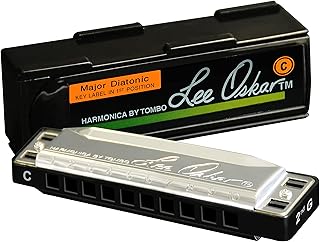
Harmonica, Key of C, Major Diatonic

Harmonica, Key of C, Major Diatonic

4.7(1.3K)

$49.99

View on Amazon

Buy a single harp in C, not a multi-key pack. A plastic or sealed comb is easiest to care for, and most harps come with a basic plastic box.

Beginner harmonica method book with audio

Recommended · Learning

A method book puts single notes, tab, melodies, bending and cross harp in a sensible order, and its audio lets you hear what each exercise should sound like.

budget
Harmonica Primer Book for Beginners with Video and Audio Access

Harmonica Primer Book for Beginners with Video and Audio Access

4.5(2.4K)

$11.99

View on Amazon
mid-range
Basic Blues Harmonica Method Level 1: Level 1, Complete Blues Harmonica Lesson Series (Harmonica Masterclass Complete Blues Harmonica Lesson)

Basic Blues Harmonica Method Level 1: Level 1, Complete Blues Harmonica Lesson Series (Harmonica Masterclass Complete Blues Harmonica Lesson)

4.4(47)

$14.99

View on Amazon
premium
Teach Yourself to Play Blues Harmonica: Book & Online Audio

Teach Yourself to Play Blues Harmonica: Book & Online Audio

4.4(29)

$15.99

View on Amazon

Make sure it is written for the 10-hole diatonic harmonica in C, not the chromatic, and that it includes audio tracks or online audio.

Second diatonic harmonica in A

Optional · Core instrument

For later, once you are playing cross harp: an A harp lets you play blues in E, the most common key for guitar blues, so you can jam along with records and friends.

budget
Blues Deville Harmonica, Stocking Stuffers, Guitar Accessories, Key of A

Blues Deville Harmonica, Stocking Stuffers, Guitar Accessories, Key of A

4.3(124)

$42.99

View on Amazon
mid-range
560PBX Special 20 Harmonica, Key of A

560PBX Special 20 Harmonica, Key of A

4.6(481)

$44.71

View on Amazon
premium
Harmonica, Major Key of A

Harmonica, Major Key of A

4.7(320)

$49.97

View on Amazon

Pick the same model as your C harp so it feels the same in your mouth. An A harp sounds a little lower than a C harp.

Harmonica case for several harps

Optional · Storage

Keeps lint and grit out of the reeds when you carry harps in a bag, and holds the extra keys you add later in one padded place.

budget
Harmonica Cases Storage Case PU Leather Black Harmonica Zippered Carrying Case Storage Bag for 7 Harmonicas

Harmonica Cases Storage Case PU Leather Black Harmonica Zippered Carrying Case Storage Bag for 7 Harmonicas

4.5(97)

$21.52

View on Amazon
mid-range
Accordions Hohner Harmonica MZ20191 FlexCase Harmonica Case, Medium

Accordions Hohner Harmonica MZ20191 FlexCase Harmonica Case, Medium

4.5(195)

$34.49

View on Amazon
premium
Harmo Pro case - Harmonica Carry Case - Harmonica Storage & Carrying Case With Shoulder Strap for 14 Harmonicas Hohner Built-in Mic & Cable Pockets - Designed in the USA by a pro player

Harmo Pro case - Harmonica Carry Case - Harmonica Storage & Carrying Case With Shoulder Strap for 14 Harmonicas Hohner Built-in Mic & Cable Pockets - Designed in the USA by a pro player

4.5(524)

$64.90

View on Amazon

The plastic box your harp ships in is fine at home. Get a case with room for at least six to seven harps so it still fits as you add keys.