Skip to content

Starter guide

Herping

Find wild snakes, frogs, lizards, turtles and salamanders, and leave them where they live.

Your phone camera and a pair of boots you already own are enough to start. Herping is going out to find reptiles and amphibians in the wild: frogs calling from a pond on a wet spring night, a salamander under a log, a snake basking on a trail edge. It works like birding for animals that hide. You learn which habitats, weather and hours bring them out, you watch and photograph what you find, and you leave every animal where it lives. The pull is the search itself. Most species are close to home and rarely seen, so each one feels like a small discovery, and your photos can feed real conservation records.

Difficulty
beginner-friendly
Startup cost
$62-$360
First result
Your first frogs or salamanders on your first warm, rainy night out
EyeshineAt night, eyes reflect your light back as small bright points.
Field bag total$0.00
A person seen from behind walking a dark forest track in a pool of flashlight light
01

What a herping outing looks like

Walk slowly, stop often, look twice

A typical outing is an hour or two of slow walking through one good patch of habitat, stopping often. By day you scan sunny logs, rock piles and trail edges for basking lizards, turtles and snakes, usually from several yards back. After dark, especially in or just after rain, you walk pond margins and damp woodland with a light, listening for frog calls and looking for the reflection of eyes. Some herpers also drive quiet back roads slowly on warm nights to spot animals crossing. Finding the animal is most of the outing. Once you have, you take a few photos, note where and when, and move on.

02

Your first outings

Tick each one off as you go

03

Look, photograph, leave: the law and the ethics

Do not take animals home.

Wild reptiles and amphibians usually do badly in captivity, and removing them is a main cause of decline for turtles and some snakes. Captive-bred pets are a separate hobby.

Catching and handling are regulated.

In the US each state sets its own rules. Many protect certain species outright, some require a hunting or fishing license or a permit even to catch and release, and the rules differ again for roadsides. Check your state wildlife agency before you go.

Parks and preserves are stricter.

National parks and most state parks and nature preserves prohibit disturbing, handling or collecting any wildlife. Stay on trails where the site requires it.

Federally listed species are off limits.

Harassing, capturing or moving a threatened or endangered species is illegal without a federal permit.

Keep your hands off amphibians.

Their skin absorbs sunscreen, repellent and soap residue. If one has to be moved off a road, use clean wet hands and carry it in the direction it was heading.

Put cover back exactly.

If rules allow you to lift a log or rock, lower it gently into the same position and let the animal walk back under. Never break apart rotting logs or pry up rock slabs.

Do not spread disease.

Fungal and viral diseases are killing frogs, salamanders and snakes. Scrub mud off your boots and let them dry fully, or disinfect them, before visiting a different site.

Keep locations vague.

Poachers use online posts to find rare turtles and snakes. Hide or blur the location of sensitive species when you share a record.

A black and yellow salamander on a gravel path, photographed at ground level with a walker out of focus behind
A salamander crossing a path
04

Staying safe around snakes and at night

Rule oneNever handle a venomous snake, and do not handle any snake you cannot identify with certainty. Most bites happen when someone tries to catch, move or kill a snake.

  • Give every snake room: stay at least six feet back, more for a large one, and step away slowly if it holds its ground. A zoom photo beats a close one.
  • Watch where your hands and feet go. Do not reach into crevices, under logs or onto ledges you cannot see, and step onto a log rather than over it.
  • Wear closed-toe boots and long pants, and use a light after dark even on a familiar trail.
  • If someone is bitten, call 911, keep them still and keep the bitten limb at about heart level. Do not cut, suck, ice or tie off the wound, and do not try to catch the snake.
  • Wash your hands after any contact with a reptile or amphibian. Reptiles can carry salmonella, and many toads and newts have skin toxins.
  • For night walks, go with a partner, tell someone your route and carry a backup light. If you search from a road, pull fully off, use your hazard lights and wear something reflective.
  • Check yourself for ticks after every outing.
A patterned snake coiled on the ground, half hidden behind green leaves
A coiled snake, half hidden by leaves
05

Reading weather, season and habitat

A green tree frog sitting on a long green leaf
A tree frog on a leaf

Temperature runs everything.

Reptiles and amphibians cannot make their own heat, so they are most active when it is roughly 60 to 85 degrees Fahrenheit and they hide in extreme heat or cold.

Rain brings out amphibians.

The first warm rainy nights of spring send frogs and salamanders to breeding ponds in large numbers. Mild, wet nights stay productive through fall.

Sun brings out reptiles.

On cool, bright mornings, snakes, lizards and turtles bask in the open. In summer heat they shift to early morning, dusk and night.

Edges hold the most animals.

Search where two habitats meet, such as pond margins, stream banks, the border of woods and field, and rock outcrops near cover.

Listen before you look.

Each frog species has its own call, and learning five or six local calls lets you identify a pond's residents from the trail.

Look for parts, not whole animals.

A turtle is a bump on a log and a snake is a length of pattern that does not match the leaves around it. At night, eyes reflect your light back as small bright points.

06

What trips beginners up

  • Expect empty outings. Snakes in particular are hard to find, and even experienced herpers have nights with nothing but frogs.
  • Going out in the wrong conditions. A hot, dry, windy afternoon is the worst time, and it is when most beginners try.
  • Walking too fast. Slowing to half your normal pace and stopping to scan finds far more than covering distance.
  • Getting too close for the photo. The animal bolts, and you lose the picture you needed for identification.
  • Guessing an identification from color alone. Many harmless snakes resemble venomous ones, so check head shape, pattern and range in your field guide.
  • Skipping the notes. A photo without a date and place is hard to identify later and is useless as a record.
A small gray lizard sprawled on pale rocks that match its color
A lizard the color of its rock
07

Where to learn more

A regional field guide and a free identification app teach you the most, the fastest. For frog and toad calls, online species accounts with recordings and the national volunteer frog-monitoring program are the best free training. Regional herpetological societies run field trips where beginners are welcome, and going out once with people who know the local animals is worth months of solo searching. Your state wildlife agency's website usually has a free checklist of the reptiles and amphibians found in the state.

08

Why the kit is this short

Herping needs very little gear because the skill is in knowing where and when to look. The two things worth buying first are a field guide for your region and a headlamp, since so much activity happens after dark. Close-focusing binoculars and a notebook that survives rain make daytime searching and record keeping better. Snake gaiters can wait until you start leaving the trail. There is no catching or handling equipment on this list on purpose: beginners observe and photograph.

09

Load the field bag

Compare the options on each line, then set your tiers and check out from the cart. Clicking a card selects it there, and clicking the selected card again takes that line out. The optional gaiters start out of the bag.

EssentialIdentification

Regional reptile and amphibian field guide

Identification is the heart of the hobby, and a guide with range maps tells you which species are possible where you live, including the venomous ones to recognize on sight.

budget
National Geographic Pocket Guide to Reptiles and Amphibians of North America

National Geographic Pocket Guide to Reptiles and Amphibians of North America

4.8(540)

$13.93

View on Amazon
mid-range
Peterson Field Guide To Reptiles And Amphibians Eastern & Central North America: The Definitive Guide to the Reptiles and Amphibians of Eastern and Central North America

Peterson Field Guide To Reptiles And Amphibians Eastern & Central North America: The Definitive Guide to the Reptiles and Amphibians of Eastern and Central North America

4.8(1,063)

$14.48

View on Amazon
premium
Peterson Field Guide To Western Reptiles & Amphibians: Identify snakes, lizards, salamanders & frogs across the West―with Stebbins' paintings, 160 photos, and updated range maps.

Peterson Field Guide To Western Reptiles & Amphibians: Identify snakes, lizards, salamanders & frogs across the West―with Stebbins' paintings, 160 photos, and updated range maps.

4.8(301)

$15.54

View on Amazon

Choose a guide that covers your part of the country. Guides for the eastern and western halves of North America are sold separately, and a continent-wide one works anywhere.

EssentialCore equipment

Headlamp with a bright main beam and a red light mode

Frogs, salamanders and many snakes are most active after dark. A light worn at eye level shows the reflection of their eyes and keeps both hands free.

budget
BLACK DIAMOND Spot 400 Headlamp, AAA Powered, Dimmable, Bright, BD Octane

BLACK DIAMOND Spot 400 Headlamp, AAA Powered, Dimmable, Bright, BD Octane

4.6(1,263)

$47.88

View on Amazon
mid-range
Petzl ACTIK CORE Headlamp - Green

Petzl ACTIK CORE Headlamp - Green

4.4(2,445)

$79.99

View on Amazon
premium
Fenix HP25R v2.0 Headlamp, 1600 Lumen Spotlight, 400 lumens Floodlight and Red Light, USB-C Rechargeable with LumenTac Organizer

Fenix HP25R v2.0 Headlamp, 1600 Lumen Spotlight, 400 lumens Floodlight and Red Light, USB-C Rechargeable with LumenTac Organizer

4.1(143)

$120.45

View on Amazon

A water-resistant rating matters because the best nights are rainy ones. Use the red mode to watch an animal without making it freeze or flee.

RecommendedObservation

Close-focusing binoculars

Basking turtles, lizards and snakes drop out of sight if you walk up to them. Binoculars let you identify them from a distance that is safe for you and calm for them.

budget
SVBONY Upgraded SV202 8x32 Binoculars for Birdwatching, Lightweight ED Lens

SVBONY Upgraded SV202 8x32 Binoculars for Birdwatching, Lightweight ED Lens

4.5(15)

$94.99

View on Amazon
mid-range
PENTAX Papilio III 6.5x21 WR Olive Compact Binocular

PENTAX Papilio III 6.5x21 WR Olive Compact Binocular

4.9(10)

$156.95

View on Amazon
premium
Vortex Diamondback HD 8x32 Binoculars

Vortex Diamondback HD 8x32 Binoculars

4.7(501)

$209.00

View on Amazon

Check the minimum focus distance before buying. Under about eight feet lets you study a lizard on a nearby rock as well as a turtle across a pond.

RecommendedRecord keeping

Weatherproof field notebook

Date, time, temperature and habitat notes turn a sighting into a useful record, and the best amphibian nights are too wet for ordinary paper.

budget
Weatherproof Spiral Notebook 4" x 6" Small Pocket Notepad with Stone Paper Waterproof Spiral Note Pad with Lined Pages Pocket Size Notebook for Outdoor Office College Classroom Travel

Weatherproof Spiral Notebook 4" x 6" Small Pocket Notepad with Stone Paper Waterproof Spiral Note Pad with Lined Pages Pocket Size Notebook for Outdoor Office College Classroom Travel

4.5(22)

$5.99

View on Amazon
mid-range
Elan Publishing Company the Indestructible 3.5 by 5.5 in Field Notebook, Orange, Pack of 4

Elan Publishing Company the Indestructible 3.5 by 5.5 in Field Notebook, Orange, Pack of 4

4.4(847)

$12.95

View on Amazon
premium
Rite in the Rain Weatherproof Top Spiral Notebook, 3" x 5", Yellow Cover, Universal Pattern, 3 Pack (No. 135-3X)

Rite in the Rain Weatherproof Top Spiral Notebook, 3" x 5", Yellow Cover, Universal Pattern, 3 Pack (No. 135-3X)

4.8(11,866)

$14.85

View on Amazon

A pencil writes on wet all-weather paper when most pens will not. Some options are multi-packs.

OptionalSafety gear

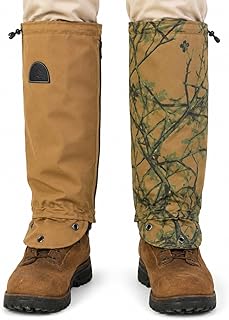
Snake gaiters

For later, when you start leaving the trail for tall grass and brush where you cannot see your feet. They protect the lower leg from a snake you did not see.

budget
GearOZ Snake Gaiters Chaps, Durable Lower Legs Anti-Snake Bite Guards

GearOZ Snake Gaiters Chaps, Durable Lower Legs Anti-Snake Bite Guards

4.6(1,192)

$35.99

View on Amazon
mid-range
Pike Trail Snake Leg Gaiters: Protection for Hikers and Hunters - Waterproof, Bite Protective, Durable, Anti-Snake, Leg Gear

Pike Trail Snake Leg Gaiters: Protection for Hikers and Hunters - Waterproof, Bite Protective, Durable, Anti-Snake, Leg Gear

4.6(493)

$59.99

View on Amazon
premium
TurtleSkin SnakeArmor Gaiters, Camo/Khaki, Regular (SAG0-1A00-5R00)

TurtleSkin SnakeArmor Gaiters, Camo/Khaki, Regular (SAG0-1A00-5R00)

4.4(133)

$204.49

View on Amazon

They are not a reason to get closer to a snake. Sturdy boots and watching where you step still come first.