Throw stones, hammers and a tree trunk, in a kilt, with new friends.
You can throw at your first practice in gym clothes with borrowed implements, because nobody owns a caber when they start. Highland games heavy athletics is a set of Scottish throwing events contested at Scottish festivals across North America and Scotland: putting a stone, throwing weights for distance and for height, swinging a long-handled hammer, pitching a sheaf over a bar with a fork, and turning the caber. You compete in all of them on the same day, in a kilt, against people of your own class. The field is unusually welcoming. Rivals coach each other between throws, festival crowds cheer every attempt, and a beginner gets measured marks to beat from the first day.
Difficulty
moderate learning curve
Startup cost
$90-$400
First result
Measured throws at your first practice, and a first competition in 1-2 months
Height 01
Events
Games-bag total$0.00
01
The events you will throw
Stone, weight, hammer, sheaf and caber
Open stone
A shot-put style throw with a smooth stone of roughly 16 to 22 lb for men and 8 to 12 lb for women. Any approach is allowed, so a glide or spin from track and field carries over.
Braemar stone
A heavier stone (about 20 to 26 lb for men, 13 to 18 lb for women) put from a standing position with no approach. It rewards leg drive over footwork.
Weight for distance
A block weight on a short chain and handle, thrown one-handed after one or two spins. Men throw 28 lb and 56 lb, women 14 lb and 28 lb.
Scottish hammer
A round metal head on a straight shaft about 50 inches long. You stand with your back to the field, feet planted, wind the hammer around your head and release over your shoulder. Men throw 16 lb and 22 lb, women 12 lb and 16 lb.
Weight over bar
One hand swings a weight (56 lb for men, 28 lb for women) between the legs and up over a crossbar. The bar rises until one thrower is left.
Sheaf toss
A burlap bag stuffed with twine or straw (16 or 20 lb for men, 10 or 12 lb for women) is pitched over a crossbar with a pitchfork.
Caber
A tapered log, often 16 to 20 feet and 70 to 130 lb in the open classes and smaller for novices. You lift it upright, run, and flip it end over end. It is judged on accuracy, not distance: a perfect turn lands pointing straight away from you at 12 o'clock.
How a day is scored
You get three attempts per event (and three misses per height in the bar events). Your placing in each event earns points, and the points across all events decide the day.
For people in their first season or first few games. Implements are sometimes lighter and the caber is smaller. Start here if the games offers it.
Amateur classes (often A, B and C)
The main open divisions, sorted by ability. Most first-year throwers who outgrow novice move into the lowest one.
Women's classes
Every event is contested with lighter implements. Larger games split women into open, lightweight and masters classes too.
Lightweight
For men under a body-weight limit, commonly 200 lb, and women under a lower one. Check the limit on the entry form.
Masters
For athletes 40 and over, usually in ten-year age bands with lighter weights in the older ones. Plenty of people start the sport in this class.
Professional
Invitation only, with prize money. Not something to plan around in your first years.
04
Staying safe on the field
▲Never throw alone. Every implement is heavy enough to kill, and a second person is the one who sees the child or dog walking into the field.
▲Before each throw, check the whole landing area and behind you, then call out. Hammers and spinning weights can release in any direction, including backward.
▲Stay out of the field and face the thrower whenever someone is in the box. Retrieve implements only after the throw has landed.
▲If the caber starts falling sideways or back toward you, let go and step away from it. Never try to save a lost caber.
▲On weight over bar, step out from under the weight as soon as it leaves your hand. It comes straight back down.
▲Inspect borrowed and homemade implements: hammer heads, weight chains and handles fail at the joints. Do not throw anything with a cracked shaft or a worn link.
▲Warm up your shoulders, hips and lower back for at least ten minutes. The throws are explosive rotations, and cold backs and biceps are where beginners get hurt.
05
What trips beginners up
×Expect to be sore in places lifting never reached. Nine events in one day means around thirty maximal throws plus warm-ups.
×The caber will not turn at first, and that is normal. A straight pick and a controlled run come before any flip, and many novices take a season to turn a full-size stick.
×Trying to muscle every throw. Distance comes from the legs and hips with a long, relaxed arm. Strong beginners who arm-throw get out-thrown by smaller athletes with timing.
×Fouling. Stepping on or over the trig (the toe board at the front of the box) wipes out the throw, so practice staying behind a line from day one.
×Buying or building implements too early. Throw with a group for a few months first, learn which weights your class uses, then spend.
×Skipping the heights. Weight over bar and sheaf are worth the same points as the distance events and improve fastest with a little practice.
Chalk coming off a hand
06
Training and time
A workable beginner week is one throwing practice of about two hours and two gym sessions. In the gym, favor explosive, full-body lifts over bodybuilding: squats, deadlifts, cleans, overhead presses and kettlebell swings all carry over directly, and so does any background in shot put, discus or hammer. Competition days are different. A games runs from morning check-in to late afternoon, most athletes drive a few hours to get there, and a typical season is four to eight games between spring and fall. The entry fee often covers a shirt and festival admission too.
A deadlift off the gym floor
07
Where to learn more
The practice group is the real classroom in this sport: technique is passed on in person, and experienced throwers expect to be asked. Between practices, use the results databases below to look up the marks people in your class are throwing, and watch slow-motion footage of the top athletes in one event at a time.
The games supplies every implement on competition day, and practice groups share theirs, so a beginner buys clothing and grip aids, not equipment. The kilt is the one item you cannot compete without. Everything from hose to tacky makes a long day on wet grass go better. The Home Practice add-on is for later, once you know your class weights and want throws between group sessions: a shot stands in for the stone, and a fork and a stuffed sack are a complete sheaf setup. Hammers, block weights and cabers are specialist or homemade items that throwers source through their group, so they are not in the list.
A three-tine fork, the start of a sheaf setup
09
Pack the games bag
Every line, with its options side by side
The first line is your games entry, which is not something you buy online. For the rest, compare the options on each line, then set your tiers and check out from the cart. Clicking a card selects it there, and clicking the selected card again takes that line out. The kilt has a Men's and Women's switch. The shot, fork, sacks and tape join the kit when you switch on Home Practice.
Line 01
Novice class entry at a local games
Essential · Getting on the field
The entry fee is what puts you on the field, and the games provides every implement you throw that day.
Not sold on Amazon
Not sold on Amazon. Register through the games' own website or the athletic director, and look for a novice or beginner class. Fees typically run $20 to $50. Throw with a practice group first: the caber and hammer should be learned with an experienced thrower watching.
Line 02
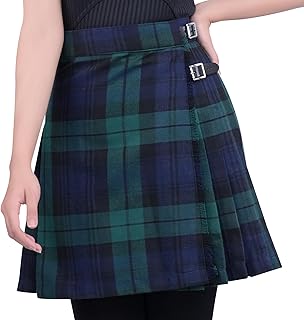
Kilt
Essential · Competition clothing
Almost every games requires a kilt to compete. An inexpensive acrylic, poly-viscose or utility kilt is what most beginners throw in.
✓ In kitbudget
Hybrid Utility Kilts for Men Scottish Traditional Kilt with Flashes
★★★★☆4.3(234)
$64.99
Hybrid Utility Kilts for Women Scottish Traditional Highland Costume Kilts
Pick Men's or Women's on the product. Kilts are sized by waist and hip measurement in inches, so measure instead of going by pants size. Any tartan or a solid color is fine; you do not need a family tartan. Wear athletic shorts you already own underneath, and pick a kilt you do not mind getting muddy.
Line 03
Kilt hose (knee-high socks)
Recommended · Competition clothing
Knee-high socks complete the required dress at many games and protect your shins from the caber and the weight handles.
Soccer, football or rugby cleats with molded studs all work. If you already own a pair from another sport, use those.
Line 05
Athletic tape
Recommended · Grip and hand care
Weight handles and hammer shafts tear up fingers and thumbs over a nine-event day. Tape covers hot spots before they open.
✓ In kitbudget
Cramer Team Color Athletic Tape, 1.5" x 10 Yards White, Easy Tear Sports Tape for Ankle, Wrist & Knee, Latex-Free Adhesive, Strong Support, Athletic Training Tape Roll
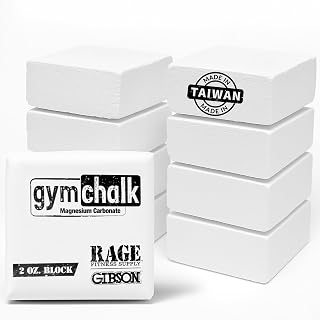
Cramer Gym Chalk Block, 2-Pack of 2 oz, Magnesium Carbonate for Powerlifting, Rock Climbing, Gymnastics, Crossfit, Weightlifting & Bouldering, Use in Chalk Balls & Bags, Superior Grip
Grip-iT Hand Grip Spray 4 oz - Better Pole Grip for Pole Dancing - Firm Grip for Aerial Silks & Yoga Swing - Supercharge Your Tennis Overgrips - Pickleball Paddles Grip Replacement - Rosin Based
Match the weight to your class: around 16 lb for most men's classes and 8 to 12 lb for women's. Many listings come in several weights, so check the one you select.
Line 09
Three-tine pitchfork
Situational · Home practice · Home Practice add-on
The sheaf is the one event you can fully set up at home, and it starts with a hay fork.
✓ In kitbudget
Truper 30308 Tru Pro 54-Inch Manure Fork 3-Tine, Ash Handle