Skip to content

Starter guide · tag, hold, get home

Kabaddi

One breath, one raid: tag an opponent and get home before they pin you.

All you need for your first game of kabaddi is a group of friends, a soft patch of grass and the athletic clothes you already own. It is a contact team sport from South Asia that mixes tag with wrestling. Two teams of seven take turns sending one raider across the midline. The raider chants "kabaddi" without stopping, tries to touch as many defenders as possible, and has to get back over the line before they hold them down. Each defender touched is a point for the raider's team; stopping the raider is a point for the defense. There is no ball, net or goal, games are short and loud, and a single raid can turn a match. Clubs play indoors on foam mats, and that is where knee sleeves and a grippy pair of mat shoes start to matter.

Difficulty
Moderate learning curve
Startup cost
$10-$150
First result
Your first touch point on a raid within a session or two, a solid ankle hold within a few weeks
01

What a session looks like

A practice usually starts with 15 minutes of mobility for hips, knees and ankles, because every raid is lunging, twisting and landing. Then the group drills one skill: raiders practice toe touches and escapes against one or two defenders, while defenders practice holds in pairs. The second half is a scrimmage. Raids last 30 seconds at most, so play comes in short, all-out bursts with rest in between while the other team raids. Expect to be out of breath, a little bruised and grinning by the end.

A kabaddi raider in an orange and blue jersey steps toward a crouched line of defenders on a red dirt court, with a packed crowd behind.
A raid at an outdoor tournament
02

The rules you need on day one

  1. Seven players a side are on court, and teams take turns sending one raider across the midline.
  2. The raider must chant "kabaddi" out loud, without a pause, for the whole raid. Stopping to breathe on the other side ends the raid and gives the defense a point.
  3. A raider who touches defenders and gets back across the midline scores one point per defender touched, and those defenders are out.
  4. Defenders score a point by stopping the raider from getting home. They may hold the raider's limbs or torso, but never the hair, clothing or neck.
  5. Players who are out come back in one by one as their team scores. Knocking out the whole other team earns a bonus called a lona.
  6. A raider who crosses the bonus line near the back of the court while six or more defenders are on court earns an extra point.
03

Which kind of kabaddi to start with

Open a card for the first thing to do. Indoor Mat adds mat shoes to your kit; Park Court adds flat markers, and circle style uses the same markers. Beach kabaddi needs nothing beyond the base kit.

Indoor MatStandard style kabaddi on a foam mat at a club or college, the version you see in pro leagues. Grippy mat shoes make cuts and escapes much easier.

Start here

Look for a club or a college team that trains on mats. Ask to join one practice in your own athletic clothes, then buy mat shoes once you know you will be back.

Park CourtStandard rules on a marked rectangle of grass, the easiest way to run your own regular game. Markers give the lines everyone argues about a fixed place.

Start here

Set up a standard-size court in a park with flat markers at the corners, midline and baulk lines, and run a weekly pickup game with the same group.

Circle styleThe open-field version popular in Punjab and its diaspora, played barefoot on grass or soft dirt in a large circle. Raiders face one defender at a time, so it plays more like a chase and a wrestle. It is often run as a tournament at community festivals, and its field marking uses the same Park Court markers.

Start here

Find a circle style tournament or community team near you. Watch one match, then play a few raids barefoot on grass, where you can chase and get chased in a big open circle.

Variations of kabaddi on Wikipedia
Beach kabaddiBarefoot on sand with fewer players a side, a laid-back version that needs nothing beyond the base kit.

Start here

Take a pickup game to the beach. Play barefoot with smaller teams on a smaller court, and enjoy that the sand forgives a bad tackle.

04

Skills to work on first

The chant

Practice saying "kabaddi" in one steady, quiet stream for 30 seconds while you move. Raiders who shout run out of breath halfway in.

The toe touch

Stretch one leg out to tag a defender's foot while your weight stays on the back leg, so you can spring home in one step.

The escape

Turn your hips toward the midline the moment you touch someone, and dive or reach across it with a hand or foot if you are caught.

The ankle hold

As a defender, drop low and wrap both hands around the raider's ankle when they reach for a toe touch. It is the first hold most beginners learn.

Chain defense

Two defenders hold hands and move as one, closing on a raider from both sides. Learning to move with a partner matters more than strength.

Black and white photo of a kabaddi defender diving low for a raider's ankle while teammates close in.
A defender diving for the ankle
05

Staying safe in a contact sport

  • Trim your fingernails short before every session. Rules require it, and long nails are the most common cause of scratches.
  • Take off rings, watches, chains and earrings. Anything a hand can catch will get caught.
  • Play on a mat, soft grass, or sand only. Never on concrete, gym hardwood, or hard dirt, because raiders hit the ground often.
  • Warm up knees and ankles properly. Most kabaddi injuries are twisted knees and rolled ankles from sudden changes of direction.
  • Only use the legal holds you have been taught, and let go the moment a raider is down or the whistle goes.
  • Learn to fall: land on your side or roll rather than catching yourself on a straight arm.
Black and white photo of a raider in a dark jersey edging along a line of defenders, one arm out for a touch.
06

What trips beginners up

Most first raids end on the wrong side of the line

  • Running out of breath mid-raid. The chant is harder than it looks, and most first raids end with a gasp on the wrong side of the line.
  • Going too deep. New raiders chase a second touch, get surrounded, and give away a point. One touch and a quick return wins games.
  • Diving at the raider alone. A lone defender who tackles high gets dragged over the line; wait for a partner and go for the ankle.
  • Expecting it to be a strength contest. Footwork, timing and patience beat size, which is why smaller players often make the best raiders.
  • Playing seven a side on day one. Start with four or five a side on a smaller court until everyone knows the rules.
07

How to get started

Tick each one off as you go

Black and white photo of kabaddi defenders fanned out low as a raider reaches in, spectators lining the court.
08

Where to learn

Watch raids first, then find a team

There are no big chains of kabaddi clubs in the US yet, so most players learn from a college team, a community team at a gurdwara or cultural center, or a group of friends. The fastest way to learn the game's rhythm is to watch professional raids: the Pro Kabaddi League posts highlights and short rules videos on its site. Searching your city name plus "kabaddi club" usually finds the nearest team, and most are happy to let a new player join a practice.

09

Why the kit looks like this

Kabaddi needs no ball, goals or net, so the kit is mostly about protecting knees and ankles. Knee sleeves are the one thing every player wears, and they take the sting out of landing and sliding. Ankle sleeves are cheap and help every style. For clothing, a fitted athletic shirt and shorts you already own are all you need, since loose clothing just gets caught. Mat shoes are only worth buying once you train indoors on a mat, and court markers only matter if you run your own outdoor game. Circle and beach players go barefoot, so their kit is even smaller.

10

Kit up for the court

Knee and ankle sleeves start in the kit at the budget tier, and the agility ladder starts out; click another card to switch. Mat shoes and court markers wait behind the Indoor Mat and Park Court add-ons until you switch one on or click one of their cards. Clicking the selected card again takes its line back out.

Compression knee sleeves (pair)

Essential · Protective gear

Raiders land on their knees and defenders drop to one knee for holds, so almost every player wears knee sleeves. They cut scrapes and give a twisting knee a little support.

budget
CAMBIVO Knee Compression Sleeves for Women and Men, Non-Slip Silicone, Breathable Support for Running, Workout and Arthritis - 2 Pack, Medium, Black

CAMBIVO Knee Compression Sleeves for Women and Men, Non-Slip Silicone, Breathable Support for Running, Workout and Arthritis - 2 Pack, Medium, Black

4.4(46.4K)

$9.99

View on Amazon
mid-range
Uflex Athletics Compression Knee Brace Sleeve Support Men & Women Single | Knee Compression Sleeve Support for Arthritis Joint Pain Relief, Workout, Sports, Circulation, Running, Everyday Knee Support

Uflex Athletics Compression Knee Brace Sleeve Support Men & Women Single | Knee Compression Sleeve Support for Arthritis Joint Pain Relief, Workout, Sports, Circulation, Running, Everyday Knee Support

4.4(30.1K)

$18.99

View on Amazon
premium
Bauerfeind Sports Compression Knee Sleeve - Lightweight Design with Gripping Zones for Knee Pain Relief & Performance

Bauerfeind Sports Compression Knee Sleeve - Lightweight Design with Gripping Zones for Knee Pain Relief & Performance

4.2(1.1K)

$44.99

View on Amazon

Measure around the knee and order the size that fits snugly without pinching. Thin, flexible sleeves suit raiding better than thick braces. Some listings are a single sleeve, so check the count and buy two to cover both knees.

Ankle compression sleeves (pair)

Recommended · Protective gear

Raiders plant and turn hard, and defenders grab ankles all game. A light sleeve supports the joint and protects the skin from friction burns.

budget
Ankle Brace for Women & Men, Ankle Compression Sleeve Support Copper Infused Ankle Brace for Sprained Ankle, Plantar Fasciitis Sports, Achilles Tendonitis Pain Relief, Copper Black, M, 2 Pack

Ankle Brace for Women & Men, Ankle Compression Sleeve Support Copper Infused Ankle Brace for Sprained Ankle, Plantar Fasciitis Sports, Achilles Tendonitis Pain Relief, Copper Black, M, 2 Pack

4.4(8.6K)

$9.99

View on Amazon
mid-range
Crucial Compression Ankle Support Sleeves for Women & Men (Pair)

Crucial Compression Ankle Support Sleeves for Women & Men (Pair)

4.3(21.8K)

$14.95

View on Amazon
premium
Sleeve Stars Ankle Brace Men & Women Support (Pair/S:9"-10"/Black)

Sleeve Stars Ankle Brace Men & Women Support (Pair/S:9"-10"/Black)

4.3(48.1K)

$33.95

View on Amazon

They work barefoot as well as in shoes, so circle and beach players get the same use from them.

Wrestling shoes for mat play

Situational · Footwear · Indoor Mat

On a foam mat, light, thin-soled shoes with a rubber grip let you cut and push off without slipping. Running shoes are too bulky and can damage the mat.

budget
FISTRAGE Wrestling Shoes Fighting Sports Master Training Mesh and Rubber Sole Unisex Pro Men's and Youth Genuine Boot Light Weight | Combat Footwear for Adults

FISTRAGE Wrestling Shoes Fighting Sports Master Training Mesh and Rubber Sole Unisex Pro Men's and Youth Genuine Boot Light Weight | Combat Footwear for Adults

4.3(558)

$45.99

View on Amazon
mid-range
Mens Wrestling Shoes Boxing Shoe Wide

Mens Wrestling Shoes Boxing Shoe Wide

4.4(1.4K)

$49.99

View on Amazon
premium
Men's Combat Speed 4 Wrestling Shoes

Men's Combat Speed 4 Wrestling Shoes

4.6(226)

$69.95

View on Amazon

Only needed for indoor mat play; outdoor players go barefoot. Wrestling shoes fit like kabaddi shoes and are much easier to find in the US. Pick Men's or Women's sizing where a tier offers both, choose snug rather than tight, and keep them for the mat only.

Flat field markers for court lines

Situational · Court setup · Park Court

Flat markers lie safely underfoot at the corners, midline and baulk lines, so a park game has a court everyone agrees on and nobody trips over a tall cone.

budget
Champro Flat Disc Markers - 10 Pack ORANGE

Champro Flat Disc Markers - 10 Pack ORANGE

4.8(93)

$15.99

View on Amazon
mid-range
Spot Markers for Sports 9 Inch, 12 Pack, Non Slip Rubber Agility Poly Spots Marker Field Flat Cone for Kids Soccer Basketball Speed Training Outdoor Classroom

Spot Markers for Sports 9 Inch, 12 Pack, Non Slip Rubber Agility Poly Spots Marker Field Flat Cone for Kids Soccer Basketball Speed Training Outdoor Classroom

4.7(68)

$18.79

View on Amazon
premium
Crown Sporting Goods 6" Non-Skid Floor Spot Markers: Set of 50 Agility Training Flat Field Cones in Fluorescent Yellow & Orange with Metal Carrying Stand

Crown Sporting Goods 6" Non-Skid Floor Spot Markers: Set of 50 Agility Training Flat Field Cones in Fluorescent Yellow & Orange with Metal Carrying Stand

4.6(150)

$34.99

View on Amazon

A set of 10 to 20 flat markers covers a full rectangle or a circle style field. Only needed if you set up your own outdoor court.

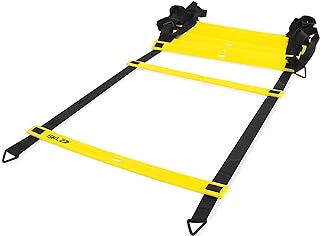
Agility ladder

Optional · Training

For later, once you raid regularly: quick, precise footwork is what lets a raider touch and get home, and a ladder lets you drill it alone between team sessions.

budget
GHB Pro Agility Ladder 12 Rung 20ft

GHB Pro Agility Ladder 12 Rung 20ft

4.5(8.5K)

$8.99

View on Amazon
mid-range
Agility Ladder Speed Ladder Training Ladder for Soccer, Speed, Football Fitness Feet Training Carry Bag Agility Training Equipment 13 rungs, 23 feet

Agility Ladder Speed Ladder Training Ladder for Soccer, Speed, Football Fitness Feet Training Carry Bag Agility Training Equipment 13 rungs, 23 feet

4.6(4K)

$13.99

View on Amazon
premium
SKLZ Speed and Agility Ladder - Training Equipment for Athletes - Improve Coordination, Footwork, and Quickness - Ideal for Soccer, Football, and Fitness Workouts

SKLZ Speed and Agility Ladder - Training Equipment for Athletes - Improve Coordination, Footwork, and Quickness - Ideal for Soccer, Football, and Fitness Workouts

4.8(2K)

$29.99

View on Amazon

Use it on grass or a gym floor for 10 minutes a few times a week.