Turn whole tree trunks into a cabin, one notched round at a time.
Log cabin building is making a small building out of whole tree trunks. You fell or buy the logs, peel off the bark, notch or pin them at the corners, stack them round by round into walls, then roof the box and seal the gaps. People take it up because the wood can come from their own land, the tool list is short, and what they end up with is a real building. It is slow, heavy outdoor work with a chainsaw at the center of it, so the first purchases are training and protective gear, and the first project is a practice corner, not a house.
Difficulty
steep learning curve
Startup cost
$4,200-$18,000
First result
A tight practice corner in your first weekend of notching, and a small cabin shell in one to two building seasons
Round 01
The work
Yard total$0.00
01
What building with logs involves
A log wall goes up one round at a time: four logs fitted to the four below, then the next four. Most of the hours are spent on the ground. You roll a log onto blocks with a cant hook, pin it in place with log dogs, peel it, mark where it meets its neighbors, rough out the joint with the chainsaw and finish it with an axe and chisel, then test the fit and cut again. Raising the log onto the wall is the short, tense part of the day. Door and window openings are sawn out after the walls are up, the roof goes on before winter, and the gaps are sealed last. A session is a full day outdoors with at least one other person, because nobody should run a saw or move a log alone.
A notched corner, round over round
02
Permits, codes and the right to cut
Settle this before you cut or buy a log
§Zoning comes first. The county or town decides whether a cabin is allowed on your parcel at all, how small it can be, and how far it must sit from property lines, wells and septic fields. Call the planning office before you buy a log.
§A cabin that people sleep in is a dwelling, and where building codes are enforced a dwelling needs a building permit, plans and inspections at set stages. Unpermitted cabins get stop-work orders, fines and removal orders.
§The model residential code exempts one-story detached accessory structures of up to 200 square feet (a tool shed, for example) from a building permit. Many places set a lower limit, the exemption is for accessory buildings and not for somewhere to live, and an exempt building still has to meet the code.
§Log walls have their own standard, ICC 400, which covers structure, settling and insulation value. Ask your building office which edition it uses and whether it wants graded logs or an engineer's stamp on the plans.
§A septic system, a well, a driveway entrance and electrical service each carry a separate permit in most counties.
§You may only cut trees you own or have the owner's written permission to cut. Taking logs from someone else's land or from public land without a permit is timber theft.
§National forest permits for the public mostly cover firewood. Cutting house logs there needs approval from the local district ranger, so do not assume it is available. Some states also require a notice or permit before you harvest timber on your own land. Ask the state forestry agency.
Scribed saddle notchEach log is traced to the one below it and notched at the corners, so the walls lock together with no gaps to fill. It is the tightest and slowest method.+
Start here
Set one short log across another, open a scriber or compass to the widest gap between them, and trace the lower log onto both sides of the upper one. Cut out the notch, roll the log back, and repeat until it sits without rocking.
Butt and passNo notches. At each corner one log stops against the next, which runs past it, and steel pins hold every course to the one below. It is the quickest method to learn.+
Start here
Lay two short logs across a pair of sill logs, drill down through an upper log, and drive a rebar pin through it into the log below. Take the pin size and spacing from your plans before you drill a real wall, and add the Chinked Walls gear too, because this method leaves gaps.
Chinked round notchCorners get a quick saddle notch, the logs are left with gaps between courses, and the gaps are sealed with chinking. This is the frontier cabin most people picture.+
Start here
Push backer rod into a gap on a practice corner, trowel a band of chinking over it so it bonds to the log above and the log below, and smooth it. Look at it again after a week of weather before you seal a whole wall.
Open a card to see its first step. Each one also puts that method's tools in the kit, and you can switch them back out from there.
04
Finding and preparing logs
Species
The Forest Service manual ranks cedar, pine, fir and larch, in that order. Straight trunks with little taper matter more than the species, so use what grows near you.
Size
Look for logs 10 to 12 inches across at the small end. Ten rounds of 10-inch logs make an 8-foot wall, so a one-room cabin takes about 40 wall logs plus the gable and roof logs.
Sources
Your own woodlot, a local logger or sawmill that sells house logs, or a log yard that delivers by truck. Bought logs often arrive already peeled.
When to cut
Late fall or winter. Winter-cut logs crack less as they dry and meet fewer insects. Spring logs peel more easily but check badly.
Peeling
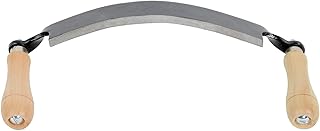
Take off all the bark, because bark holds moisture and insects against the wood. Pry it off in sheets with a bark spud, then clean up with a drawknife.
Seasoning
Stack peeled logs in a single layer on skids well off the ground, 2 to 3 inches apart, for at least six months before building. Lay bowed logs curve up so their own weight straightens them.
Fresh logs, bark still on
05
Choosing and keeping a chainsaw
The one tool every log passes under
Size
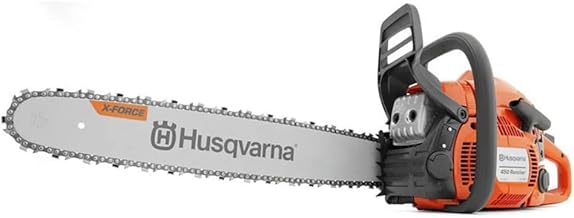
A 50 to 60 cc gas saw with a 20-inch bar cuts 10 to 14 inch logs in one pass. A bigger saw is heavier and tires you sooner. It is not safer.
What to check
A working chain brake, a chain catcher, a throttle lockout and anti-vibration mounts. Buy a brand that a shop near you services.
Before every session
Check chain tension (the chain should pull around the bar freely by gloved hand and snap back when lifted), fill the bar oil each time you add fuel, and test the chain brake.
Sharpening
Touch up the chain with a file every tank or two of fuel. The file diameter must match the chain and is listed in the saw manual. A dull chain throws dust instead of chips and makes you push, which is when saws slip and kick back.
Fuel
Two-stroke saws burn gasoline mixed with oil at the ratio in the manual, commonly 50 to 1. Premixed ethanol-free fuel keeps without gumming the carburetor when the saw sits between weekends.
06
How to get started
Laid in order: tick each round off as it is done
What you can build in your first month
A peeled log
One 8-foot log taken down to clean wood with the spud and drawknife, which shows you how your species peels.
A practice corner
Two short logs joined at a right angle, cut again and again until the joint closes.
A half-log bench
A log sawn in half lengthwise and set flat side up on two notched log feet.
One full round
Four short logs joined into a square about 4 feet across, the first course of a cabin in miniature.
07
What it really costs, and what goes wrong
Money
The tools are the small part. A cabin shell also needs a foundation, roofing, a floor, a door, windows, and logs if you do not own trees. For scale, pre-cut log kits run about $50 to $80 per square foot for the basic components alone, and contractor-built custom log homes $250 to $500 per square foot (HomeAdvisor, 2026).
Time
Logs season for six months before the first round goes down, and published estimates for a cabin built from scratch run from about 280 days to two years. Plan on more than one building season.
Settling
Green log walls shrink as they dry, by as much as 3/4 inch per foot of height. Leave a gap above every door and window (the Forest Service manual allows 2 1/2 to 4 inches over a door) or the wall will crush the frames.
Mistakes that spoil a build
×Building before the permit is in hand. An inspector can order finished work taken down.
×Setting logs on or near the ground. Sill logs that stay damp rot, so keep the first round up on a foundation and give the roof wide overhangs.
×Rushing the first rounds. A sill round that is out of level or out of square throws off every round above it.
×Starting with a full-size house. A shed or one-room cabin teaches every joint with a quarter of the logs.
Logs meeting a window frame
08
Safety
Training first, then the full kit, every time
▲Get trained before you fell a tree. Felling is the most dangerous job in this hobby, and it is learned beside an instructor, not from a page. One-day hands-on courses were listed at about $150 to $250 in 2025 and 2026.
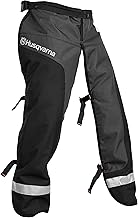
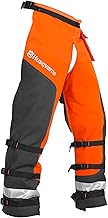
▲Wear the full kit whenever the saw runs: chaps that cover each leg from the thigh to the boot top, a helmet with a face screen and ear muffs, safety glasses under the screen, sturdy boots and gloves. Buy chaps labeled to ASTM F1897.
▲Kickback happens when the upper tip of the bar touches wood. Keep both hands on the saw with your thumbs wrapped around the handles, never cut with the tip, never cut above shoulder height, and check that the chain brake works.
▲Before each tree, look up for dead limbs, read the lean, and clear an escape path diagonally back and away from the line of fall. Cut a notch on the fall side, then a back cut slightly above it, and leave a hinge of uncut wood to steer the tree. Never saw through the hinge.
▲Keep everyone else at least two tree lengths away from a tree being felled, and never fell alone: stay within sight or shout of another person.
▲A tree hung up in another tree is a job for a professional with a winch or a machine. Do not cut the tree holding it, and do not walk under it.
▲Logs are heavier than they look. A green white pine log 16 feet long and 12 inches through weighs about 450 pounds, and denser species run a third more. Roll logs with a cant hook, carry them with tongs and a partner, and never try to catch one that starts to move.
▲Raise logs up a pair of ramp poles with a cable puller, or with a tractor or crane, and keep everyone out from under and downhill of the log. Block every log on the wall so it cannot roll before it is fitted.
▲Give an axe a clear circle, stand with your feet apart, and limb from the far side of the log so the trunk is between you and the blade. A drawknife is pulled toward you: clamp the log at waist height, pull with your elbows beside your body, and keep the edge covered when it is not in use.
▲Walls pass head height by about the seventh round. Work from rented scaffolding with guardrails, not from the top of a round log, never run a chainsaw from a ladder, and tie off with a harness and roof anchor on the roof.
▲Keep a trauma kit with a tourniquet within reach of the saw, learn how to use it, and tell someone where you are working.
The best free text is Building with Logs, a 1945 U.S. Forest Service manual that covers choosing logs, the common notches, chinking and roof framing with clear drawings. Northern Woodlands magazine has a free step-by-step article on scribing a saddle notch. Hands-on teaching is scarce and worth traveling for. A few schools run week-long courses: the Pat Wolfe Log Building School in Ontario teaches the scribed, chinkless style, and the International Log Builders' Association keeps a directory of schools and builders. Schools rarely post dates and tuition, so ask. For the chainsaw, the Game of Logging network runs one-day courses in about 30 states.
The first two lines are not Amazon purchases: training, and the building itself (logs, foundation, roof, floor, door and windows), which is where most of the money goes and which you buy locally. The essential tools cover one working day at the log pile: protective gear, a saw with its oil and files, a first aid kit, and the hand tools that hold, peel, turn and notch a log. The recommended lines make that day easier and safer. Each wall method adds a few tools of its own, so pick your method above and its gear joins the kit. The felling wedges sit behind their own add-on, Felling Your Own Trees, because many builders buy logs delivered. Renting covers the rest: scaffolding, and a tractor or crane on the days logs go up.
11
Kit out the log yard
The first two lines are not things you buy online: the training, and the logs and materials for the building itself. The essential and recommended tools start in the kit. The tools for one wall method join once you pick Scribed Notch, Butt And Pass or Chinked Walls, above or from the add-ons in the kit, and Felling Your Own Trees adds the wedges. Compare the options, then set your picks and check out from the kit. Clicking a card selects it there.
Chainsaw safety course and a log building workshop
essential · Training
Felling trees and running a saw through a notch are learned beside an instructor. A workshop also lets you fit real logs before you pay for a load of them.
Not sold on Amazon
Not sold on Amazon. For the chainsaw, look for a one-day hands-on course that includes felling, such as Level 1 of the Game of Logging program or a state extension course. Recent listings ran about $150 to $250. For log building, ask the International Log Builders' Association or a log building school about week-long courses, and ask for current tuition, which schools rarely post.
Logs, foundation and roof materials
essential · Building materials
The building itself: 40 or more logs for a one-room cabin, the foundation they sit on, roof framing and roofing, a floor, a door and windows.
Not sold on Amazon
Not sold on Amazon. Buy house logs from a local logger, sawmill or log yard, or cut your own with the landowner's permission. Concrete, roofing, lumber, pins and spikes come from a lumberyard to the sizes on your plans. Allow roughly $3,000 to $15,000 for a small one-room shell. That figure is a rough allowance that swings widely with size, log source and roof, so get local quotes before you commit.
Chainsaw chaps
essential · Safety gear
Most chainsaw cuts land on the legs. Chaps are filled with fibers that pull out and jam the chain in a fraction of a second.
✓ In kitbudget
FORESTER Chainsaw Chaps for Men & Women | Apron-Style Chaps with Pocket & Adjustable Waist | Chainsaw Safety Equipment
NoCry 6-in-1 Industrial Chainsaw Helmet with Face Shield and Ear Muffs — Mesh & Clear Plastic Visors Included — ANSI Z89.1 Certified — Adjustable Headgear — Ideal for Forestry and Arborist Work
Husqvarna 592752601 Chainsaw Helmet with Metal Mesh Face Shield, Adjustable Ear Muffs for Hearing Protection, and Sun Peak, HDPE Forestry Helmet Shell, Orange
The mesh screen stops chips but not fine dust, so wear safety glasses under it.
Safety glasses
essential · Safety gear
Sawdust gets past a mesh screen, and peeling, chiseling and driving pins all throw chips.
✓ In kitbudget
NoCry Clear Safety Glasses for Men and Women with Anti-Fog and Scratch Resistant Wrap Around Lenses, Adjustable Temples and Nose Pads — ANSI Z87 Certified Protective Eyewear with 100% UV Shielding
Pick Men's or Women's on the card. Check the toe type on the listing before you order. Purpose-built chainsaw boots add a cut-resistant layer and are worth it if you fell often.
Leather work gloves
essential · Safety gear
Peeled logs are slippery and bark is abrasive. Gloves keep your grip on the saw and your skin on your hands.
Emergency Trauma Kit, CAT GEN-7 Tourniquet 36" Splint, Military Combat Tactical IFAK for First Aid Response, Critical Wounds, Severe Bleeding Control (Black Camo)
The long-handled carrier is for two people, one on each side. The hand tongs lift one end of a log or drag a short one.
Come-along cable puller
recommended · Moving logs
A hand-cranked puller drags a log the last few feet, snugs a round together, or holds a log on the ramp poles while you reset.
✓ In kitbudget
BIG RED 2 Ton Come Along Winch, 9ft, Steel Cable,2 Hooks, Heavy Duty Power Puller Tool with Dual Gears,Hand Winch Cable, Automotive Hoist Winch Puller, 4000 lbs Pulling Capacity
NEIKO 02256A Come Along Winch, 5-Ton (10,000 Lbs) Pulling Capacity, 10Ft, 3 Hook, Heavy Duty Power Cable Come Along Tool with Dual Gears, Hand Winch Cable, Automotive Hoist Winch Puller, Recovery Gear
Read the anchor instructions and fix it to solid roof framing, not to sheathing alone.
Log building book
recommended · Learning
A printed manual at the log pile answers the question you have with a saw in your hand: notch layout, roof framing, settling details.
✓ In kitbudget
Building With Logs (Legacy Edition): A Classic Manual On Building Log Cabins, Shelters, Shacks, Lookouts, and Cabin Furniture For Forest Life (Library of American Outdoors Classics)
The budget pick is a reprint of the free Forest Service manual. The others go deeper into scribing and full-size houses.
Log scriber
situational · Wall method · Scribed Notch add-on
It traces the shape of the lower log onto the upper one, the mark you cut to in scribed work.
✓ In kitbudget
ALLY Tools 12 Inch Precision Locking Wing Divider/Woodworking Compass with Pencil Holder INCLUDES Two Pencils and Pencil Sharpener Ideal for Drawing, Drafting, Carpentry
A locking 12-inch compass is enough for a practice corner and a rough cabin. A purpose-made scriber carries level bubbles that keep the trace true over a whole wall.
Sledgehammer
situational · Wall method · Butt And Pass add-on
Driving a steel pin through one log and into the next takes a heavy hammer swung with both hands.
✓ In kitbudget
Estwing 8-Pound Hard Face Sledge Hammer - 36-Inch Hickory Handle, Ergonomic Grip, Durable Construction for Demolition & Stake Driving
A cartridge covers a practice corner and needs a quart-size caulk gun. A cabin takes pails, so the premium pick is the same chinking in a 5-gallon size, spread with the trowel. Work out your gap length before ordering.
Quart-size caulk gun
situational · Wall method · Chinked Walls add-on
Chinking cartridges are about three times the size of a household caulk tube and do not fit a standard gun.
✓ In kitbudget
Newborn 915-GTR Super Ratchet Rod Cradle Caulking Gun with Gator Trigger Comfort Grip, 1/4 Gallon Cartridge, 6:1 Thrust Ratio