Skip to content

Starter guide

Mason Bee Keeping

Raise gentle native bees that pollinate your garden and ask for almost nothing.

Mason bees are solitary native bees: no hive, no queen, no honey and almost no sting. You hang a small wooden house full of nesting tubes on a sunny wall, set out a handful of cocoons in early spring, and watch each female pack the tubes with pollen and seal them with mud. They fly for about six weeks and pollinate fruit trees and berries far more thoroughly than honey bees do. In fall you open the tubes, clean the new cocoons and keep them in the refrigerator until next spring. Leafcutter bees, their summer cousins, use the same house once the mason bees finish.

Difficulty
beginner-friendly
Startup cost
$75-$220
First result
Your first mud-capped nesting tubes two to three weeks after the cocoons go out
BackEntrance
Filled back to frontEach female fills a tube from the back, one walled-off cell at a time.
House and supplies$0.00
A small dark wooden bee house on a post beside a plastered wall, one shelf filled with perforated clay blocks and the other with a tight bundle of hollow reed tubes
01

What keeping mason bees involves

A few busy weeks, then a long wait

A mason bee season is short and mostly hands-off. Males emerge first and hover at the house for a few days until the females come out. After mating, each female works alone: she carries pollen on her belly instead of in neat leg baskets, which is why she dusts every flower she lands on, and she fills one or two tubes with five or six eggs apiece. She ranges only about 300 feet from the nest, so the bees you raise work your own yard and your nearest neighbors'. By early summer the adults are gone and the next generation is growing inside the sealed tubes, where it stays until you open them in fall.

Tubes per female
One or two
Eggs per tube
Five or six
Range from the nest
About 300 feet
02

How to get started

Tick these off as the year goes

A fuzzy tan-brown wild bee feeding on an open white apple blossom among pink unopened buds
Blossom opening: time to set cocoons out
03

Which bees to raise

Open one to see where to start. The leafcutter card can add its tubes to the kit.

Spring mason beesThe standard start and what the base kit is for. They fly in cool weather for about six weeks, which makes them the bee for apples, cherries, pears, plums and blueberries.

Start here

Order 20 or so cocoons in winter from a supplier that raises bees in your part of the country, and pick a ship date about two weeks before your fruit trees usually bloom.

Summer Leafcutter BeesA second season in the same house. They need days near 75°F, nest in narrower 1/4 inch (6 mm) holes, and seal their cells with cut circles of leaf instead of mud. They suit vegetable gardens, melons and summer flowers.

Start here

When the mason bees stop flying in early summer, pull their filled tubes out of the house and slide in the narrower leafcutter tubes. Set the leafcutter cocoons out once daytime highs hold near 75°F.

Crown Bees leafcutter bee guide
Wild native beesLocal mason bees and other solitary bees move into spare tubes on their own. They cost nothing and are already adapted to your area, though it can take a season or two before any find the house.

Start here

Load about a third more tubes than you have cocoons and leave the extras empty. A mud cap on a tube you did not expect to fill means a wild bee has moved in.

04

Choosing a bee house and nesting tubes

You must be able to open every hole.

Paper tubes you unroll, natural reeds you split, or wood trays that come apart let you harvest cocoons and remove pests each fall. Bamboo canes and solid drilled blocks cannot be opened, so mites and disease build up year after year.

Check the hole size and depth.

Mason bees want 5/16 inch (8 mm) holes about 6 inches deep. Shorter holes produce mostly male bees, and a house with mixed decorative hole sizes wastes most of its space.

Look for a closed back and a deep roof.

Tubes need to be sealed at the back and sheltered from rain. A house only as deep as its tubes leaves them wet.

Start each spring with fresh tubes.

Paper tubes and reeds are single-use, because a used one carries mites into the next generation.

Start small.

One house with 20 to 40 holes is plenty for a first year. Crowding hundreds of holes in one spot invites parasites.

Close-up of the front of a bee house: dozens of hollow tube ends around two drilled log rounds, several holes plugged with pale mud caps
Capped ends mean a tube is full
05

How much time it takes

Plan on about an hour in late winter to clean the house and load tubes, a five-minute look each week while the bees fly, and ten minutes to bag the filled tubes in early summer. The fall harvest is the one long session: about an hour for a small house. Over winter the only job is adding a little water to the humidity container once a month. The bagged tubes stay somewhere warm and shaded all summer because the larvae need that heat to develop, so nothing goes in the refrigerator before the harvest.

Late winter
About an hour
Bee season
Five minutes a week
Early summer
Ten minutes
Fall harvest
About an hour
Winter
Water once a month
06

Stings, pests and buying bees responsibly

Stings are rare and mild.

Males have no stinger, and a female stings only if she is squeezed or trapped in clothing. There is no hive to defend, so you can stand a foot from the house. Anyone with a known bee sting allergy should still be careful when handling cocoons and tubes.

Buy bees from your own region.

The blue orchard bee has distinct eastern and western populations, and cocoons shipped across the country emerge at the wrong time and can carry disease to local bees. Ask the seller where the bees were raised.

Know the three pests.

Pollen mites look like loose yellow-orange dust in a cell. Chalkbrood shows as hard gray or black larvae. Tiny parasitic wasps drill into tubes left outside in summer. Fall harvest removes the first two, and the mesh bag stops the third.

Keep sprays away.

Do not apply insecticide to anything in bloom near the house, and ask before a neighbor or lawn service does.

Macro of a fuzzy pale-faced bee peering head first out of a round nesting hole in weathered wood
One bee, one hole, nothing to defend
07

What trips beginners up

Bees that leave.

Some females fly off to nest elsewhere. A house in morning sun, mud close by and flowers already open when the cocoons go out keep most of them home.

Releasing too early or too late.

Cocoons set out before anything blooms starve. Cocoons held in the refrigerator past late spring run out of stored fat.

No usable mud.

Sandy or bagged potting soil will not hold together. If the bees cannot find clay, they will not nest.

Skipping the fall harvest.

Leaving filled tubes in the house over winter is the usual reason a thriving first year collapses in the second.

A dry refrigerator.

Frost-free refrigerators pull moisture out of cocoons. Stored loose in a paper bag, many will not survive to spring.

Expecting honey or a crowd.

Twenty cocoons produce a few busy weeks and, in a good year, two or three times as many cocoons. That is success.

08

Where to learn more

University extension services publish the most reliable free guides, and the Oregon State one covers the whole year in a few pages. The blue orchard bee handbook from SARE goes deeper on nesting materials, parasites and orchard use. Cocoon suppliers send email reminders timed to your region, which is a simple way to keep the seasonal tasks from slipping. Local master gardener programs and native plant societies often run fall cocoon cleaning workshops where you can see the pests in person.

09

How the kit is put together

The essentials are the bees, a house and the right size tubes. The recommended lines cover the two points where beginners lose bees, summer parasites (the mesh bag) and winter drying (the humidity container), plus clay for yards without it. Only the tubes are a repeat purchase. The leafcutter tubes sit behind their own switch because they are a second season you can add any year. Bees ship live from specialist suppliers in season, so that line carries no product link.

A small dark bee with a rusty-orange abdomen in flight toward the front of a plain wooden nest box with an overhanging roof
Flying in under the roof overhang
10

Fill the bee house

Compare the options on each line, then set your tiers and check out from the cart. Clicking a card selects it there, and clicking the selected card again takes that line out. The first line, the bees themselves, is not sold on Amazon: cocoons ship live from a specialist supplier.

Mason bee cocoons

essential · The bees

A new house can sit empty for a season or two waiting for wild bees. A starter batch of cocoons puts nesting females in it the first spring.

Not sold on Amazon · order from a bee supplier

Not sold on Amazon. Order in winter from a specialist bee supplier that raises cocoons in your region (ask if it is not stated) and ships them chilled for a spring date you choose. About 20 cocoons, a mix of males and females, runs $25 to $45. The same suppliers ship leafcutter cocoons in early summer for a similar price, already warmed and close to emerging.

Mason bee house

essential · Housing

The house keeps the nesting tubes dry, shaded from afternoon heat and fixed in one place, which is what a female looks for before she commits to a nest.

budget
WHITEHORSE Premium Cedar Bee House - 6” Long Replaceable Tubes - Perfect for Mason Beekeeping - an Insect Hotel Built to Last - Support Bees While Pollinating Your Garden (Paper Tubes Included)

WHITEHORSE Premium Cedar Bee House - 6” Long Replaceable Tubes - Perfect for Mason Beekeeping - an Insect Hotel Built to Last - Support Bees While Pollinating Your Garden (Paper Tubes Included)

4.6(158)

$34.95

View on Amazon
mid-range
Woodlink Western Cedar Mason Bee House with Replaceable Tubes

Woodlink Western Cedar Mason Bee House with Replaceable Tubes

4.8(11)

$41.99

Only 14 left in stock - order soon.

View on Amazon
premium
JCs Wildlife Mason Bee House, Small, Poly Lumber Pollinator Box, USA Made

JCs Wildlife Mason Bee House, Small, Poly Lumber Pollinator Box, USA Made

4.7(145)

$75.56

Only 2 left in stock - order soon.

View on Amazon

Pick one with a solid back and a roof that overhangs the tubes by 2 to 3 inches. Avoid houses whose holes are glued-in bamboo or drilled into a solid block: you cannot open them to harvest. Some houses ship with a first set of paper tubes. If yours does, the tube line below is next spring's refill and can wait.

8 mm mason bee nesting tubes

essential · Nesting material

These are the holes the bees actually nest in. They have to be the right diameter, about 6 inches deep, and openable so you can get the cocoons out in fall.

budget
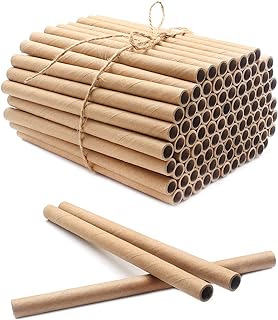
Benvo 100 Pieces Mason Bee Tubes 6 Inches Nesting Refill Cardboard Tubes Bee House Paper Inserts Replacement Liners for Mason Bee House Bee Hotels Bee Condo Beekeeper Accessory(5/16 Inch Diameter)

Benvo 100 Pieces Mason Bee Tubes 6 Inches Nesting Refill Cardboard Tubes Bee House Paper Inserts Replacement Liners for Mason Bee House Bee Hotels Bee Condo Beekeeper Accessory(5/16 Inch Diameter)

4.7(81)

$12.99

View on Amazon
mid-range
Rivajam 150 Mason Bee House Tubes Refill Pack | 75 Cardboard Bee Tubes & 75 Paper Mason Bee Tube Liners | Mason Bee Supplies for Solitary Beehive House | Garden Pollinator Bee House Nest Tubes

Rivajam 150 Mason Bee House Tubes Refill Pack | 75 Cardboard Bee Tubes & 75 Paper Mason Bee Tube Liners | Mason Bee Supplies for Solitary Beehive House | Garden Pollinator Bee House Nest Tubes

4.5(167)

$17.99

View on Amazon
premium
Rivajam 125 Phragmite Reed Mason Bee Tubes | Refill for Bee House, Hotel Nest Box, Solitary Hive & Pollinator Box | Garden Starter Kit & Supplies

Rivajam 125 Phragmite Reed Mason Bee Tubes | Refill for Bee House, Hotel Nest Box, Solitary Hive & Pollinator Box | Garden Starter Kit & Supplies

4.2(82)

$24.99

View on Amazon

Paper tubes with liners or natural reeds both work: you unroll the paper or split the reed to reach the cocoons. Plan on one hole per cocoon you release and start every spring with unused ones. A pack of 100 covers a small house for several seasons.

Clay mud mix

recommended · Nesting material

Mason bees wall off every egg with mud, and it has to be clay-rich enough to hold its shape. Many yards have soil that is too sandy or too full of compost.

budget
Mason Bee Mud Mixture

Mason Bee Mud Mixture

No rating yet

$7.50

View on Amazon
mid-range
Red Clay, 500 Grams

Red Clay, 500 Grams

5.0(3)

$13.00

Only 1 left in stock - order soon.

View on Amazon

Stir it into a shallow hole of damp garden soil near the house. Either a mix sold for mason bees or plain dry red clay does the job. If your soil already rolls into a firm ball when wet, you have what they need.

Fine mesh bag for filled tubes

recommended · Storage and protection

Parasitic wasps smaller than a fruit fly lay eggs through the walls of filled tubes all summer. A fine mesh bag keeps them out while letting air through.

budget
Meowoo 12PCS Big Organza Bags (12x16inch, White)

Meowoo 12PCS Big Organza Bags (12x16inch, White)

4.7(246)

$9.99

View on Amazon
mid-range
ATCG 25pcs 12x16 Inches Large Drawstring Organza Bags Decoration Festival Wedding Party Favor Pouches (White)

ATCG 25pcs 12x16 Inches Large Drawstring Organza Bags Decoration Festival Wedding Party Favor Pouches (White)

4.8(511)

$12.99

View on Amazon
premium
Sansam Extra Large Drawstring Organza Gift Bags, 20pcs 12.0''x16.0'' Mesh Bags with Drawstring for Wedding, Party Favors, Gift Storage, Sachets, Household Storage

Sansam Extra Large Drawstring Organza Gift Bags, 20pcs 12.0''x16.0'' Mesh Bags with Drawstring for Wedding, Party Favors, Gift Storage, Sachets, Household Storage

4.6(276)

$13.99

View on Amazon

A large organza drawstring bag has the right weave: fine enough to stop a gnat, open enough to breathe. A 12 by 16 inch bag holds the tubes from a small house. Pull the drawstring tight, knot it, and keep the bag in an unheated garage or shed.

Cocoon humidity container

recommended · Storage and protection

Cleaned cocoons spend four or five months in the refrigerator, and a frost-free one dries them out. A small vented container with a water pad holds the humidity they need.

budget
HumidiBee™ Cocoon Humidifier for Mason Bees

HumidiBee™ Cocoon Humidifier for Mason Bees

No rating yet

$11.50

View on Amazon

Top up the water about once a month and keep the container away from ripening fruit. A lidded food container with a few air holes and a damp paper towel is a workable substitute if you check it weekly.

6 mm leafcutter bee nesting tubes

situational · Nesting material · Summer Leafcutter Bees add-on

Leafcutter bees are smaller than mason bees and ignore the wider spring tubes. They need 1/4 inch (6 mm) holes.

budget
Juvale Bee Tube Inserts - 100 Pack, 6 in x 6 mm Cardboard - Paper Nesting Inserts & Cardboard Nesting Tubes for Mason Bee House Replacement

Juvale Bee Tube Inserts - 100 Pack, 6 in x 6 mm Cardboard - Paper Nesting Inserts & Cardboard Nesting Tubes for Mason Bee House Replacement

4.3(73)

$6.76

View on Amazon

They go in the same house after the mason bee tubes come out, so no second house is needed. Check the listing says 6 mm or 1/4 inch: most tubes sold for bee houses are the wider spring size. At harvest, never rinse leafcutter cocoons. The leaf wrapping is not waterproof.

Mason bee attractant spray

optional · Extras

Solves the problem of females emerging and flying off to nest somewhere else. The scent mimics a used nest, which tells them the tubes are a proven site.

budget
InvitaBee Mason Bee Attractant

InvitaBee Mason Bee Attractant

No rating yet

$11.50

View on Amazon
mid-range
Camas Mason Bee House Attractant, Unique Solitary Pollinator Supplies Such as Mason Bee House Lure can greatly Benefit Mason Bee or Leaf Cutter Bee Nesting Kits

Camas Mason Bee House Attractant, Unique Solitary Pollinator Supplies Such as Mason Bee House Lure can greatly Benefit Mason Bee or Leaf Cutter Bee Nesting Kits

3.9(56)

$24.95

Only 7 left in stock - order soon.

View on Amazon
premium
Donaldson Farms Mason Bee Attractant Spray, Nature-Derived Ingredients, 2oz

Donaldson Farms Mason Bee Attractant Spray, Nature-Derived Ingredients, 2oz

3.9(694)

$24.99

View on Amazon

Most useful in a brand new house with brand new tubes. A house that held bees last year already smells right.

Pollinator wildflower seed mix

optional · Extras

Solves a yard with too little in bloom within the bees' 300 foot range. A sown patch fills the gaps between fruit tree blossom and summer.

budget
Burpee Wildflower 25,000 Bulk, 1 Bag | 18 Varieties of Non-GMO Flower Seeds Pollinator Garden, Perennial Mix

Burpee Wildflower 25,000 Bulk, 1 Bag | 18 Varieties of Non-GMO Flower Seeds Pollinator Garden, Perennial Mix

3.9(8.9K)

$9.90

View on Amazon
mid-range
Eden Brothers Native Perennial Wildflower Seed Mix, 1oz, 19 Species Wild Flower Seed, 100% Pure Seed No Fillers, Bulk Perennial Flower Seeds for Planting Outdoors, Attracts Pollinators & Hummingbirds

Eden Brothers Native Perennial Wildflower Seed Mix, 1oz, 19 Species Wild Flower Seed, 100% Pure Seed No Fillers, Bulk Perennial Flower Seeds for Planting Outdoors, Attracts Pollinators & Hummingbirds

4.3(26)

$14.99

View on Amazon
premium
Buzzy Seeds Wildflower Pollinator Seed Mix, 1 Lb Bag, 18 Varieties

Buzzy Seeds Wildflower Pollinator Seed Mix, 1 Lb Bag, 18 Varieties

4.1(379)

$24.17

View on Amazon

Choose a mix suited to your region and sow it the fall or early spring before the bees arrive.