Skip to content

Starter guide

Padel

Doubles in a glass box, where the walls keep every rally alive.

Padel is a doubles racket sport played on a small enclosed court, about a third the size of a tennis court, with glass walls you can play the ball off like in squash. The racket is short, solid and stringless, and the serve is underhand, so four beginners can hold a real rally in their first hour. Points are scored exactly like tennis. Because the walls keep the ball in play, rallies run long and placement beats power, which is why mixed-ability groups enjoy the same game. You book a court by the hour, split it four ways, and the only gear you carry is a racket, a can of balls and shoes that grip the sanded turf.

Difficulty
beginner-friendly
Startup cost
$98-$462
First result
Real rallies and a played set in your first 90-minute session
Padel-bag total$0.00
01

How to get started

Tick these off as you go

A woman in black lunging low to reach a ball on a blue padel court
Low, and after the bounce
02

The rules in two minutes

  1. Padel is doubles. Singles courts exist but are rare.
  2. Scoring is tennis scoring: 15, 30, 40, game, six games to a set, best of three sets.
  3. The serve is underhand. Bounce the ball behind the service line and hit it at or below waist height, diagonally into the opposite service box. You get two serves.
  4. The ball must bounce on the turf on your opponents' side before it touches any wall or fence. Hit their glass on the full and you lose the point.
  5. After that bounce the ball can hit the walls and you can still play it, as long as it has not bounced on the turf twice.
  6. You may hit the ball into the glass on your own side to send it back over the net. You may not use the wire mesh that way.
  7. A serve that bounces in the box and then hits the mesh fence is a fault. One that bounces and hits the glass is live.
  8. You can volley anything except the return of serve, and you cannot touch the net.
03

How to choose a first racket

Shape decides how forgiving it is.

Round heads have a large sweet spot in the middle and suit beginners. Teardrop heads are a middle ground. Diamond heads put the weight and sweet spot high for power and punish off-center hits.

Balance matters more than total weight.

A low or even balance feels light in the hand and is easier on the elbow. Head-heavy rackets hit harder and tire the arm.

Pick a weight around 12.5 to 13 oz (355 to 370 g).

Lighter players and anyone with a history of tennis elbow should stay near the bottom of that range.

A soft foam core gives a comfortable, springy hit that helps slow swings clear the net.

Hard cores reward fast swings you do not have yet.

A fiberglass face is softer and cheaper than carbon and is the right choice for a first racket.

Stiff full-carbon faces are for later.

Before each session

Check the wrist cord is not frayed, re-wrap the overgrip if it is slick, and never leave the racket in a hot car. Heat softens the foam core and kills the feel.

A hand holding an orange and blue perforated padel racket in front of the court glass
Solid face, drilled holes, no strings
A man seen from above bending to a ball beside a white line on blue turf
04

The skills to work on first

One grip, the glass, the lob

Continental grip

Hold the racket like a hammer and keep that one grip for volleys, serves and wall shots.

Letting the ball go

Turn sideways, let the ball pass you, and hit it after it comes off the back glass. This single habit separates padel players from tennis players.

The lob

A high, deep ball over the pair at the net is the most useful shot in the game, because it takes the net away from them.

Net position

Points are won from the net. Move up together after a good lob and back together when you are lobbed.

The soft volley

Block the ball deep to the corners rather than swinging at it.

05

What trips beginners up

What to expect, and what to stop

  • Expect the glass to confuse you for the first few sessions. Reading a rebound is a new skill even for good tennis players.
  • Expect long rallies to leave you more out of breath than the small court suggests.
  • Expect to lose to patient pairs who hit softer than you do.
  • Stop hitting hard. A fast ball comes back off the glass as an easy setup for the other pair.
  • Stop standing in the middle of the court between the service line and the back wall. Be at the net or behind the service line.
  • Stop taking big tennis backswings. There is no room near the glass, and a short compact swing is more accurate.
  • Stop splitting from your partner. If one of you goes forward and the other stays back, the gap between you is where you lose the point.
Two players touching rackets on a blue padel court with the mesh fence behind them
06

Where to play and what it costs

Four players, one booking

Padel needs a purpose-built court, 66 feet by 33 feet (20 by 10 m) with glass and mesh walls, so you play at a club rather than a public park. In the US most courts are in Florida, Texas, California and the New York area, with new clubs opening in most large cities. A court is usually booked for 90 minutes and costs roughly $40 to $100 depending on the city and the hour, split between four players. Clubs run open matches, where you take one of four paid spots and are grouped by level, and Americano socials, where partners rotate every few games. Both are the easiest way in if you do not have three friends ready to play. Courts are indoor or outdoor, and the game is the same on both. Glass is slick when wet, so outdoor sessions stop for rain.

07

Where to learn

One group lesson early on is worth more than any gear upgrade, because a coach will fix your grip and teach you to use the back glass in an hour. Between sessions, free video lessons cover the lob, the wall shots and where to stand. Watching a professional match helps most if you ignore the smashes and follow how the four players move as two pairs.

08

Why the kit looks like this

The kit is small because the club supplies the court, the net and the walls. The racket and balls are the only things the game cannot happen without. Shoes are recommended rather than essential because clean-soled court shoes will get you through the first sessions, but they are the next thing to buy: padel is all short sprints and pivots on sand-dressed turf. Overgrips and a frame protector are a few dollars each and keep the racket in your hand and in one piece. The bag is optional: its job is to keep the racket padded, away from your shoes and out of the heat. Court fees are the real running cost, not gear.

Four padel rackets fanned in a circle with yellow balls on blue turf
Four rackets, one can of balls
09

Pack the bag

Compare the options below, then set your tiers and check out from the bag. Clicking a card selects it there, and clicking the selected card again takes that line out. The racket, balls, shoes, overgrips and frame protector start in the bag. The racket bag is optional, so it starts out until you pick one.

Beginner padel racket

essential · Core equipment

It is the one piece of gear the sport is named for: a short, solid, perforated racket with no strings. A round, soft one gives you a big sweet spot while your timing is still rough.

budget
Head EVO Speed Padel Racket Paddle Series (226403)

Head EVO Speed Padel Racket Paddle Series (226403)

4.7(1.1K)

$87.80

View on Amazon
mid-range
Wilson Optix V2 Lite Padel Rackets

Wilson Optix V2 Lite Padel Rackets

4.1(12)

$111.99

View on Amazon
premium
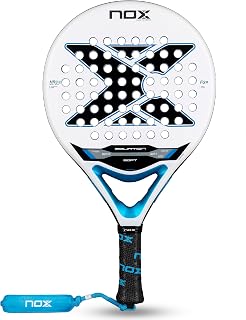
NOX Padel Racket Equation Soft 2026 | Round Shape Pala Padel for Comfort

NOX Padel Racket Equation Soft 2026 | Round Shape Pala Padel for Comfort

4.9(16)

$175.00

View on Amazon

Look for a round head, low or even balance and a weight near 12.5 to 13 oz. The wrist cord is required by the rules, so check one is attached. A pickleball paddle or a platform tennis paddle is not a substitute.

Padel balls

essential · Consumables

Padel balls look like tennis balls but are slightly smaller and lower in pressure, so they bounce lower and come off the glass at a playable speed. Clubs expect you to bring your own.

budget
WILSON Premier Padel Speed Ball - Yellow, 3 Pack

WILSON Premier Padel Speed Ball - Yellow, 3 Pack

4.8(336)

$9.89

View on Amazon
mid-range
Wilson X3 Padel Balls, 3-Pack

Wilson X3 Padel Balls, 3-Pack

4.5(502)

$12.95

View on Amazon
premium
HEAD Padel Pro Ball - 1 Can, 3 Balls

HEAD Padel Pro Ball - 1 Can, 3 Balls

4.7(1K)

$15.99

View on Amazon

A can holds three, which is enough for a match. Pressurized balls go flat a few weeks after opening, so buy cans as you need them rather than in bulk.

Padel court shoes

recommended · Footwear

Padel courts are artificial turf dressed with sand. A herringbone or clay-court sole grips it on sprints and still lets your foot turn on a pivot, which protects ankles and knees.

budget
adidas Mens Courtquick Padel Tennis Sneakers Shoes - White

adidas Mens Courtquick Padel Tennis Sneakers Shoes - White

4.6(141)

$77.03

View on Amazon
mid-range
WILSON Hurakn Lite

WILSON Hurakn Lite

4.4(144)

$110.00

View on Amazon
premium
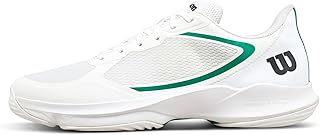
Wilson Mens Men's Hurakn Pro V2 Padel Shoes

Wilson Mens Men's Hurakn Pro V2 Padel Shoes

3.9(32)

$128.00

View on Amazon

Pick Men's or Women's on each option. Padel shoes and clay-court tennis shoes share the same sole pattern, and either works. Avoid running shoes: they have no side support and their lugs catch in the turf.

Padel overgrips

recommended · Consumables

Padel handles are thin and get slick with sweat fast. A fresh overgrip stops the racket twisting in your hand and lets you build the handle up to your size.

budget
Tourna Padel Grip 3 Pack, Trademarked Blue

Tourna Padel Grip 3 Pack, Trademarked Blue

4.6(171)

$7.99

View on Amazon
mid-range
Wilson AbsorbX Padel Overgrips

Wilson AbsorbX Padel Overgrips

4.4(36)

$10.94

View on Amazon
premium
WILSON Pro Padel Overgrip - 12 Pack, White

WILSON Pro Padel Overgrip - 12 Pack, White

4.7(54)

$27.00

View on Amazon

Packs run from three grips to a dozen. Many players wrap two overgrips to thicken the handle. Replace the top one when it turns smooth or gray, usually every few sessions.

Padel racket frame protector

recommended · Racket care

Beginners scrape the racket head on the glass and the turf constantly while learning wall shots. A strip of protector tape over the top of the frame takes the chips instead of the racket.

budget
Padel Protector Transparent Padel Frame Tape Two Pack - Edge Protector Durable with Rough Finish for Extra Protection 1.38x14.57in. 35 x 370 mm.

Padel Protector Transparent Padel Frame Tape Two Pack - Edge Protector Durable with Rough Finish for Extra Protection 1.38x14.57in. 35 x 370 mm.

4.3(1.6K)

$6.99

View on Amazon
mid-range
Dunlop Protection Tape for Padel Bats

Dunlop Protection Tape for Padel Bats

4.2(94)

$9.99

View on Amazon
premium
Adidas Antishock Protection Tape

Adidas Antishock Protection Tape

4.4(102)

$15.99

View on Amazon

Clean the frame before sticking it on. It adds a few grams at the tip, which you will stop noticing within a session.

Padel racket bag

optional · Storage & carry

A padel racket loose in a gym bag sits against sandy shoes and bakes in a hot trunk, and heat softens its foam core. A padel bag gives it a padded pocket of its own, with room for balls and a change of shirt.

budget
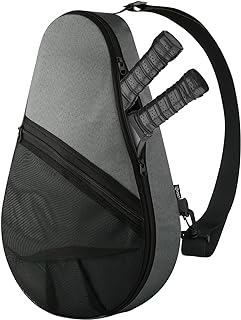
Cosmos Padel Racket Bag Pickleball Paddle Sling Backpack Padel Racquet Storage Bag, Padel (Paddel Tennis) Equipment Carrying Bag with Mesh Pocket for 2 Paddles Ball Water Bottle & Accessory

Cosmos Padel Racket Bag Pickleball Paddle Sling Backpack Padel Racquet Storage Bag, Padel (Paddel Tennis) Equipment Carrying Bag with Mesh Pocket for 2 Paddles Ball Water Bottle & Accessory

4.4(277)

$19.99

View on Amazon
mid-range
Babolat Court Lite Padel Backpack

Babolat Court Lite Padel Backpack

4.4(15)

$51.80

View on Amazon
premium
NOX Padel Backpack PRO SERIES

NOX Padel Backpack PRO SERIES

4.5(62)

$99.99

View on Amazon

A sling or backpack with a padded racket pocket is enough for one racket. The larger backpacks add a separate shoe compartment.