Fly cross-country under a backpack-sized wing, launched on foot from a hill.
Paragliding is one of the simplest ways for a person to fly. A lightweight fabric wing and a harness pack into a rucksack, and you take off by running down a slope until the wing lifts you into the air. With no motor, you stay aloft by flying through rising air near ridges or in thermals, steering with two hand-held brakes. A flight can be a gentle ten-minute glide down to the landing field or a multi-hour trip across a mountain range. The barrier to entry is training and judgement rather than bulky equipment, which is why people drawn to weather, the outdoors, and a genuine sense of flight tend to stick with it for life.
Difficulty
steep learning curve
Startup cost
$220-$1050
First result
Short solo flights within your first week of training; a novice (P2) rating in one to two months
Overview
01
What paragliding actually involves
You clip into a harness that hangs below the wing, spread the lines out on a slope, and pull the wing up over your head by running a few steps into the wind. Once it is flying overhead and stable, a few more strides and you lift off your feet. In the air you sit back in the harness and steer with a brake handle in each hand, one for left, one for right, and pull both together to slow down and flare for landing. Because there is no engine, staying up means finding lift: air pushed up the face of a ridge by the wind, or thermals of warm air rising off ground the sun has heated. Everything else is reading the sky, staying inside safe conditions, and always knowing where you can put down.
Foot-launched
You take off by running a few steps down a slope until the wing flies.
No engine
Height comes from ridge lift and thermals, never a motor.
Packs to a rucksack
The wing and harness fit in a backpack and travel as checked luggage.
02
Why people get hooked
So little between you and the view
Few activities put you in the air with so little between you and the view, and no aircraft to store or maintain. The whole kit fits in a large backpack, so a wing travels as checked luggage and hikes up any hill you can walk. Progress is easy to feel: your first unassisted launch, your first thermal that lifts you above where you started, your first flight to a field you picked from a thousand feet up. Over time you build a real weather sense, learning to read cloud, wind, and terrain the way a sailor reads water.
03
How ratings work
The path to flying unsupervised
01A novice rating (P2 in the US system) certifies that you can launch, fly a pattern, and land on your own in mild conditions. Earning it takes a set number of supervised solo flights, judged launches and landings, and a written exam on weather, airspace, and right-of-way.
02Ratings climb from novice to intermediate to advanced. Each level needs a minimum of logged flights plus an instructor or observer sign-off before it clears you for steeper sites, stronger wind, and thermals.
03The rating is a licence to keep learning, not a finish line. Most serious incidents involve pilots in their first few years who fly conditions beyond their actual skill.
Past the mountains
04
What beginners find hard
No sugar-coating
Most sessions involve far more waiting than flying. You need the right wind strength and direction, a workable sky, and a safe landing option, and a day can shut down in minutes.
Ground handling the wing in a breeze is awkward and tiring at first, and it is where you will spend many early hours.
Weather cancellations are normal. A one-week course can deliver only two flyable days, so build slack into your plans.
Progress is not a straight line. Nerves after a rough launch or a hard landing are common and fade with airtime.
Doing it safely is not cheap. Unknown-history used gear bought to save money is a false economy.
05
Safety essentials
Non-negotiable
▲Learn only with a certified instructor. Self-teaching from videos has killed capable athletes from other sports.
▲Fly well inside your rating and only in the conditions your instructor clears. Strong or gusty wind and the turbulent middle of a hot day are for much later.
▲Carry a reserve parachute on every flight and get hands-on repack and deployment training. It is your last option if the wing collapses.
▲Run a full pre-flight check every single time: harness buckles done up, reserve pin seated, lines clear and untwisted, carabiners locked, helmet on.
▲Learn the site and the airspace above it. Good-looking hills can sit under controlled airspace or generate rotor and turbulence on the downwind side.
▲As a beginner, never fly a site alone, and always tell someone your plan and expected landing.
Every flight starts with the same pre-flight check.
06
Rules and licensing
In the United States a foot-launched paraglider flies under FAR Part 103, the ultralight rule, so there is no federal pilot licence and no aircraft registration.
In practice almost every flying site is managed by a club affiliated with the USHPA, and they require current membership and a matching pilot rating to launch, largely because that membership carries the third-party insurance landowners insist on. Part 103 still binds you: daylight hours only, stay clear of clouds, no flying over congested areas, and no entering controlled airspace without permission. Many other countries run formal licence systems, so check the local rules before flying while travelling.
Ridge soaringStaying up in the band of lift where wind hits a hill or coastal dune. The most reliable way to get regular airtime close to home.+
Start here
Ask your school which local soaring sites suit a new pilot and what wind range to fly them in.
Thermal and cross-country flyingClimbing in rising bubbles of warm air and gliding between them to cover distance, sometimes a hundred miles or more in a day.+
Start here
Log thermal flights close to your home site with a mentor before you try to leave it.
Hike-and-fly and vol-bivouacWalking up with a light pack and flying down, sometimes linking peaks over several days with camping gear aboard.+
Start here
Start by walking up a training hill you already fly, carrying the kit you trained on.
AcroAerobatic manoeuvres flown over water with a rescue boat standing by. Advanced, with its own long training path.+
Start here
Leave it until you have a few hundred hours, then start with a maneuvers clinic over water run by a qualified instructor.
Powered paragliding, or paramotorAdding a motor and propeller so you can launch from flat ground in calm air. Related, but a separate rating and skill set.+
Start here
Treat it as a separate sport and book training with a paramotor school.
08
Your first few weeks
Tick these off as you go
Solo in open sky
09
Time it takes
A beginner course usually runs 7 to 10 days, either in one block or spread across weekends. After that, plan on one or two half-day sessions a week to keep skills sharp and reach a solid novice level within a season. Because you only fly in suitable weather, you often give up a whole morning to get one or two short flights, and you learn to check forecasts daily so you can move fast when a good window opens.
Most of a session is spent watching the sky, not flying.
10
About the shopping list
The three big-ticket items, the wing, the harness, and the reserve parachute, are deliberately not on the list below. A certification course itself is the real entry cost, usually between $1,000 and $2,000 depending on its length and location. Buy the flying gear through your school once you know your weight range and skill level, ideally a checked used set matched to a beginner certification. Fit and condition matter too much to guess at online. The list below is the personal kit that is safe to choose yourself and that you keep using as you progress. Many schools lend wings, harnesses, and reserves during the course, so you can start training having bought only these smaller pieces.
11
Pack the flight deck
The first line is the one that matters: lessons, which no shop sells. Compare the gear options below it, then set your tiers and check out from the kit sidebar. Clicking a card selects it there. The satellite communicator and trekking poles join the kit only once you switch on the matching add-on.
Lessons at a certified school
essential · Instruction
Paragliding is learned in person, on a training hill with an instructor talking you through each launch by radio. The course is the real first purchase, and the school lends you the wing, harness and reserve while you train.
Not sold on Amazon · book it with a school
Not sold on Amazon. In the US, choose a school whose instructors are certified by USHPA and whose course ends in a novice (P2) rating; expect $1,000 to $2,000. Buy the gear below once the school has confirmed what you need.
Flying helmet (EN 966 free-flight, or a climbing helmet many schools accept for training)
essential · Safety gear
Every training flight and every flying site requires head protection, and launch and landing mishaps are most common while you are learning. A well-fitting climbing helmet is widely accepted for early training; a dedicated free-flight helmet rated to EN 966 is the long-term choice.
Pick a thin, close-fitting pair so you can still feel the toggles. Bulky ski gloves kill your feel for the wing.
Supportive hiking boots with ankle support
essential · Core equipment
Launches and landings happen on slopes and rough fields, often at a run, so you want ankle support and a grippy sole. Trainers roll ankles and slip on dewy grass.
✓ In kitbudget
Columbia Men's Newton Ridge Plus II Waterproof
★★★★☆4.4(5K)
$94.99
Columbia Women's Newton Ridge Plus Waterproof Hiking Boots
Switch between Men's and Women's above the cards or in the pack. Mid or high tops with a firm sole. Skip heavy mountaineering boots, which are clumsy for running launches.
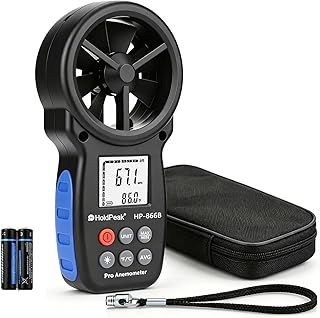
Handheld wind meter (anemometer)
essential · Core equipment
Reading the wind speed at launch is a go or no-go decision every session, and as a beginner you fly only in light, smooth wind. Guessing by feel is how students get hurt.
✓ In kitbudget
HoldPeak 866B Digital Anemometer, Handheld Wind Speed CFM Meter
A basic pocket model is plenty. You mainly need current speed plus the gust peaks.
Handheld two-way radio
recommended · Communication
Instructors talk you through your first flights from the ground, and most training hills expect students to carry a radio. It is also how you coordinate a retrieve later on.
✓ In kitbudget
Baofeng UV-5R Ham Radio Handheld, Dual Band Two Way Radio (Black) | 144-148MHz 420-450Mhz Walkie Talkie, 1800mAh Li-ion Battery, Portable for Outdoor Hiking Camping Emergency Backup
Check which frequencies and band your school uses before buying. Some regions require a licence to transmit on certain bands, so ask first.
Wraparound sport sunglasses
recommended · Personal gear
Glare and UV are stronger with altitude, and wind streaming into your eyes makes it hard to judge your approach and flare. A wrap shape blocks the airflow.
✓ In kitbudget
Sports Sunglasses for Men Women, Lightweight Running Glasses with UV400 Protection, Non Polarized for Cycling Golf
Add a retainer strap so a gust or a rough landing does not cost you the glasses.
Course textbook
recommended · Learning
A proper training manual lets you review weather, canopy control, and airspace between lessons, which makes the practical days click faster and gets you to a rating sooner.
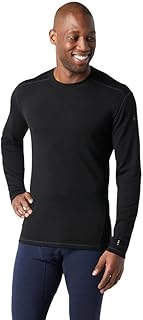
Air temperature drops roughly 3 to 5 degrees Fahrenheit for every thousand feet you climb, so a flight that starts warm on launch can turn cold within minutes.
✓ In kitbudget
Mens Base Layer - 100% Merino Wool Midweight Long Sleeve Thermal Shirt
★★★★★4.7(4,407)
$65.00
MERIWOOL Womens Base Layer 100% Merino Wool Midweight Long Sleeve Thermal Shirt
Switch between Men's and Women's above the cards or in the pack. Merino resists odour and stays warm even when damp with sweat. Add windproof outer layers as you start climbing higher.
Cross-country flights land you miles from a road in spots with no phone signal, so a way to message a retrieve driver or trigger an SOS matters once you leave the local ridge.
✓ In kitbudget
ZOLEO Satellite Communicator (Slate Grey) | Two-Way GPS Messenger with Emergency SOS, Check-In and Location Sharing for Hiking, Camping and Remote Travel
Hiking to a launch with a full glider pack on steep, loose ground is hard on the knees, and poles save the leg strength you want for the flight itself.
✓ In kitbudget
Foxelli Trekking Poles – Lightweight Collapsible Aircraft Grade Aluminum Hiking Poles with Cork Grips Quick Locks & All-Terrain Accessories – Pair of 2