Skip to content

Starter guide

Photography

Learn to see light, then catch it before it moves.

You can start with the phone you already own: light, composition and timing are most of the skill, and a phone teaches all three. Photography is the craft of making pictures by controlling light, focus, and timing. A modern camera automates most of the technical work, so a beginner can take sharp, well-exposed photos on day one, then gradually take over the settings to get the exact look they want. It rewards curiosity about ordinary things: the way afternoon sun rakes across a street, a friend's expression a half-second before they laugh, fog sitting in a valley at dawn. You can do it anywhere, keep the gear small, and end most sessions with something worth keeping.

Difficulty
moderate learning curve
Startup cost
$0 with your phone · $605-$1400 for a camera kit
First result
Usable photos on your first afternoon out
Bag total$0.00
01

What It Actually Involves

Most sessions look like this: you pick a place and a rough subject (people, a neighborhood, a landscape), you walk and watch the light, and you make a few dozen frames trying different angles and moments. Later you copy the files to a computer, pick the handful that work, and make small adjustments to brightness, color, and crop. The shooting half is physical and social. The editing half is quiet and selective. Both matter, and most people find they enjoy one more than the other.

  1. Step 1 · ShootWalk, watch the light, work the frame
  2. Step 2 · CullPull the handful that actually work
  3. Step 3 · EditSmall moves: brightness, color, crop
A camera on a tripod under the Milky Way in a rocky desert
A night setup under the Milky Way
02

Why People Stick With It

It gives you a reason to pay attention.

People who shoot regularly talk about noticing weather, faces, and buildings they used to walk past. It travels well, it can be social or solitary, and it produces something concrete you can print, share, or look back on years later. The feedback loop is fast: you can see whether a photo works within seconds, and steady improvement over the first year is very common.

A photographer raising a camera to their eye on a city street at dusk
Most of it is just paying attention to a street you already know.
A lone figure standing in an empty city street washed in golden-hour light
03

Directions You Can Take It

Seven ways people shoot

PortraitsPhotographing people, posed or candid, often with a fast prime lens for a soft background.

Start here

Photograph a friend beside a window with the light coming from the side, at the widest aperture your lens allows.

Street and documentaryUnposed life in public, usually with a small camera and a wide-to-normal lens.

Start here

Walk one familiar block for an hour with a single focal length and shoot whatever catches your eye.

Landscape and natureSlower, tripod-based work built around good light at dawn and dusk.

Start here

Pick a spot close to home and go back at sunrise or sunset three times with a tripod.

TravelA generalist mix, packed light, covering places, food, and people.

Start here

Spend a day photographing your own town as if you were visiting, with one camera and one lens.

Wildlife and birdsLong telephoto lenses, patience, and early mornings.

Start here

Start with birds at a local park or feeder, using the long end of your zoom, before paying for a telephoto.

Product and still lifeControlled setups at home, often the first paid work people get.

Start here

Shoot one object on a table by a window, with a sheet of white card on the far side to fill the shadows.

Astrophotography and nightLong exposures of stars, the Milky Way, and city lights.

Start here

Find a dark site on a moonless night, set the camera on a tripod, and start at around 20 seconds with the aperture wide open.

Light pollution map
04

What Beginners Find Hard

No sugar-coating

The camera is the easy part.

The frustrating part is that your early photos will look flat compared to what you pictured, usually because the light was harsh, the background was cluttered, or the moment was a beat late. Editing has its own learning curve, and it is easy to overdo it. Gear envy is real and mostly a trap: the jump from a phone to a real camera is large, but the jump from an entry camera to an expensive one is small and will not fix composition. Expect a few months before your keeper rate feels good.

05

Skills To Focus On First

What to practice

  • Exposure triangle: how aperture, shutter speed, and ISO trade off, and what each one does to the image.
  • Focus control: choosing the focus point yourself instead of letting the camera guess.
  • Reading light: recognizing direction, hardness, and color, and knowing when to wait or move.
  • Composition: where to put the subject, what to leave out, and how to use lines and framing.
  • Basic editing: exposure, white balance, contrast, and crop, applied with restraint.
06

Your First Two Weeks

Tick these off as you shoot

Black-and-white photo of a person aiming a DSLR straight down the lens
Two weeks in you stop fighting the camera and start seeing.

What You Can Make In Your First Month

A window-light portrait

A friend lit from the side, with the background out of focus.

A golden-hour landscape

One local view shot in the hour before sunset.

A photo walk set

Ten frames from a single walk that hang together as a group.

A long exposure

Blurred water or light trails, shot from a tripod at dusk.

One edited favorite

A single photo adjusted for exposure, contrast, and crop, then exported to share.

07

Common Beginner Mistakes

The usual slip-ups

  • Shooting everything at eye level from a standing position.
  • Leaving the camera on full auto so you never learn what the settings do.
  • Buying a third lens before wearing out the first one.
  • Ignoring the background until it is too late.
  • Editing on a phone screen at full brightness and pushing saturation too far.
  • Taking two frames and moving on instead of working the scene.
08

Shooting Around People And Property

In the United States you can generally photograph anything in plain view from a public place, including people and buildings, without permission. Rules change once you are on private property, and using photos of recognizable people to advertise or sell something usually needs a signed model release. Some venues, transit systems, and government buildings restrict tripods or commercial shoots. Norms differ in other countries, where consent to photograph strangers is expected in more situations. When someone asks you to stop or delete a photo of them, the practical move is usually to be polite and comply even where the law is on your side.

Rule of thumb

In plain public view

Generally yours to photograph in the US, people and buildings included.

Rule of thumb

To sell or advertise

A recognizable person usually has to sign a model release first.

Rule of thumb

Asked to stop

Being polite and complying is the practical move, even when the law is on your side.

09

Where To Learn

Where the useful feedback is

  • Your camera's own manual for the menu system and custom buttons, which no generic tutorial covers.
  • Free structured courses from photography education sites and well-known YouTube channels that teach fundamentals rather than gear reviews.
  • A local photo walk group or community college class for feedback from people who can see your work in person.
  • Photo critique forums and subreddits, useful if you post specific questions rather than asking 'is this good'.
  • Books on light and composition, which age far better than anything about specific camera models.
10

Notes On The Shopping List

The camera and a pair of memory cards are all you strictly need to start. A spare battery and a card reader come next, since a day out needs both. An entry-level mirrorless camera with its kit zoom covers most situations and is the single biggest quality jump you will make. A cheap standard prime lens is the best next purchase for portraits and low light. The tripod, bag, and cleaning kit are quality-of-life items you will want within the first month. Filters and a remote release only matter once you know you are drawn to landscape or night work, so they are listed as situational.

A camera body beside a detached zoom lens on a dark surface
One body, one lens, a card. Everything after that is optional.
11

Build The Kit

Compare the options below, then set your tiers and check out from the kit sidebar. Clicking a card selects it there. The polarizing filter and the remote release join the kit only once you switch on their add-on.

Entry-level mirrorless camera with kit zoom lens

essential · Core equipment

This is the camera and the everyday lens in one box. The kit zoom is flexible enough to learn every type of photography before you spend money on anything else.

budget
Canon EOS R100 Mirrorless Camera RF-S18-45mm F4.5-6.3 is STM Lens Kit, 24.1MP APS-C, 4K Video

Canon EOS R100 Mirrorless Camera RF-S18-45mm F4.5-6.3 is STM Lens Kit, 24.1MP APS-C, 4K Video

4.5(722)

$549.00

View on Amazon
mid-range
Sony Alpha a6400 Mirrorless Camera with 16-50mm Lens, ILCE-6400L/B, Black

Sony Alpha a6400 Mirrorless Camera with 16-50mm Lens, ILCE-6400L/B, Black

4.6(1K)

$814.91

View on Amazon
premium
Canon EOS R50 Mirrorless Camera with 18-45mm F4.5-6.3 is STM Lens Bundle

Canon EOS R50 Mirrorless Camera with 18-45mm F4.5-6.3 is STM Lens Bundle

4.4(209)

$829.00

Only 7 left in stock - order soon.

View on Amazon

Buying last year's model or a used body from a reputable seller saves a lot with almost no downside for a beginner. Stick to one system once you choose, since lenses are the long-term investment.

SD memory cards, pack of two (UHS-I, 128GB, V30)

essential · Core equipment

The camera ships without storage. A V30-rated 128GB card holds thousands of RAW files and is fast enough for 4K video and burst shooting, and a second card in the bag means a full or failed card does not end the day.

budget
128GB CS100 SDXC UHS-I Memory Card - up to 100MB/s, C10, U3, V30, 4K UHD, SD Card for Computers, Digital Cameras, Home Theatre Devices, Car Navigation Systems (2 Pack)

128GB CS100 SDXC UHS-I Memory Card - up to 100MB/s, C10, U3, V30, 4K UHD, SD Card for Computers, Digital Cameras, Home Theatre Devices, Car Navigation Systems (2 Pack)

4.3(245)

$41.59

View on Amazon
mid-range
PNY 128GB Elite-X C10 U3 V30 SDXC Flash Memory Card 2-Pack, UHS-I, 4K UHD

PNY 128GB Elite-X C10 U3 V30 SDXC Flash Memory Card 2-Pack, UHS-I, 4K UHD

4.6(4.7K)

$54.66

View on Amazon
premium
Lexar 128GB 2-Pack 800x PRO SD Memory Card, 150MB/s Read, 4K, V30, UHS-I

Lexar 128GB 2-Pack 800x PRO SD Memory Card, 150MB/s Read, 4K, V30, UHS-I

4.7(543)

$99.99

View on Amazon

Buy from a seller shipped and sold by Amazon or the brand to avoid counterfeit cards. Swap cards between outings rather than filling one for months, so a single failure never takes everything.

Spare camera battery (two-pack with charger)

recommended · Power

A small mirrorless body gets a few hundred shots per charge, fewer with the screen on or in the cold, so a second battery is what gets you through a full day out.

budget
BESTON 2-Pack LP-E17 Battery and Charging Base for Canon EOS R50 R100 RP R10 R8

BESTON 2-Pack LP-E17 Battery and Charging Base for Canon EOS R50 R100 RP R10 R8

4.5(1.3K)

$24.59

View on Amazon
mid-range
Powerextra 2 Pack Replacement Sony NP-FW50 Battery Smart LCD Display Dual USB Charger Compatible for Sony ZV-E10, Alpha a6500, a6300, a6000, a7s, a7, a7s ii, a7s, a5100, a5000, a7r, a7 ii Camera

Powerextra 2 Pack Replacement Sony NP-FW50 Battery Smart LCD Display Dual USB Charger Compatible for Sony ZV-E10, Alpha a6500, a6300, a6000, a7s, a7, a7s ii, a7s, a5100, a5000, a7r, a7 ii Camera

4.6(3.1K)

$27.99

View on Amazon
premium
SMALLRIG NP-FW50 Battery Set for Sony, 2H 11W Dual-Slot USB-C Charger

SMALLRIG NP-FW50 Battery Set for Sony, 2H 11W Dual-Slot USB-C Charger

4.6(104)

$44.99

View on Amazon

Match the battery to the body: the Canon cameras here take LP-E17, the Sony takes NP-FW50. Every option includes a charger, so one battery charges while you shoot with the other.

USB-C SD card reader

recommended · Accessories

Copying files off the card ends every session, and a reader is faster and more reliable than a cable to the camera, which also drains its battery.

budget
UGREEN USB C SD 4.0 Card Reader UHS-II Micro SD Card Reader

UGREEN USB C SD 4.0 Card Reader UHS-II Micro SD Card Reader

4.6(2.1K)

$19.99

View on Amazon
mid-range
SABRENT USB-C Card Reader, Dual-Slot UHS-II SD & microSD (CR-CSDM)

SABRENT USB-C Card Reader, Dual-Slot UHS-II SD & microSD (CR-CSDM)

4.6(379)

$19.99

View on Amazon
premium
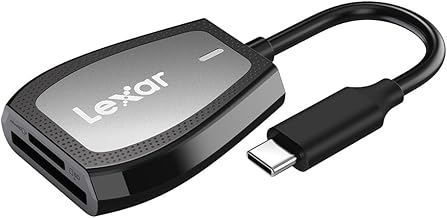
Lexar Dual-Slot SD/Micro SD Card Reader, Up to 312MB/s Read, USB-C

Lexar Dual-Slot SD/Micro SD Card Reader, Up to 312MB/s Read, USB-C

4.5(713)

$23.99

View on Amazon

USB-C fits most recent laptops and phones; an older computer with only USB-A ports needs a small adapter.

Standard prime lens (around 50mm equivalent, f/1.8)

recommended · Lenses

A fast prime forces you to move your feet, works far better in low light than the kit zoom, and gives the soft-background look people associate with 'real' camera photos.

budget
Meike 50mm F1.8 AF Lens for Sony E Mount Full-Frame Camera

Meike 50mm F1.8 AF Lens for Sony E Mount Full-Frame Camera

4.5(74)

$127.99

View on Amazon
mid-range
Canon RF50mm F1.8 STM Lens for EOS R Series Mirrorless Cameras

Canon RF50mm F1.8 STM Lens for EOS R Series Mirrorless Cameras

4.7(3.2K)

$199.00

View on Amazon
premium
Sony FE 50mm F1.8 Standard Lens (SEL50F18F/2), Black

Sony FE 50mm F1.8 Standard Lens (SEL50F18F/2), Black

4.7(1.6K)

$248.00

View on Amazon

Match the lens mount to your camera brand and check whether your body is APS-C, where a 50mm acts like a short telephoto and a 30mm to 35mm feels more natural. An adapter lets some brands use cheaper DSLR-era lenses.

Tripod

recommended · Support

A tripod is required for sharp low-light shots, long exposures, and any photo slower than about 1/60 second. It also slows you down and makes you compose more carefully.

budget
XXZU 75" Camera Tripod,Aluminum Tripod for Camera Phone/Monopod with Remote

XXZU 75" Camera Tripod,Aluminum Tripod for Camera Phone/Monopod with Remote

4.6(11.4K)

$29.99

View on Amazon
mid-range
K&F CONCEPT 64" Carbon Fiber Camera Tripod with 1.4" Ball Head

K&F CONCEPT 64" Carbon Fiber Camera Tripod with 1.4" Ball Head

4.5(393)

$89.99

View on Amazon
premium
SmallRig AP-02 63" Travel Camera Tripod, Max. Payload 17.6lb

SmallRig AP-02 63" Travel Camera Tripod, Max. Payload 17.6lb

4.4(137)

$139.00

View on Amazon

Check the load rating covers your camera plus your heaviest lens with margin. A flexible-leg model is a lighter option that wraps onto railings and posts when you travel. A cheap tripod you actually carry beats an expensive one left at home.

Camera shoulder or sling bag

recommended · Carry and protection

A padded bag protects the camera from knocks and weather and keeps a spare lens and card together so you actually bring them.

budget
MOSISO Camera Sling Bag, Photography Shoulder Bag with Tripod Holder

MOSISO Camera Sling Bag, Photography Shoulder Bag with Tripod Holder

4.6(4.8K)

$31.98

View on Amazon
mid-range
Peak Design Everyday Sling 6L, Ash, Padded Adjustable Shoulder Strap for Crossbody or Waist Carry, FlexFold Divider, Ideal for Carrying Cameras or Everyday Essentials, Sling Bag for Men and Women

Peak Design Everyday Sling 6L, Ash, Padded Adjustable Shoulder Strap for Crossbody or Waist Carry, FlexFold Divider, Ideal for Carrying Cameras or Everyday Essentials, Sling Bag for Men and Women

4.7(4)

$103.95

Only 1 left in stock - order soon.

View on Amazon
premium
NOMATIC Luma Camera Sling 9L: Designed with Peter McKinnon, Camera Sling Bag with Quick-Access Pockets, Magnetic Closures - Ideal Camera Bags for Photographers & Compact Camera Case (Rust)

NOMATIC Luma Camera Sling 9L: Designed with Peter McKinnon, Camera Sling Bag with Quick-Access Pockets, Magnetic Closures - Ideal Camera Bags for Photographers & Compact Camera Case (Rust)

3.8(19)

$104.91

Only 1 left in stock - order soon.

View on Amazon

Get one that fits your current kit plus one extra lens, not a huge bag you will not want to carry. A discreet bag that does not shout 'camera' is safer in cities.

Lens cleaning kit (blower, brush, microfiber, fluid)

recommended · Maintenance

Front elements pick up fingerprints and dust constantly, and a smudged lens quietly ruins photos. A blower and microfiber cloth handle almost everything safely.

budget
Altura Photo Camera Lens Cleaning Kit for DSLR & Mirrorless, with Hard Case

Altura Photo Camera Lens Cleaning Kit for DSLR & Mirrorless, with Hard Case

4.7(6.2K)

$17.08

View on Amazon
mid-range
K&F CONCEPT 4 in 1 Camera Lens Cleaning Kit for Photography Beginner, MK06

K&F CONCEPT 4 in 1 Camera Lens Cleaning Kit for Photography Beginner, MK06

4.7(4.2K)

$19.99

View on Amazon
premium
VSGO Optical Camera Lens Cleaning Kit Travel Edition

VSGO Optical Camera Lens Cleaning Kit Travel Edition

4.5(140)

$27.99

View on Amazon

Blow and brush loose dust off before you ever wipe, so you do not grind grit across the glass. Leave sensor cleaning to a shop until you are confident.

Circular polarizing filter (CPL)

situational · Filters · Landscape & Outdoor add-on

A polarizer cuts glare off water, glass, and wet leaves and deepens blue skies in a way you cannot fully recreate in editing. It matters most for landscape, travel, and outdoor work.

budget
Tiffen 55mm CPL Circular Polarizing Filter

Tiffen 55mm CPL Circular Polarizing Filter

4.6(8.1K)

$23.95

View on Amazon
mid-range
Hoya NXT Plus 55mm Circular Polarizing Filter - 10-Layer HMC Coating

Hoya NXT Plus 55mm Circular Polarizing Filter - 10-Layer HMC Coating

4.6(347)

$58.90

View on Amazon
premium
B+W 55mm Circular Polarizer with Multi-Resistant Coating

B+W 55mm Circular Polarizer with Multi-Resistant Coating

4.6(466)

$62.90

View on Amazon

Buy the filter thread size printed on your lens (often marked with a circle-slash symbol), not your sensor size. One filter sized to your largest lens plus cheap step-up rings can cover a whole kit.

Remote shutter release with intervalometer

situational · Triggers · Night & Long Exposure add-on

For exposures longer than 30 seconds, star trails, and time-lapses the camera needs an external timer, and firing without touching the camera prevents shake. Only needed if you pursue night or long-exposure work.

budget
JJC Intervalometer Timer Remote for Canon EOS Rebel and EOS R Series

JJC Intervalometer Timer Remote for Canon EOS Rebel and EOS R Series

4.5(1.1K)

$21.99

View on Amazon
mid-range
Pixel TW283-S2 Wireless Intervalometer Remote Shutter Release for Sony

Pixel TW283-S2 Wireless Intervalometer Remote Shutter Release for Sony

4.1(344)

$39.99

View on Amazon

Match the model to your camera's remote port or wireless system, since they differ by brand. Some recent cameras have a phone app that does the same job for free.