Skip to content

Starter guide

Racquetball

A fast, forgiving indoor court game you can rally in on day one.

Racquetball is a fast indoor game played inside a closed four-wall court with a short, light racquet and a bouncy hollow rubber ball. Every wall and the ceiling are in play, so the ball keeps coming back to you, and that is what makes it unusually easy to start: two complete beginners can hold long rallies in their first hour. You win points only while serving, games run to 15, and a match is best of three, so a typical hour on court is part workout, part friendly competition. Many gyms, YMCAs and recreation centers already have courts, and the starter kit is small: eye protection, a racquet, a can of balls and shoes that grip a wood floor.

Difficulty
Beginner-friendly
Startup cost
$95-$250
First result
Real back-and-forth rallies in your first session
A yellow racquetball racquet, a blue ball and clear goggles on a maple court floor with red lines
01

What an hour on court looks like

Four walls, a ceiling and a ball that keeps coming back

You book a court (usually 45 minutes to an hour), warm up by hitting the ball against the front wall to yourself, then play games to 15. Rallies are short and fast: the ball flies off the front wall, a side wall and sometimes the ceiling before it reaches you, so you spend the hour turning, chasing and resetting to the middle of the court. Most beginners play singles, but cutthroat (three players, the server against the other two) and doubles are common at gyms, so you can play with whoever turns up. Expect to be sweating within ten minutes.

02

Why people stick with it

  • The lively ball and the closed box mean beginners rally almost straight away, so the first session is fun instead of a lesson in missing.
  • It is a hard cardio workout that feels like a game, and an hour goes by much faster than the same time on a treadmill.
  • Courts are indoors and climate-controlled, so you can play year-round, early in the morning or late at night.
  • Club ladders, leagues and amateur tournaments are sorted by level, so there is always someone your speed.
  • The kit is cheap and lasts: a racquet and a pair of goggles can carry you through years of play.
03

Your first two weeks

Tick each one off as you go

04

The rules in five minutes

  1. Only the server scores. If the receiver wins the rally, they just win the serve.
  2. Games go to 15 points, and a match is best of three, with the tiebreaker played to 11.
  3. A serve must hit the front wall first and land past the short line. It may touch one side wall, but not both, and not the ceiling or back wall before bouncing.
  4. You get two tries at a serve. Two faults in a row hand the serve to your opponent.
  5. In a rally, the ball must reach the front wall before hitting the floor, and you must return it before its second bounce.
  6. If your opponent blocks your shot or your path to the ball, call a hinder and replay the point. Never swing when you might hit them.
05

Choosing a racquet, ball and goggles

Racquets are capped at a regulation 22 inches long, so you are choosing weight and head size, not length.

A light racquet (around 170 to 190 grams) with a large head is forgiving and adds easy power for a beginner with a short swing.

Pick the grip size you can hold with a small gap between your fingertips and palm.

Most adults use the smaller of the two common sizes (3 5/8 inch), which lets the wrist snap through.

Beginner racquets come strung, so there is nothing to set up.

If the strings break or go slack after a year, a pro shop can restring it.

Standard-speed balls are the all-round choice.

Faster balls bounce more and are made for strong players, so a beginner is better off with the standard type.

Check eye protection for a stamp saying it meets ASTM F803 for racquetball.

Everyday glasses and swim goggles will shatter or pop off.

Before each session, wipe dust off your shoe soles, check the strings for fraying and retire a ball that has split or gone soft.

06

Staying safe in the box

  • Wear rated eye protection every time. A racquetball moves fast enough to cause serious eye injuries.
  • Keep the wrist strap on so the racquet cannot fly out of your hand toward your opponent.
  • Never turn around to watch a ball behind you without your racquet up in front of your face.
  • Warm up your shoulders, hips and ankles first; quick changes of direction are where beginners pull muscles.
07

Skills to work on first

A side-on forehand

Turn your shoulder to the side wall, step into the ball and swing low and level, like skipping a stone.

A backhand that matches it, so you are not running around every ball on your weak side.

A low drive serve that lands deep in a back corner instead of bouncing up to the middle.

Reading the back wall

Letting the ball come off it and hitting it on the way forward, rather than chasing it into the corner.

Returning to center court after every shot, just behind the receiving line, so the next ball is never far away.

08

What trips beginners up

  • Expect to be exhausted after 30 minutes at first. Your fitness catches up within a few weeks of regular play.
  • The ball comes back off walls you were not watching, so judging where it will end up takes a few sessions to click.
  • Hitting too high is the most common habit: shots off the top of the front wall come straight back for an easy kill. Aim low.
  • Crowding your opponent or watching the ball from in front of them causes hinders and collisions. Give them room.
  • Swinging with only the arm wears out the elbow. Rotate the hips and shoulders and let the wrist snap last.
09

Where to learn and find games

USA Racquetball is the place to start: it publishes the official rules, lists clubs and courts, and runs leagues and tournaments with divisions for novices. Many gyms and YMCAs run beginner clinics or weekly drop-in nights, which are the fastest way to find regular partners. To see how the game should look, the professional tour posts free match video, and watching how pros use the back wall and ceiling teaches shot choice faster than any drill.

10

What the kit covers

Court time is the one cost you cannot buy online, and it is often included in a gym membership. Everything else is a small kit that suits singles, cutthroat and doubles alike: rated eye protection, a strung beginner racquet, a can of balls and non-marking court shoes. A glove is the one add-on worth buying early, because the grip gets slippery once you start sweating. A beginner racquet will carry you through at least the first year, so spending more on the racquet can wait until you know how you like to play.

11

Gear up for the box

The first line is court time, which you book with a gym or club rather than buy online. For everything else, compare the options, then set your tiers and check out from the kit. Clicking a card selects it there, and clicking the selected card again takes that line out.

Court access (gym membership or guest court booking)

essential · Court time

Racquetball is played inside a dedicated four-wall court, so you need a gym, YMCA, recreation center or club that has one.

Not sold on Amazon · booked with a gym or club

Not sold on Amazon. Courts are often included with a gym or YMCA membership; otherwise guest bookings typically run $5 to $20 an hour. Use the USA Racquetball club finder or ask local gyms whether they have courts.

Racquetball eye protection

essential · Safety gear

A racquetball can cause serious eye injury, and most clubs will not let you on court without eye protection made for the sport.

budget
HEAD Impulse Racquetball Eyewear

HEAD Impulse Racquetball Eyewear

4.2(2.7K)

$13.13

View on Amazon
mid-range
HEAD Rave Racquetball Eyewear

HEAD Rave Racquetball Eyewear

4.2(996)

$19.38

View on Amazon
premium
HEAD Racquetball Goggles - Powerzone Shield Anti Fog & Scratch Resistant Protective Eyewear w/Adjustable Strap

HEAD Racquetball Goggles - Powerzone Shield Anti Fog & Scratch Resistant Protective Eyewear w/Adjustable Strap

4.4(323)

$34.95

View on Amazon

Look for a stamp saying it meets ASTM F803 for racquetball. Anti-fog lenses are worth having, since a sweaty court fogs plain lenses quickly.

Beginner racquetball racquet

essential · Core equipment

This is the one tool you play every shot with; a strung, light beginner racquet with a large head gives easy power while your swing develops.

budget
HEAD CPS Heat Racquetball Racquet

HEAD CPS Heat Racquetball Racquet

4.5(352)

$24.99

View on Amazon
mid-range
Python Intro 5000 Racquetball Racquet

Python Intro 5000 Racquetball Racquet

4.5(814)

$39.99

View on Amazon
premium
Gearbox Racquetball Racquet GB-75 Strung

Gearbox Racquetball Racquet GB-75 Strung

4.6(58)

$64.99

View on Amazon

Most adults take the smaller common grip size (3 5/8 inch). A playing partner can lend a spare racquet for your first session.

Racquetball balls

essential · Consumables

Balls split and lose bounce with play, and courts rarely supply them, so bring your own can.

budget
Python Blue Racquetballs, 3 Ball Can

Python Blue Racquetballs, 3 Ball Can

4.7(755)

$9.49

View on Amazon
mid-range
Penn Ultra Blue Racquetball

Penn Ultra Blue Racquetball

4.8(698)

$9.98

View on Amazon
premium
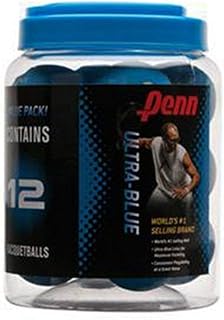
Penn Ultra Blue Racquetballs, 12-Pack High-Bounce Rubber Balls for Racquetball & Dog Fetch

Penn Ultra Blue Racquetballs, 12-Pack High-Bounce Rubber Balls for Racquetball & Dog Fetch

4.8(5K)

$19.99

View on Amazon

Stick with the standard-speed type; the faster ones are for advanced players.

Non-marking indoor court shoes

essential · Footwear

Running shoes slip on the polished wood floor and roll under you on quick side steps; gum-rubber court soles grip and protect your ankles.

budget
Unisex Tennis Pickleball Badminton Shoes for Men & Women Court Shoes

Unisex Tennis Pickleball Badminton Shoes for Men & Women Court Shoes

4.4(143)

$47.90

View on Amazon
mid-range
ASICS Men's Upcourt 6 Volleyball Shoes

ASICS Men's Upcourt 6 Volleyball Shoes

4.3(2.2K)

$53.95

View on Amazon
premium
ASICS Men's Gel-Rocket 12 Volleyball Shoes

ASICS Men's Gel-Rocket 12 Volleyball Shoes

4.4(698)

$64.95

View on Amazon

Indoor shoes sold for volleyball, squash or badminton work just as well. Keep them for indoor use only so the soles stay grippy. Where a tier offers both, pick Men's or Women's.

Racquetball glove

recommended · Accessories

Within a few minutes your hand sweats and the grip starts to twist; a thin glove on your racquet hand keeps it steady and prevents blisters.

budget
HEAD Renegade Racquetball Glove, Large, Right Hand

HEAD Renegade Racquetball Glove, Large, Right Hand

4.4(1.4K)

$11.50

View on Amazon
mid-range
Python Vintage Synthetic Racquetball/Pickleball Glove

Python Vintage Synthetic Racquetball/Pickleball Glove

4.5(1.1K)

$12.99

View on Amazon
premium
Gearbox Movement Racquetball Glove (Medium, Right)

Gearbox Movement Racquetball Glove (Medium, Right)

4.4(83)

$19.99

View on Amazon

Wear it on your hitting hand and pick the smallest size you can wear comfortably. Racquetball gloves are sized for everyone, so choose your size and hand on the listing.