Solve physical puzzles on the wall using grip, balance, and nerve.
Rock climbing is the sport of moving up rock or artificial walls by pulling and standing on holds, using footwork and body position as much as raw strength. Most people start at an indoor gym, either bouldering close to padded floors or climbing higher routes on a rope with a partner. It rewards problem solving, builds full-body strength, and gives a clear sense of progress as harder grades become possible. The community is welcoming and the barrier to a first session is low: rent shoes, take an intro class, and you are climbing the same day.
Difficulty
moderate learning curve
Startup cost
$105-$460
First result
You will top your first routes in your first session or two
Overview
Rack total$0.00
01
What rock climbing actually involves
A typical week is one to three gym sessions of one to two hours each. You warm up on easy terrain, then work harder climbs at your limit, resting a few minutes between attempts. Bouldering is short, powerful problems a few feet off the ground with thick pads below and no rope. Roped climbing means longer walls where a partner manages the rope through a belay device to catch a fall. Progress is tracked with grade scales: the V-scale for bouldering, the Yosemite Decimal System (5.x) for roped routes. Outdoors adds route finding, gear placement, and weather, which is why most climbers spend months indoors first.
1 to 3 sessions
A week, one to two hours on the wall each time
V-scale
The grade ladder for bouldering
5.x (YDS)
The grade ladder for roped routes
Indoor bouldering
02
Styles you can pursue
Five directions from the same start
BoulderingShort hard problems over pads, no rope, minimal gear, easy to do solo at a gym.+
Start here
Buy a day pass at a bouldering gym, rent shoes, and work through the easiest grade on the wall.
Top-ropeThe rope runs through an anchor above you, so falls are small. The standard way to learn roped climbing.+
Start here
Book a belay class at a gym. It ends with the belay check you need to climb there on a rope.
Sport climbingYou lead the rope up, clipping it into pre-placed bolts with quickdraws as you go.+
Start here
Take a gym lead class once top-roping feels comfortable, and go outside the first time with someone experienced.
Trad climbingYou place removable protection in cracks yourself. Gear-heavy and best learned with a mentor.+
Start here
Follow an experienced leader and clean their gear for a season before placing your own.
Outdoor vs indoorThe gym builds fitness and technique; outdoor climbing adds anchor building, hazard assessment, and etiquette.+
Start here
Hire a certified guide or join a club trip for your first day on real rock.
03
What beginners find hard
No sugar-coating
Forearms pump out fast at first. Grip endurance is often the limiter before technique is.
Skin on your fingertips gets sore and can split. Sessions feel short until your hands toughen up.
Progress plateaus after the quick early gains. Breaking through means drilling movement, not just trying harder.
Fear of falling on a rope is normal and takes deliberate practice falls to reduce.
Finger tendons and pulleys adapt slower than muscle, so the urge to climb hard every day leads to injury.
04
Your first month
Tick these off as you go
Easy routes first. Quiet feet beat hard pulls.
05
Skills to focus on early
What to drill first
Footwork: place the toe precisely and trust it, rather than pulling everything with your arms.
Straight-arm hanging and hip positioning to keep weight over your feet and off your grip.
Belaying smoothly: taking in slack, catching falls softly, lowering at a controlled speed.
The tie-in knot (figure-eight follow-through) and a proper partner check every climb.
Reading a route from the ground so you climb with a plan instead of guessing mid-wall.
06
Physical prep and injury avoidance
Climbing loads fingers, elbows, and shoulders in ways daily life does not.
For the first six to twelve months, let the climbing itself be the training and skip hangboard max hangs, which overload tendons that have not adapted. Warm up with easy climbing and light band work for the shoulders before pulling hard. If a finger joint aches or feels tweaky, stop for the day. Pulley strains from crimping are the most common beginner injury and they heal slowly. Antagonist work like push-ups and wrist curls keeps the elbows healthy.
Fingers and elbows adapt slower than the muscles do.
07
Safety
Non-negotiable
▲Always do a mutual partner check before leaving the ground: harness buckles, knot, belay device, locking carabiner.
▲Buy life-safety gear (harness, rope, belay device, carabiners, helmet) new from a reputable retailer, never used from a stranger, and retire it per the maker’s guidance.
▲Do not climb outdoors on your own gear until an experienced climber or a course has taught you anchors and rappelling.
▲Wear a helmet for all outdoor roped climbing and belaying to protect against rockfall and inverted falls.
▲Check knots and the belay device every single climb. Complacency, not difficulty, causes most accidents.
08
Finding and joining a gym
1Search for a climbing gym near you and sort by distance. Many metro areas have both a bouldering-only gym and one with rope walls.
2Choose a gym with rope walls if you expect to want roped climbing, since a bouldering-only gym cannot add that later.
3Expect a day pass of roughly 15 to 30 dollars on the first visit, plus a few dollars for shoe rental.
4If you go more than about six times a month, a ten-visit punch pass or a monthly membership costs less per session.
5Leave a few extra minutes on the first visit to sign a liability waiver and watch a short orientation video before getting on the wall.
6Learn the house rules: never stand or sit under someone climbing, one person per boulder problem, and down-climb or drop feet-first instead of jumping from the top.
Most first sessions start here, not on rock.
09
About this gear list
The essentials cover a bouldering-only start: shoes, chalk, and a chalk bag. Add a harness and a belay device with a locking carabiner as soon as you want to climb ropes, though most gyms rent both cheaply while you decide. Everything under situational is only worth buying once you are climbing outdoors in that specific style, and a crash pad or a rope is a purchase to make with a mentor who can check your choice. A gym membership or day pass is the real recurring cost and is not listed here.
10
Build the kit
Compare the options below, then set your tiers and check out from the kit sidebar. Clicking a card selects it there. The crash pad, helmet, rope, and quickdraw lines join the kit only once you switch on the matching outdoor add-on.
Beginner climbing shoes
essential · Core equipment
Sticky-rubber shoes let you stand on small footholds that regular sneakers slip off. A flat, neutral pair is comfortable enough for long beginner sessions.
✓ In kitbudget
Men's Momentum Lace or Strap Rock Climbing Shoes, Gym/Outdoor
★★★★☆4.4(1,007)
$87.88
BLACK DIAMOND Women's Momentum Strap Rock Climbing Shoes, Gym & Outdoor
Switch between Men's and Women's above the cards or in the pack. Fit snug with toes flat or barely curled, no dead space at the heel. Downsizing hard is for advanced climbers, not week one.
Loose climbing chalk
essential · Consumables
Chalk keeps sweat off your hands so holds do not slip. One bag lasts a beginner months, so the cheapest option is fine to start.
Friction Labs Premium Loose Climbing Chalk, High-Performance Hand Chalk | Superior Grip For Climbing, Weightlifting & Gymnastics, Skin Friendly Loose Chalk, Comes in Fine, Chunky & Super Chunky
Check your gym’s rules. Some require chalk balls or ban loose chalk to cut dust.
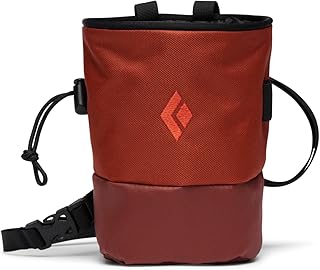
Chalk bag with belt
essential · Core equipment
A bag on your waist lets you re-chalk mid-climb without stopping at the ground. The included belt means you do not need a harness to use it while bouldering.
✓ In kitbudget
Chalk Bag for Rock Climbing - Rock Climbing Gifts Gear Accessories - Quick-Clip Belt, Large Zippered Pockets & Brush Holder - Weight Lifting, Gym, Bouldering, Disc Golf, Wall, Rock Climbing Chalk Bag
Chalk Bag for Rock Climbing, Climbing Chalk Bag for Bouldering with 2 Large Zipper Storage Pockets, Premium Gym Chalk Bag for Weightlifting, Great Gift and Rock Climbing Gear
A small clip-on bag suits roped climbing; a wider bucket that sits on the floor is nicer for bouldering.
Boar-hair hold brush
recommended · Accessories
Chalk and skin build up on holds and kill friction. A quick scrub before an attempt makes a real difference on hard moves, and it is basic etiquette outdoors.
TWO STONES Climbing & Bouldering Brush with Natural Firm Boar's Hair Bristles and Durable Handle, Climbing Chalk Brush Designed for Ultimate Performance on Climbing Wall Indoor or Outdoor
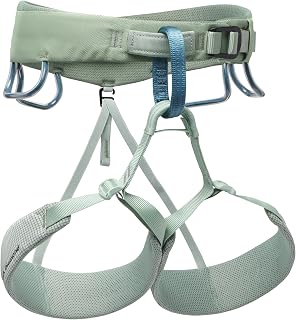
You need a harness for any roped climbing, starting with top-rope in the gym. Boulderers never tie in. Adjustable leg loops make it easy to fit over shorts or winter layers and to share sizing.
BLACK DIAMOND Men's Momentum Rock Climbing Harness, Adjustable Loops | trakFIT leg loops, pre-threaded buckle, gear loops organize quickdraws, cams, belay tools, and essentials
★★★★★4.7(853)
$74.88
BLACK DIAMOND Women's Momentum Rock Climbing Harness, Adjustable Loops
The mid-range harness comes in Men's and Women's; switch above the cards or in the pack. Gyms rent harnesses for a few dollars, so try before buying. Retire any harness after a hard fall or about ten years.
The belay device plus one locking carabiner are how you catch a partner’s fall and lower them. The two must be bought together: a tube-style device needs a pear-shaped screwgate locking carabiner to work correctly.
The budget option ships with a matching carabiner. If you pick a device-only listing, add one pear-shaped screwgate locking carabiner. Assisted-braking devices are common at gyms but need specific training.
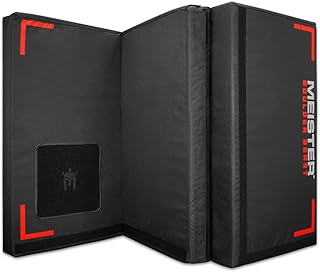
Meister Boulder Beast XL Tri-Fold Climbing Crash Pad w/Backpack Straps | Oversized 72" x 44" landing area with 5" multi-layer cushioning for bouldering + shoe cleaning carpet
Roped climbing outdoors needs your own dynamic rope, which stretches to absorb a fall. A 60m rope in the 9.8mm range is a durable all-round first choice.
✓ In kitbudget
Sterling VR9 9.8mm Dynamic Climbing Rope | Send more confidently with the dry-treated Evolution VR9 Rope
Check the route length where you climb; some areas need a 70m rope. A dry coating matters mainly for alpine and ice, not the crag. Switch on Roped Climbing too for the harness and belay device.