Skip to content

Starter guide

Sake Brewing

Turn steamed rice and koji into your own fresh sake in about a month.

If you have a stove, a big pot and a colander, you already own the trickiest piece of equipment. Sake brewing is making Japanese rice wine at home: you steam short-grain rice, mix it with koji (rice grown with a friendly mold that turns starch into sugar) and yeast, and let both work side by side in a cool corner for about two weeks. Then you press the liquid through a cloth, let it clear in a jug and bottle it. A one-gallon batch costs little in ingredients and gives you about four bottles of fresh, fruity sake you will not find in a store. People stay with it for the slow, calm rhythm and because every batch can be pushed somewhere new: drier, sweeter, cloudy, or brewed the traditional way with a starter and your own koji.

Difficulty
moderate learning curve
Startup cost
$130-$280
First result
Your first glass of fresh, cloudy sake 2 to 3 weeks after brew day; clear bottled sake in 5 to 6 weeks
01

What a batch actually involves

Brew day takes two to three hours, most of it waiting: you rinse and soak the rice, steam it for an hour until it is sticky but not mushy, let it cool, then stir it into cold water with the koji and yeast in a sanitized bucket. For the next two weeks the bucket sits somewhere cool (55 to 65°F) and you give it a stir every day or two. On pressing day you pour the mash through a fine bag and squeeze out the sake, which then rests in a glass jug for a few weeks to settle. The last session is a quiet half hour of siphoning the clear sake into bottles. Homemade sake is strong, usually around 15 to 18% alcohol, and tastes best young and cold.

  1. 3.3 lbRice, steamed
  2. 55-65°FFerment cool
  3. 2 wkThen press
  4. 2-4 wkClear in the jug
A pale stoneware sake bottle and two small cups on a white table
Sake is served in small cups, and homemade sake is best young and cold
02

Which way should you start?

Simple one-gallon batchRice, dried koji and dry wine yeast mixed in one go. This is where almost everyone should start, and the base kit covers it completely.
Start here

Brew the Make one-gallon recipe this weekend. It uses the base kit exactly as listed, with no starter and no mold to grow.

Nigori (cloudy sake)Not a separate brew but a choice at bottling. Keep some of the fine rice sediment in the bottle for a creamy, sweeter sake. No extra gear.

Start here

On your first batch, pour off a glass of the young sake right after pressing, before it clears. That cloudy, sweet-and-tart drink is fresh nigori, and you can bottle a share of it with the fine sediment stirred in.

Traditional StarterThe brewery method. You grow a small yeast starter for about a week, then add rice and koji in three stages over four days. It ferments cleaner and more reliably, and adds only yeast nutrient to the kit (the base kit's wine yeast builds the starter).

Start here

Once a simple batch has gone well, divide the Brew Your Own recipe by three so it fits your one-gallon setup, and build the yeast starter a week before brew day.

Brew Your Own: Making Sake
Homemade KojiGrowing the koji mold on steamed rice yourself over about two days in a warm, humid box. It is the heart of sake flavor and the most hands-on path, and needs koji spores and a steady heat source.

Start here

Grow one small tray of koji from spores (about 1 lb of rice) and use it in place of half the dried koji in your next batch, so you can taste the difference.

Science Meets Food: Culturing Koji at Home

The simple one-gallon batch and nigori need nothing beyond the base kit. Adding Traditional Starter or Homemade Koji switches that path's gear into the kit list and the total.

A wall of decorated sake barrels wrapped in straw, stacked in rows
03

Your first batch, step by step

Nine steps from dry rice to bottled sake

What you can brew in your first month

A one-gallon batch of sake

The Make recipe, fermented about two weeks and pressed by week three, then left to clear in a jug.

A bottle of fresh nigori

Some of the cloudy sake straight from the press, sweet and tart, best drunk cold within a week or two.

Sake kasu

The pressed rice paste left in the bag, kept in the fridge and used in marinades, soups or pickles.

A brewing log

Rice weight, fermentation temperatures, pressing day and tasting notes, so batch two can be drier or sweeter on purpose.

04

The skills that make good sake

Steaming the rice right

Steamed rice, not boiled, keeps its grains separate so the koji can reach the starch. Squash a grain to check: no hard white core, and not gluey.

Holding a cool temperature

Sake ferments slowly and cold. Warmer than about 65°F gives harsh, solvent-like flavors; colder than about 50°F can stall the yeast.

Sanitizing everything

The long, low-acid start gives bacteria a chance, so anything touching the mash after the rice is steamed gets sanitized first.

Reading the ferment

Learn what healthy looks and smells like (a white foam cap, a fruity, pear-and-melon smell). A hydrometer reading that stops dropping for a few days tells you it is done.

Clarifying and bottling cleanly

Patience in the jug and a gentle siphon give you clear sake. Fridge storage keeps it fresh, since unpasteurized sake keeps changing.

05

What trips beginners up

  • Expect your first batch to taste like a fresh, fruity farmhouse sake rather than a polished store bottle. Premium sake uses rice milled down to half its size and tight temperature control.
  • Homemade sake stays cloudy for weeks. Clarity comes from time in the cold, not from more filtering.
  • A sharp, sour or nail-polish smell usually means the ferment ran too warm. Find a cooler spot for the next batch rather than adding more yeast.
  • Do not use brown, long-grain or quick-cook rice. Long-grain rice steams up dry and quick-cook rice falls apart; short-grain white rice is what the koji and recipe expect.
  • Do not boil the rice instead of steaming it. Boiled rice turns to mush and makes a gluey mash that is hard to press.
  • Do not seal bottles of young sake and leave them at room temperature. It can still be fermenting, so keep bottles in the fridge or pasteurize them first.
  • Do not open the bucket every few hours to check. Stirring every day or two is enough, and every opening lets in air and wild microbes.
Two hand-painted sake cups on a worn wooden board beside a white bottle
Two hand-painted cups and a bottle on a wooden board
07

Where to keep learning

The American Homebrewers Association has free brewing articles and a club finder. A local homebrew club is the easiest place to get honest feedback on a batch, and most welcome sake brewers. For the traditional starter method, Brew Your Own magazine has a full recipe and walk-through, and the Science Meets Food guide covers growing your own koji.

A small glass of pale, clear sake beside a black bottle on a white tablecloth
A glass of clear, finished sake beside its bottle
08

Why the kit looks like this

The essentials cover the Make one-gallon recipe exactly: the rice, koji and yeast it calls for, a bucket with room for the rice to swell, a bag to press it, a jug to clear it, and the sanitizer, siphon and bottles to finish it. Ingredients for each later batch run about $25 to $40. The steamer, thermometer strip and hydrometer are recommended because steaming and temperature are where first batches go wrong. Weigh the rice on any kitchen scale you already have, and steam it over a large pot from your kitchen. Add the Traditional Starter or Homemade Koji add-ons only when you move on to those methods.

Two shelves of sake bottles against a cedar-slat wall
09

Stock the brewery

Rice, koji, yeast and gear for the first gallon, plus each path

Compare the options on each line, then set your tiers and check out from the kit list. Clicking a card selects it there, and clicking the selected card again takes that line out. The rice, koji and yeast lines are the shopping list for the Make recipe. Gear for the traditional starter and homemade koji stays out of the total until you add that path.

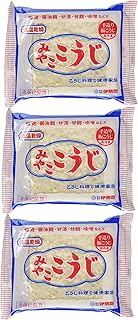
Dried rice koji

Essential · Ingredients

Koji supplies the enzymes that turn rice starch into sugar for the yeast. Without it, rice will not ferment at all.

budget
IseSo Miyako Koji 1kg

IseSo Miyako Koji 1kg

4.7(2.6K)

$19.00

View on Amazon
mid-range
MIYAKO KOJI 200g/ Malted rice for making Shio Koji, Miso, Sweet Sake, Pickles (Pack of 3)

MIYAKO KOJI 200g/ Malted rice for making Shio Koji, Miso, Sweet Sake, Pickles (Pack of 3)

4.5(177)

$23.89

View on Amazon
premium
Dried Rice Koji – Made in Japan | For Shio Koji, Miso, Soy Sauce, Amazake | Vegan, Gluten-Free, No Additives (800g)

Dried Rice Koji – Made in Japan | For Shio Koji, Miso, Soy Sauce, Amazake | Vegan, Gluten-Free, No Additives (800g)

4.5(414)

$33.99

View on Amazon

The recipe needs about 20 oz (570 g) per gallon, so check the pack weight. Buy plain dried rice koji, not a seasoning or a liquid salt koji. Store it in the fridge or freezer.

Japanese-style white rice

Essential · Ingredients

Rice is the body of the sake. Japanese-style short- or medium-grain white rice steams up sticky and soft, which lets the koji reach its starch.

budget
Soeos Premium Sushi Rice, 4 lb (2 Pack), Calrose Rice, Medium Grain, White Sticky Rice,Perfect for Making Sushi Rolls

Soeos Premium Sushi Rice, 4 lb (2 Pack), Calrose Rice, Medium Grain, White Sticky Rice,Perfect for Making Sushi Rolls

4.6(128)

$12.99

View on Amazon
mid-range
Kokuho Rose Rice, 5 lb

Kokuho Rose Rice, 5 lb

4.8(71)

$18.84

View on Amazon
premium
Nishiki Premium Rice, Medium Grain,15 Pound (Pack of 1)

Nishiki Premium Rice, Medium Grain,15 Pound (Pack of 1)

4.7(44.3K)

$25.98

View on Amazon

Each one-gallon batch uses 3.3 lb. Sushi rice or medium-grain Calrose-style rice is ideal; avoid brown, long-grain or parboiled rice.

Dry wine yeast

Essential · Ingredients

A clean, alcohol-tolerant wine yeast ferments the sugar the koji releases and copes with sake's high strength.

budget
Lalvin EC-1118 Wine Yeast (5 Pack) - Sold by CAPYBARA Distributors Inc.

Lalvin EC-1118 Wine Yeast (5 Pack) - Sold by CAPYBARA Distributors Inc.

4.7(958)

$7.99

View on Amazon
mid-range
Lalvin K1-V1116 Wine Yeast (5 Pack) - Make Wine Cider Mead Kombucha At Home - 5 g Sachets - Saccharomyces cerevisiae - Sold by CAPYBARA Distributors Inc.

Lalvin K1-V1116 Wine Yeast (5 Pack) - Make Wine Cider Mead Kombucha At Home - 5 g Sachets - Saccharomyces cerevisiae - Sold by CAPYBARA Distributors Inc.

4.7(384)

$7.99

View on Amazon
premium
Red Star Premier Blanc Wine Yeast (10PK) Sold by CAPYBARA Distributors Inc.

Red Star Premier Blanc Wine Yeast (10PK) Sold by CAPYBARA Distributors Inc.

4.7(228)

$8.99

View on Amazon

The recipe uses about 1 g, a fraction of a packet. Fold the rest closed and keep it in the fridge for the next batch.

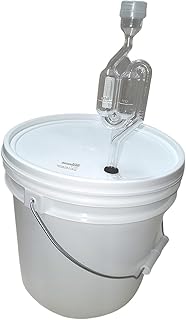
Fermenting bucket with lid and airlock (2 gallon or larger)

Essential · Core equipment

The mash of rice, koji and water fills well over a gallon and needs a wide opening for stirring and for scooping out to press.

budget
2 Gallon Primary Fermenter with Lid and Airlock

2 Gallon Primary Fermenter with Lid and Airlock

4.1(35)

$17.95

View on Amazon
mid-range
North Mountain Supply 2 Gallon Fermenting Bucket with 2-Piece Airlock

North Mountain Supply 2 Gallon Fermenting Bucket with 2-Piece Airlock

4.6(155)

$25.34

View on Amazon
premium
Home Brew Ohio Complete 2 Gallon Fermenting Bucket

Home Brew Ohio Complete 2 Gallon Fermenting Bucket

4.2(249)

$33.02

View on Amazon

Food-grade plastic with a grommeted lid. A narrow-necked jug will not work for this stage, since the rice cannot get back out.

One-gallon glass jug with airlock

Essential · Core equipment

After pressing, the sake rests in the jug for a few weeks while the haze settles out, sealed from the air.

budget
1 Gallon Glass Jug with Airlock, #6.5 Rubber Bung and Twin Bubble Design

1 Gallon Glass Jug with Airlock, #6.5 Rubber Bung and Twin Bubble Design

4.4(938)

$15.30

View on Amazon
mid-range
North Mountain Supply - 1G-38-ST-TB-1 1 Gallon Glass Fermenting Jug with Handle, 6.5 Rubber Stopper, Twin Bubble Airlock, Black Plastic Lid (Set of 1)

North Mountain Supply - 1G-38-ST-TB-1 1 Gallon Glass Fermenting Jug with Handle, 6.5 Rubber Stopper, Twin Bubble Airlock, Black Plastic Lid (Set of 1)

4.7(3K)

$17.22

View on Amazon
premium
Home Brew Ohio 1 Gallon Jug With TwinBubble Airlock,Metal Cap,#6 drilled stopper

Home Brew Ohio 1 Gallon Jug With TwinBubble Airlock,Metal Cap,#6 drilled stopper

4.7(56)

$21.22

View on Amazon

Check the stopper fits the jug's mouth. Glass lets you see when the sake has cleared.

Fine-mesh straining bag

Essential · Core equipment

You press the sake by pouring the mash into the bag and twisting it. The fine mesh holds back the rice while the sake runs through.

budget
2 Pack 26"×22" Brew Bag Reusable Mesh Strainer for Wine Beer Brewing

2 Pack 26"×22" Brew Bag Reusable Mesh Strainer for Wine Beer Brewing

4.7(2.6K)

$6.98

View on Amazon
mid-range
75 Micron Nylon Straining Bag Fine Mesh Food Strainer Filter Bags for Nut Milk, Green Juice, Cold Brew, Home Brewing (25.39" x 18.89")

75 Micron Nylon Straining Bag Fine Mesh Food Strainer Filter Bags for Nut Milk, Green Juice, Cold Brew, Home Brewing (25.39" x 18.89")

4.5(673)

$9.99

View on Amazon
premium
Brew Bag, 26" x 22", 2 Pack, 100% Unbleached Cotton Bag for Homebrewing, Fine Cheesecloth Bag for Fruit/Cider/Wine/Beer, Reusable Drawstring Straining

Brew Bag, 26" x 22", 2 Pack, 100% Unbleached Cotton Bag for Homebrewing, Fine Cheesecloth Bag for Fruit/Cider/Wine/Beer, Reusable Drawstring Straining

4.6(651)

$14.95

View on Amazon

Large enough to hold a gallon of mash. A clean cotton cloth works too, but a nylon bag is easier to squeeze and wash.

No-rinse brewing sanitizer

Essential · Cleaning

Sake ferments slowly and starts with little acid, so stray bacteria have time to take hold. Sanitizing everything that touches it after steaming prevents sour batches.

budget
Craft A Brew - One Step No Rinse Cleanser - For Cleaning At Home Brewing Equipment - Non-Foaming Cleanser - Safe & Easy to Use - Home Brewing Supplies (8oz)

Craft A Brew - One Step No Rinse Cleanser - For Cleaning At Home Brewing Equipment - Non-Foaming Cleanser - Safe & Easy to Use - Home Brewing Supplies (8oz)

4.7(145)

$12.99

View on Amazon
mid-range
Iodophor Sanitizer for Brewing or Wine Making

Iodophor Sanitizer for Brewing or Wine Making

4.4(91)

$14.95

View on Amazon
premium
Star San, 8 oz.

Star San, 8 oz.

4.7(107)

$16.95

View on Amazon

Clean first with hot water, then sanitize. One bottle lasts many batches.

Mini auto-siphon with tubing

Essential · Core equipment

Moves the clear sake into bottles while leaving the sediment in the jug. Pouring stirs it all back up.

budget
Fermtech Mini Auto-Siphon - Clear Siphon with 3ft Food - Grade Vinyl Hose - Effortless Bottling for 1 Gallon Jugs, Wine, Beer, Mead & Kombucha - 3/8in

Fermtech Mini Auto-Siphon - Clear Siphon with 3ft Food - Grade Vinyl Hose - Effortless Bottling for 1 Gallon Jugs, Wine, Beer, Mead & Kombucha - 3/8in

4.5(2.2K)

$13.99

View on Amazon
mid-range
14” Auto Siphon-3/8” Racking Cane Homebrew Wine Siphon Pump with Tubing

14” Auto Siphon-3/8” Racking Cane Homebrew Wine Siphon Pump with Tubing

4.0(36)

$19.99

View on Amazon
premium
North Mountain Supply Quick Start Automatic Siphon - Quick Start Siphon Pump, Butterfly Valve, Siphon Hose and Clip - 24 Inches to Fit Gallon and Half-Gallon Jugs

North Mountain Supply Quick Start Automatic Siphon - Quick Start Siphon Pump, Butterfly Valve, Siphon Hose and Clip - 24 Inches to Fit Gallon and Half-Gallon Jugs

4.2(143)

$20.59

View on Amazon

Get the mini size so it fits through a one-gallon jug's neck.

Swing-top glass bottles

Essential · Bottling

A batch fills about six to eight 500 ml bottles. Swing tops reseal by hand, so you need no capper and can pour a little at a time.

budget
YEBODA 16 oz Clear Swing Top Glass Bottles with Airtight Lids, 6 Pack

YEBODA 16 oz Clear Swing Top Glass Bottles with Airtight Lids, 6 Pack

4.6(3.8K)

$21.84

View on Amazon
mid-range
AYL Flip Top Glass Bottle [16 fl. oz./Pack of 6]– Swing Top Brewing Bottle with Stopper for Beverages, Oil, Vinegar, Kombucha, Beer, Water, Soda, Kefir – Airtight Lid & Leak Proof Cap – Clear

AYL Flip Top Glass Bottle [16 fl. oz./Pack of 6]– Swing Top Brewing Bottle with Stopper for Beverages, Oil, Vinegar, Kombucha, Beer, Water, Soda, Kefir – Airtight Lid & Leak Proof Cap – Clear

4.7(9.6K)

$24.99

View on Amazon
premium
8 Pack 16OZ Swing Top Glass Bottles, Flip Top Brewing Fermentation Bottles

8 Pack 16OZ Swing Top Glass Bottles, Flip Top Brewing Fermentation Bottles

4.7(2.6K)

$25.99

View on Amazon

Clear glass shows off nigori; keep the bottles in the fridge and out of light. Check the gaskets seal before each use.

Bamboo steamer basket

Recommended · Core equipment

Steaming 3 lb of rice evenly is the step beginners most often get wrong. A wide steamer on your pot spreads the rice thin so it cooks through.

budget
BirdRock Home Bamboo Steamer, 2-Tier (Classic Bamboo, 10" Diameter)

BirdRock Home Bamboo Steamer, 2-Tier (Classic Bamboo, 10" Diameter)

4.6(2K)

$20.66

View on Amazon
mid-range
Helen's Asian Kitchen Bamboo Food Steamer with Lid - 100% Natural Bamboo - Basket Steamers for Cooking Dumplings, Dim Sum, Veggies, Fish, Meat - Preserve Nutrients & Flavors - 10-Inch

Helen's Asian Kitchen Bamboo Food Steamer with Lid - 100% Natural Bamboo - Basket Steamers for Cooking Dumplings, Dim Sum, Veggies, Fish, Meat - Preserve Nutrients & Flavors - 10-Inch

4.4(2.5K)

$29.99

View on Amazon
premium
KitchenCrust Bamboo Steamer Basket 10 Inch With Ring, 2 Tier Dumpling Set

KitchenCrust Bamboo Steamer Basket 10 Inch With Ring, 2 Tier Dumpling Set

4.7(803)

$36.99

View on Amazon

Line it with a damp cotton cloth. If you already own a large metal colander, a colander lined with a towel over a pot works too.

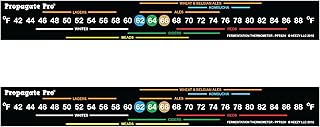
Stick-on fermenter thermometer strip

Recommended · Monitoring

Sake needs to stay between about 55 and 65°F. A strip on the bucket shows the temperature of the mash itself, not the room.

budget
3 Pack Fermentation Adhesive Strip Thermometer - Displays Temperature in Degrees Celsius & Fahrenheit - Great for Kombucha, Beer, Wine, Vegetable Fermentation (46 to 93, Degrees Fahrenheit)

3 Pack Fermentation Adhesive Strip Thermometer - Displays Temperature in Degrees Celsius & Fahrenheit - Great for Kombucha, Beer, Wine, Vegetable Fermentation (46 to 93, Degrees Fahrenheit)

4.1(1.2K)

$6.19

View on Amazon
mid-range
Strip Thermometer for Carboy Fermenter Homebrew Beer New

Strip Thermometer for Carboy Fermenter Homebrew Beer New

4.1(120)

$6.63

View on Amazon
premium
Stick On Brewing Thermometer Strip | Adhesive Temperature Display Sticker For Carboys & Buckets/Fermentors | Homebrew Fermenting, Brewers, Wine, Beer, Kombucha 42-88F (2)

Stick On Brewing Thermometer Strip | Adhesive Temperature Display Sticker For Carboys & Buckets/Fermentors | Homebrew Fermenting, Brewers, Wine, Beer, Kombucha 42-88F (2)

4.0(125)

$9.99

View on Amazon

Stick it below the liquid line on a clean, dry spot.

Hydrometer with test jar

Recommended · Monitoring

Shows when fermentation has really finished (the reading stops dropping for several days) and how dry the sake is, so you press at the right time.

budget
Triple Scale Alcohol Hydrometer(2 pcs)and Test Jar for Home Brew, Wine, Beer, Mead, Cider & Kombucha - Combo Set of 250ml Plastic Cylinder, Cleaning Brush, Storage Bag - ABV, Brix and Gravity Test Kit

Triple Scale Alcohol Hydrometer(2 pcs)and Test Jar for Home Brew, Wine, Beer, Mead, Cider & Kombucha - Combo Set of 250ml Plastic Cylinder, Cleaning Brush, Storage Bag - ABV, Brix and Gravity Test Kit

4.4(1.8K)

$13.99

View on Amazon
mid-range
Hydrometer Test Kit, Triple Scale Alcohol Tester Hydrometer for Wine, Beer, Kombucha & Mead, Wine Making Kit, (ABV Tester, Brix, Specific Gravity Hydrometer) + Hydrometer Test Jar for Home Brewing Kit

Hydrometer Test Kit, Triple Scale Alcohol Tester Hydrometer for Wine, Beer, Kombucha & Mead, Wine Making Kit, (ABV Tester, Brix, Specific Gravity Hydrometer) + Hydrometer Test Jar for Home Brewing Kit

4.3(539)

$14.99

View on Amazon
premium
Brewing Hydrometer Alcohol Tester Kit: USA-Made Beer & Wine American-Made Specific Gravity ABV Test Pro Series Traceable & Borosilicate Glass Test Tube Jar & Brush

Brewing Hydrometer Alcohol Tester Kit: USA-Made Beer & Wine American-Made Specific Gravity ABV Test Pro Series Traceable & Borosilicate Glass Test Tube Jar & Brush

4.7(892)

$35.99

View on Amazon

Draw the sample from the liquid above the rice with a sanitized cup, and do not pour it back.

Yeast nutrient

Situational · Ingredients · Traditional Starter

The small yeast starter is thin on the nitrogen and minerals yeast need to multiply fast. A little nutrient gets it strong enough to protect the whole mash.

budget
Home Brew Ohio - 73-4HA4-OWKO Yeast Nutrient, 2 oz Silver

Home Brew Ohio - 73-4HA4-OWKO Yeast Nutrient, 2 oz Silver

4.7(468)

$4.95

View on Amazon
mid-range
North Mountain Supply Food Grade Yeast Nutrient - 3.5 Ounce Jar

North Mountain Supply Food Grade Yeast Nutrient - 3.5 Ounce Jar

4.7(3.5K)

$6.53

View on Amazon
premium
LD Carlson Company Fermax Yeast Nutrient 1 lb (Packaging may vary)

LD Carlson Company Fermax Yeast Nutrient 1 lb (Packaging may vary)

4.7(843)

$12.75

View on Amazon

The scaled-down recipe needs only a quarter teaspoon, so one jar lasts years. The starter uses the base kit's wine yeast.

Koji spores (koji-kin)

Situational · Ingredients · Homemade Koji

The spores are the starter culture you dust over steamed rice to grow your own koji.

budget
Shiragiku Koji [Aspergillus oryzae] Spores Gluten-Free Vegan - 10g/0.35oz

Shiragiku Koji [Aspergillus oryzae] Spores Gluten-Free Vegan - 10g/0.35oz

4.5(53)

$14.99

View on Amazon
mid-range
Hishiroku Chouhaku-kin Koji Starter Spores 0.7oz (20g) Sachet

Hishiroku Chouhaku-kin Koji Starter Spores 0.7oz (20g) Sachet

4.4(40)

$15.00

View on Amazon
premium
Koji Kin Starter Spore Sake Miso Dry Aged Steak Amazake

Koji Kin Starter Spore Sake Miso Dry Aged Steak Amazake

4.5(195)

$19.50

View on Amazon

Choose spores sold for rice koji or sake, not for soy sauce. A few grams inoculate a pound of rice; keep the rest sealed and cool.

Heat mat with thermostat

Situational · Core equipment · Homemade Koji

Koji needs about 86 to 95°F for two days. A heat mat under a tray in a closed picnic cooler, held steady by the thermostat probe, is the cheapest reliable incubator.

budget
Seedling Heat Mat and Digital Thermostat Combo Set, MET-Certified Plants Heating Mat Warm Hydroponic,Germination, Indoor Gardening, Greenhouse

Seedling Heat Mat and Digital Thermostat Combo Set, MET-Certified Plants Heating Mat Warm Hydroponic,Germination, Indoor Gardening, Greenhouse

4.4(53)

$26.95

View on Amazon
mid-range
Durable Reptile Heating Pad 8" X 12" with Digital Thermostat Under Tank Heater Terrarium Warmer Combo Set for Turtles, Lizards, Frogs, and Other Reptiles

Durable Reptile Heating Pad 8" X 12" with Digital Thermostat Under Tank Heater Terrarium Warmer Combo Set for Turtles, Lizards, Frogs, and Other Reptiles

4.4(1.4K)

$32.99

View on Amazon
premium
20" x 20.75" Seedling Heat Mat with Thermostat Controller Combo Set

20" x 20.75" Seedling Heat Mat with Thermostat Controller Combo Set

4.4(178)

$45.99

View on Amazon

Put the probe in the rice, not on the mat. Keep a bowl of water in the cooler for humidity.