Skip to content

Starter guide

Tennis

One racquet, a can of balls and a public court.

Tennis is a racquet sport played over a three-foot net, one against one or two against two, where you win a point by landing the ball in the other side's court so it cannot be returned. The gear list is short: a racquet, a can of balls and shoes that grip sideways. Most towns have public courts that cost nothing to use, and you can play at 15 or 75. The early weeks are about keeping the ball in play, and the first rally that goes back and forth ten times is what hooks most people.

Difficulty
moderate learning curve
Startup cost
$40-$260
First result
A ten-shot rally from the service line in 2-4 sessions
Racquet-bag total$0.00
01

Your first three weeks

Tick these off as you go

A player in white seen from above, set behind the baseline of a hard court with a long shadow
Behind the baseline
02

Scoring and the court in eight lines

  1. The court is 78 feet long. Singles uses the inner sidelines (27 feet wide) and doubles adds the two alleys (36 feet wide). The net is 3 feet high at the center.
  2. A point starts with a serve from behind the baseline into the service box diagonally opposite. You get two tries, and missing both is a double fault that loses the point.
  3. After the serve the ball may bounce once on your side before you hit it, or you can hit it out of the air. Any ball that touches a line is in.
  4. Points in a game run love (zero), 15, 30, 40, game. The server's score is always called first.
  5. At 40-40 the score is deuce, and from there you must win two points in a row: the first gives you the advantage, the second the game.
  6. One player serves a whole game, starting from the right side and switching sides every point. The serve passes to the other player or team after each game.
  7. A set goes to the first side to win six games with a two-game lead. At 6-6 you play a tiebreak: first to seven points, ahead by two.
  8. Most matches are best of three sets. Players change ends after every odd-numbered game so sun and wind even out.
A net and its white center strap stretched across an empty blue hard court
Three feet at the center
03

Choosing a racquet and keeping it playable

What to check before you buy

Head size

100 to 110 square inches. A bigger head has a larger sweet spot and forgives off-center hits.

Weight

9 to 10.5 ounces strung. Lighter than that twists in your hand on a hard ball, and heavier tires a new arm within a set.

Length

The standard 27 inches for anyone 12 or older.

Grip size

Hold the racquet in a forehand grip and slide the index finger of your other hand between your fingertips and palm. It should just fit. Most adults land on 4 1/4 or 4 3/8 inches, and if you are between sizes take the smaller one, since an overgrip adds about a sixteenth of an inch.

Buy it pre-strung.

Factory strings are fine for a first year, and beginner racquets nearly always ship with them.

Before and between sessions

  • Before each session, drop a ball from head height onto the court. A ball that bounces lower than your waist has gone flat and will teach you to swing too hard.
  • Replace the overgrip when it turns slick or gray, usually every 8 to 10 hours of play.
  • Restring about as many times a year as you play in a week, and at least once a year, because strings lose tension even when the racquet sits unused.
A racquet and three balls lying on a green court in the striped shadow of a fence
One racquet, a few balls
A player seen from above tossing the ball to serve on a red clay court
04

Five ways to play

Same court, different afternoons

SinglesOne against one on the narrower court. The most running and the most hitting per hour.

Start here

Book or walk onto a public court with one friend and play first to ten points, serving underhand if you need to. Count how many rallies reach four shots and try to beat it next time.

DoublesTwo against two using the alleys. Less ground to cover, more net play, and the most social version of the game.

Start here

Find three other beginners (a parks department drop-in is the easiest place) and play one set of doubles. Stand one player at the net and one at the baseline, and swap after each game.

Slower-ball startThe same game on the same court with lower-compression balls that bounce lower and travel slower, so rallies last while your strokes are still forming.

Start here

Buy a can of lower-compression balls and rally with a partner from service line to service line until you can keep twenty in a row going, then move back to the baseline.

Solo practiceA practice wall for groundstrokes and a basket of balls for serves, for the days no partner is free.

Start here

Find a court with a practice wall, or an empty court and a basket of balls. Hit fifty forehands and fifty backhands against the wall, then serve the whole basket into each service box.

Leagues and rated playOrganized matches against adults of the same skill rating, once you can serve and keep score.

Start here

Read the rating descriptions, pick the one that honestly fits (most new adults are 2.0 to 2.5), and sign up for a local league at that level as an individual.

Open one to see where to start. Slower-ball start and Solo practice each have a button that adds their gear to the bag.

05

Skills to work on first

From your feet up

Ready position and split step

Knees bent, racquet in front, and a small hop as your opponent hits so you can push off either way.

Forehand

Turn your shoulders early, swing from low to high and finish with the racquet over the opposite shoulder. The low-to-high path is what lifts the ball over the net and brings it down inside the baseline.

Two-handed backhand

The same turn and the same low-to-high swing, with the non-dominant hand doing most of the work.

Serve

A consistent ball toss, slightly in front and as high as your outstretched racquet. A reliable toss matters more than power.

Footwork to the ball

Small adjustment steps so you hit at waist height and an arm's length away, instead of reaching.

06

What trips beginners up

What to expect, and what to drop

  • Expect most early balls to fly long. The fix is a slower swing with more upward brush, not a shorter one.
  • Expect the serve to lag behind everything else for months. It is the only shot you start from nothing, and it has the most moving parts.
  • Expect to be sore in the legs and the hitting shoulder after the first few sessions. An hour of singles covers one to two miles in short sprints.
  • Do not rally from the baseline on day one. Starting at the service line builds control that full-court hitting never does.
  • Do not grip the handle tight. Hold it at about four out of ten, firm enough to keep it from turning and no more.
  • Do not watch your shot land. Recover to the middle of the baseline as soon as the ball leaves your strings.
  • Do not play points every session. Half an hour of cooperative rallying improves you faster than an hour of games you lose on the second shot.
07

Staying unhurt

  • Clear loose balls from your side before every point. Stepping on one is the most common way to roll an ankle.
  • Warm up for five minutes with a light jog and arm circles, then hit gently from close range before you swing hard.
  • Soreness on the outside of the elbow is an early sign of tennis elbow. Rest it, loosen your grip, and check that the grip is not too small.
  • Hard courts in summer run far hotter than the air. Bring at least a quart of water per hour, wear sunscreen and a hat, and stop if you feel dizzy.
  • Never jump the net, and never play on a wet hard court: the painted surface turns slick.
A player seen from above reaching up to serve from the baseline of a hard court
08

Where to learn and find a game

A clinic, one channel, a partner

The cheapest good instruction is a group beginner clinic through a parks department or community tennis association, usually $10 to $25 a session and often with loaner racquets. For free video, pick one channel and follow its beginner series in order instead of collecting tips from many. To find partners, ask at the clinic, check the notice board at your public courts, or enter a league once you know your rating.

09

Why the kit is built this way

Two things are needed to hit a ball today: a racquet and balls. Court shoes come next because tennis is played moving sideways, and they protect both your ankles and the court. Overgrips are the one consumable that changes how the racquet feels in your hand for a few dollars. Everything after that depends on how you play: slower balls if you want longer rallies while you learn, and a bulk bag of practice balls with a hopper if you plan to drill alone. A stringing machine, a ball machine and a second racquet are not here because none of them helps in the first year.

White court shoes, a racquet and a ball on red clay, seen through the mesh of the net
Court shoes, seen through the net
10

Load the bag

Compare the options below, then set your tiers and check out from the bag. Clicking a card selects it there. The racquet, balls, shoes and overgrips start in the bag. The Slower Balls and Solo Practice lines join once you switch that add-on on.

Adult beginner tennis racquet

essential · Core equipment

It is the one tool of the sport. A light, large-headed frame gets the ball over the net on off-center hits while your swing is still inconsistent.

budget
Wilson Federer Adult Recreational Tennis Racket - Grip Size 3 - 4 3/8", Red/White/Black

Wilson Federer Adult Recreational Tennis Racket - Grip Size 3 - 4 3/8", Red/White/Black

4.7(4.5K)

$32.27

View on Amazon
mid-range
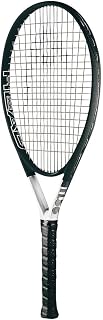
HEAD Ti S6 Tennis Racket

HEAD Ti S6 Tennis Racket

4.7(1.9K)

$99.00

View on Amazon
premium
Babolat Boost Drive Strung Tennis Racquet (White)

Babolat Boost Drive Strung Tennis Racquet (White)

4.7(61)

$119.00

View on Amazon

Check the grip size before you order: most listings offer 4 1/4 and 4 3/8 inches. Avoid kids' frames shorter than 27 inches.

Pressurized tennis balls

essential · Consumables

Standard balls lose their bounce two to four weeks after the can is opened, so you need fresh ones from the start and regularly after.

budget
Wilson US Open Tennis Balls

Wilson US Open Tennis Balls

4.8(2.5K)

$6.49

View on Amazon
mid-range
Dunlop Sports ATP Championship Tennis Balls, (3-Ball Can)

Dunlop Sports ATP Championship Tennis Balls, (3-Ball Can)

4.5(190)

$8.99

View on Amazon
premium
Penn Championship Tennis Balls - Extra Duty, 2 Cans, 6 Balls

Penn Championship Tennis Balls - Extra Duty, 2 Cans, 6 Balls

4.7(633)

$11.49

View on Amazon

Extra duty felt is for hard courts, regular duty for clay. Three balls is enough to rally, and a multi-can pack costs less per ball.

Tennis court shoes

recommended · Footwear

Running shoes are built to go forward and tip over on a hard sideways stop. Court shoes sit lower, have a reinforced side wall and a flat outsole that grips without marking the surface.

budget
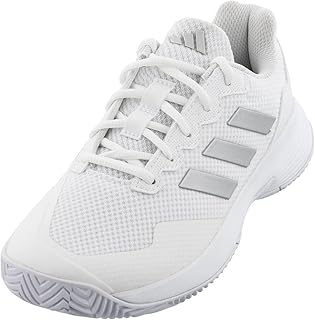
adidas Mens Gamecourt 2.0 Tennis Sneakers Shoes - Black

adidas Mens Gamecourt 2.0 Tennis Sneakers Shoes - Black

4.4(4K)

$48.99

View on Amazon
mid-range
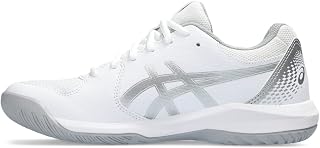
ASICS Men's Gel-Dedicate 8 Tennis Shoes

ASICS Men's Gel-Dedicate 8 Tennis Shoes

4.3(3.1K)

$69.95

View on Amazon
premium
ASICS Men's Gel-Resolution X Tennis Shoes

ASICS Men's Gel-Resolution X Tennis Shoes

4.1(577)

$139.95

View on Amazon

Pick Men's or Women's on the option you choose. An all-court or hard-court outsole suits most public courts.

Tennis overgrips

recommended · Consumables

A thin wrap over the factory grip soaks up sweat and stops the handle from turning in your hand. It wears out in weeks and costs far less than replacing the grip underneath.

budget
Tourna Grip XL Original Dry Feel Tennis Grip - The Ultimate Hot Weather Overgrip

Tourna Grip XL Original Dry Feel Tennis Grip - The Ultimate Hot Weather Overgrip

4.7(5K)

$6.97

View on Amazon
mid-range
Wilson Pro Overgrip Tennis Racket Grips - Pack of 3

Wilson Pro Overgrip Tennis Racket Grips - Pack of 3

4.8(2.1K)

$8.65

View on Amazon
premium
Yonex Overgrip Super GRAP 3 Pack - Tennis, Badminton, Squash - Choice of Colors

Yonex Overgrip Super GRAP 3 Pack - Tennis, Badminton, Squash - Choice of Colors

4.7(794)

$9.99

View on Amazon

Tacky overgrips suit dry hands and absorbent ones suit sweaty hands. Wrap from the butt cap upward, overlapping by about an eighth of an inch.

Low-compression tennis balls

situational · Consumables · Slower Balls add-on

They fly slower and bounce lower than standard balls, which gives you time to set your feet and makes long rallies possible in the first month.

budget
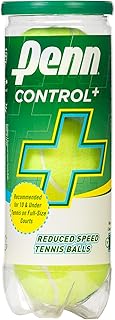
Penn Control Plus Tennis Balls - Youth Felt Green Dot Tennis Balls for Beginners, 1 Can 3 Balls

Penn Control Plus Tennis Balls - Youth Felt Green Dot Tennis Balls for Beginners, 1 Can 3 Balls

4.6(508)

$7.99

View on Amazon
mid-range
Babolat Green Tennis Balls (3 Ball Can), Green, One Size

Babolat Green Tennis Balls (3 Ball Can), Green, One Size

4.5(27)

$12.53

View on Amazon
premium
Tourna Green Dot Low Compression Tennis Balls

Tourna Green Dot Low Compression Tennis Balls

4.3(78)

$24.73

View on Amazon

The green stage is closest to a standard ball and works on a full court. The orange stage is slower still and suits rallying inside the service lines.

Pressureless practice tennis balls (bulk)

situational · Practice gear · Solo Practice add-on

Serving practice means hitting dozens of balls before you walk to pick them up. Pressureless balls keep their bounce for a year or more, so a bulk bag does not go flat in storage.

budget
Penn Pressureless Tennis Balls

Penn Pressureless Tennis Balls

4.7(1.3K)

$24.99

View on Amazon
mid-range
Tourna Pressureless Tennis Balls with Vinyl Tote (45 pack of balls)

Tourna Pressureless Tennis Balls with Vinyl Tote (45 pack of balls)

4.5(1.1K)

$38.01

View on Amazon
premium
Gamma Sports Pressureless Tennis Balls Box - Ideal for Practice, Teaching, and Training with High-Visbility Felt - Indoor and Outdoor Court Play - 48 and 75 Pack Sizes

Gamma Sports Pressureless Tennis Balls Box - Ideal for Practice, Teaching, and Training with High-Visbility Felt - Indoor and Outdoor Court Play - 48 and 75 Pack Sizes

4.5(1.5K)

$79.99

View on Amazon

They feel heavier and harder off the strings than standard balls. Use them for drills and keep a fresh can for games.

Tennis ball hopper

situational · Practice gear · Solo Practice add-on

It picks balls up through its wire base without bending over, then flips to stand at waist height beside you while you serve.

budget
Wilson Unisex Adult Ball Pick Up Basket Tennis Ball Collection Pick-Up Basket, 75 Tennis Balls Capacity, NS

Wilson Unisex Adult Ball Pick Up Basket Tennis Ball Collection Pick-Up Basket, 75 Tennis Balls Capacity, NS

4.2(6.8K)

$34.94

View on Amazon
mid-range
Tourna Ballport Tennis Ball Hopper Holds 80 Balls Durable and Lightweight

Tourna Ballport Tennis Ball Hopper Holds 80 Balls Durable and Lightweight

4.5(1.9K)

$39.99

View on Amazon
premium
Gamma Ball Hopper Pro 90 - Heavy Duty Tennis Ball Basket with Adjustable Padded Handle - Holds 90 Tennis Balls - Easy Pickup and Carry for Tennis Practice and Coaching

Gamma Ball Hopper Pro 90 - Heavy Duty Tennis Ball Basket with Adjustable Padded Handle - Holds 90 Tennis Balls - Easy Pickup and Carry for Tennis Practice and Coaching

4.3(8)

$60.67

View on Amazon

A hopper that holds 50 to 75 balls is plenty for one person and still fits in a car trunk.